Loops of a parallel circuit
I can divide a parallel circuit into a set of nested series circuits.


- Year 9
Loops of a parallel circuit
I can divide a parallel circuit into a set of nested series circuits.
Lesson details
Key learning points
- In a parallel circuit, each loop can be traced from one end of the cell or battery to the other end.
- Each loop in a parallel circuit is equivalent to a series circuit connected to the same cell or battery.
- A parallel circuit can be split into a number of series circuits each connected to the ends of the same cell or battery.
Keywords
Series circuit - An electric circuit with one complete loop from one end of a cell or battery to the other end.
Battery - Two or more cells connected in series form a battery.
Parallel circuit - An electric circuit with more than one complete loop from one end of a cell or battery to the other end.
Potential difference - A more formal term for voltage; they can be used interchangeably.
Common misconception
Pupils are often confused about how to analyse a parallel circuit.
Emphasise the need to consider each loop of a parallel circuit as if it were a single series circuit connected to a cell or battery.


Equipment
Lamps, wires, 2 × 1.5 V cells connected to form a battery for class practical.

Content guidance
- Risk assessment required - equipment

Supervision
Adult supervision required

Licence
Lesson video
Loading...
Prior knowledge starter quiz
6 Questions
Q1.Which of the following statements about the electrical leads in laboratory circuits is correct?

Q2.Which of the following is the more formal term for voltage?
Q3.Which of the following is the correct way to connect a voltmeter and an ammeter in a circuit?
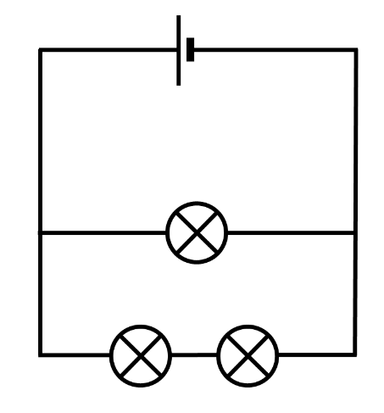
Q4.Which of the following statements about the voltage in the branches of the parallel circuit shown is correct?
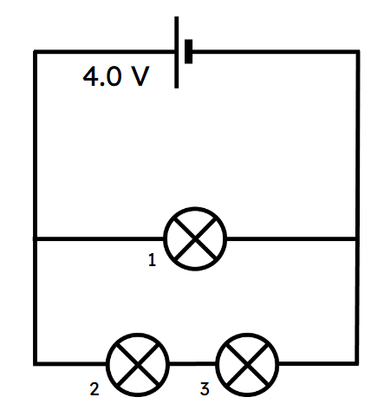
Q5.All of the lamps in the circuit shown are identical. What is the voltage across lamp 3?
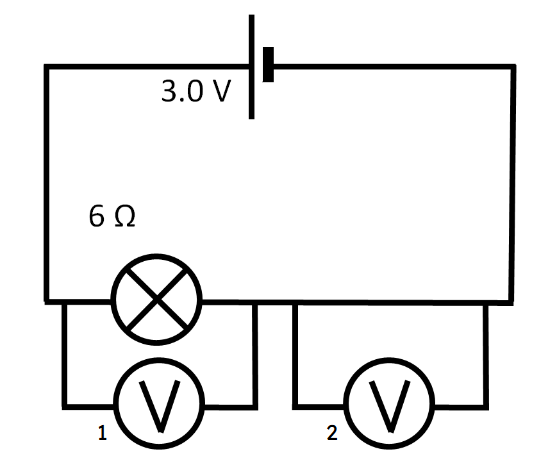
Q6.What will the reading be on voltmeters 1 and 2 in the circuit shown?
Assessment exit quiz
6 Questions
Q1.Which of the following statements about circuits are correct?
Q2.Which of the following circuits is the odd one out?
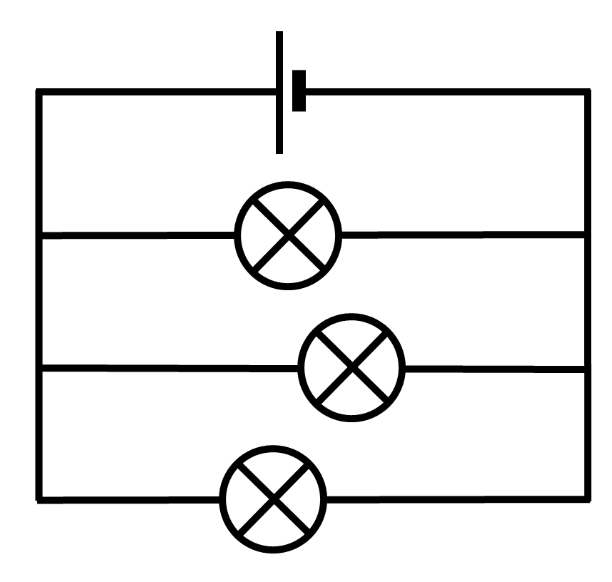
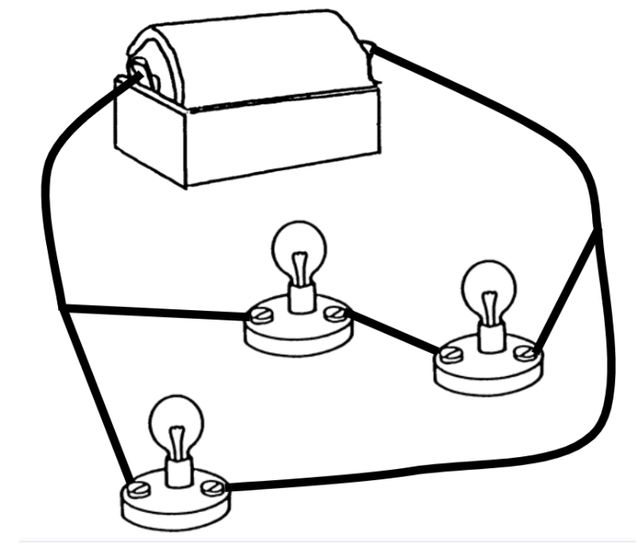
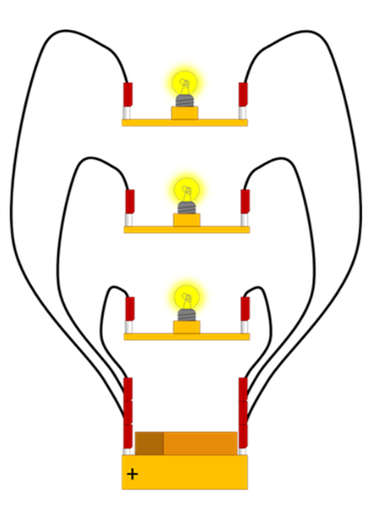
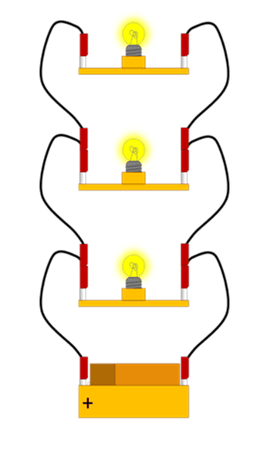
Q3.All of the lamps in the circuit shown are identical. Which of the following statements is correct?
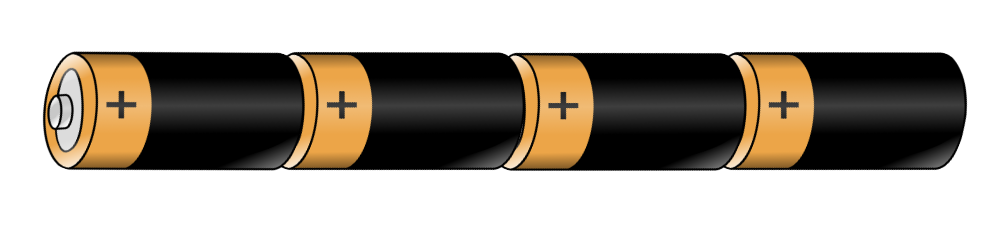
Q4.What is the voltage of a battery of four 1.5 V cells, connected in the same direction in series?