New
New
Mains electricity
I can compare the power of different appliances and work out how much they cost to use.
Lesson 9 of 9
New
New
- Year 9
Mains electricity
I can compare the power of different appliances and work out how much they cost to use.
Lesson details
Key learning points
- Electrical appliances and devices use different amounts of energy each second, as indicated by their power rating.
- Power is a measure of the amount of energy used by or supplied to a device in one second.
- Power is measured in watts (W).
- Multiplying power of a device in kilowatts (kW) by time in hours (h) gives us the energy used in kilowatt–hours (kWh).
- Electricity bills are based on the amount of energy units used; 1 unit of energy is equal to 1 kWh.
Keywords
Power - the amount of energy transferred every second
Watts (W) - the unit of power
Kilowatts (kW) - a larger unit of power; 1 kW = 1000 W
Joules (J) - the unit of energy
Kilowatt–hours (kWh) - the unit of energy usage; 1 kWh = 1 unit of energy used
Common misconception
Most pupils do not discriminate sufficiently between current, voltage, energy and power.
Provide pupils with opportunities to calculate energy usage with appliances that have different power ratings and are used for different lengths of time.
It is useful to see how a high powered appliance used for a short time and a low powered appliance used for a long time compare. Encourage pupils to use the smart meters in their homes (if they have them). If not, consider setting this as a homework and then analyse the data in class.
Teacher tip
Equipment
Wattmeter (joulemeter) if available for demonstration and a range of devices to test.
Licence
This content is © Oak National Academy Limited (2026), licensed on Open Government Licence version 3.0 except where otherwise stated. See Oak's terms & conditions (Collection 2).
Prior knowledge starter quiz
6 Questions
Q1.Which of the following types of circuit is used for car headlamps so that if one light stops working, the other stays lit?
Which of the following types of circuit is used for car headlamps so that if one light stops working, the other stays lit?
a series circuit
Correct answer: a parallel circuit
a parallel circuit
either a series or a parallel circuit
Q2.Which of the following statements is correct?
Which of the following statements is correct?
Correct answer: Voltage is measured in parallel, current is measured in series.
Voltage is measured in parallel, current is measured in series.
Both voltage and current are measured in parallel.
Voltage is measured in series, current is measured in parallel.
Both voltage and current are measured in series.
Q3.Which of the following statements about a circuit where a high current flows through a bulb and the voltage and current are correctly measured is correct?
Which of the following statements about a circuit where a high current flows through a bulb and the voltage and current are correctly measured is correct?
The voltmeter and the ammeter both have a high current passing through them.
The voltmeter and the ammeter both have a low current passing through them.
The voltmeter has a high current and the ammeter has a very low current passing.
Correct answer: The ammeter has a high current and the voltmeter has a very low current passing.
The ammeter has a high current and the voltmeter has a very low current passing.
Q4.In the circuit shown, what is the voltage across the electric cell if the voltage across the 8 $$\Omega$$ resistor is 2.0 V and the voltage across the 4 $$\Omega$$ resistor is 2.0 V?
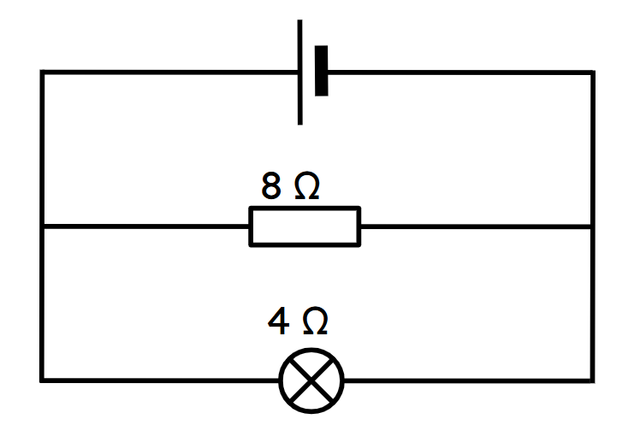
In the circuit shown, what is the voltage across the electric cell if the voltage across the 8 $$\Omega$$ resistor is 2.0 V and the voltage across the 4 $$\Omega$$ resistor is 2.0 V?

1.0 V
1.33 V
Correct answer: 2.0 V
2.0 V
4.0 V
Q5.In the circuit shown, what will the ammeter read if the current in the resistor is 0.35 A and the current in the lamp is 0.25 A?
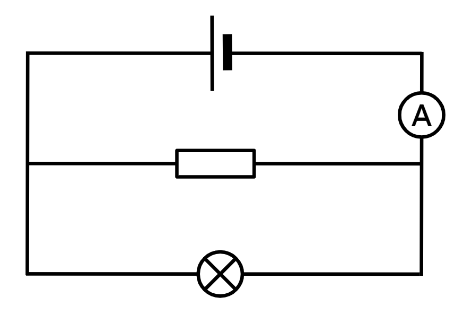
In the circuit shown, what will the ammeter read if the current in the resistor is 0.35 A and the current in the lamp is 0.25 A?

0.25 A
0.30 A
0.35 A
Correct answer: 0.60 A
0.60 A
Q6.Where does our household electricity come from?
Where does our household electricity come from?
only fossil fuel power stations
only nuclear power stations
wind turbines and solar panels
hydroelectricity plants
Correct answer: A mix of different sources, depending on weather conditions and demand.
A mix of different sources, depending on weather conditions and demand.
Assessment exit quiz
6 Questions
Q1.Which of the following is the unit of power?
Which of the following is the unit of power?
ohms
volts
amps
Correct answer: watts
watts
joules
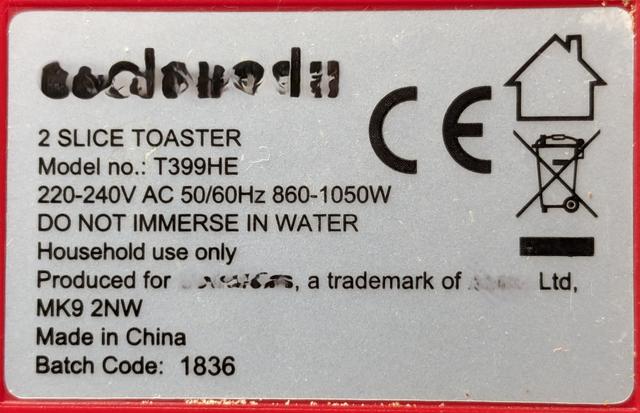
Q2.Which of the following devices or appliances has the greatest power rating?
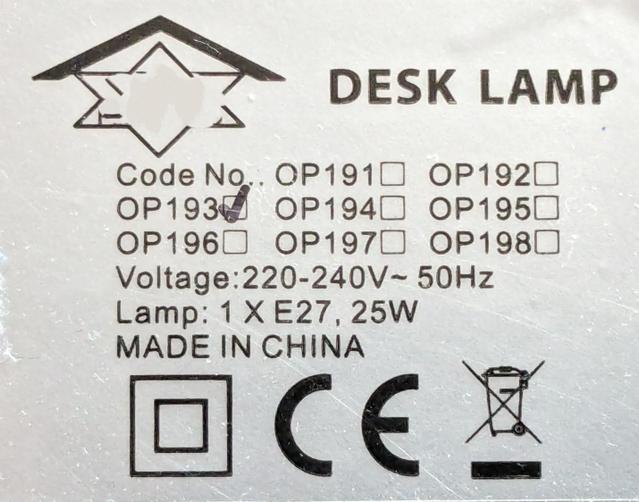
Which of the following devices or appliances has the greatest power rating?
lamp: 220-240 V, 50 Hz, 25W

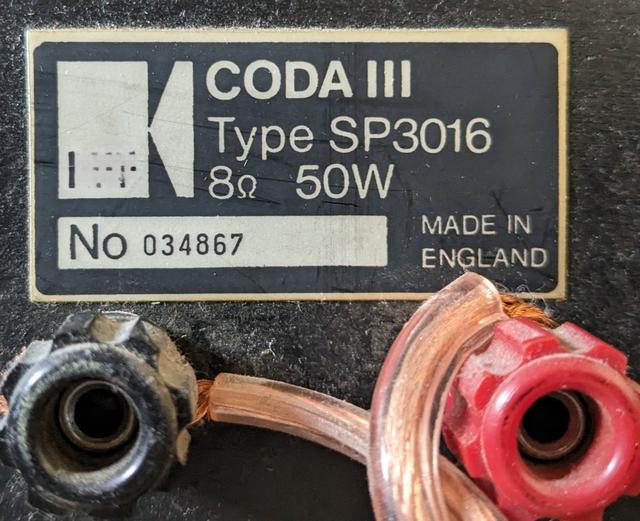
loudspeaker: 50W

Correct answer: toaster: 220-240 V, 50/60 Hz, 860-1050W
toaster: 220-240 V, 50/60 Hz, 860-1050W
Q3.How many watts are there in a kilowatt?
How many watts are there in a kilowatt?
a thousandth watts
Correct answer: a thousand watts
a thousand watts
a million watts
a billion watts
Q4.Which of the following values is equal to 0.1 kilowatts?
Which of the following values is equal to 0.1 kilowatts?
1 watt
10 watts
Correct answer: 100 watts
100 watts
1000 watts
Q5.How many watts are there in a gigawatt?
How many watts are there in a gigawatt?
100
1000
1 000 000
Correct answer: 1 000 000 000
1 000 000 000
Q6.What is the cost of using a 1000 W heater for 30 min, if 1 kWh costs £0.30?
What is the cost of using a 1000 W heater for 30 min, if 1 kWh costs £0.30?
3 pence
Correct answer: 15 pence
15 pence
30 pence
60 pence