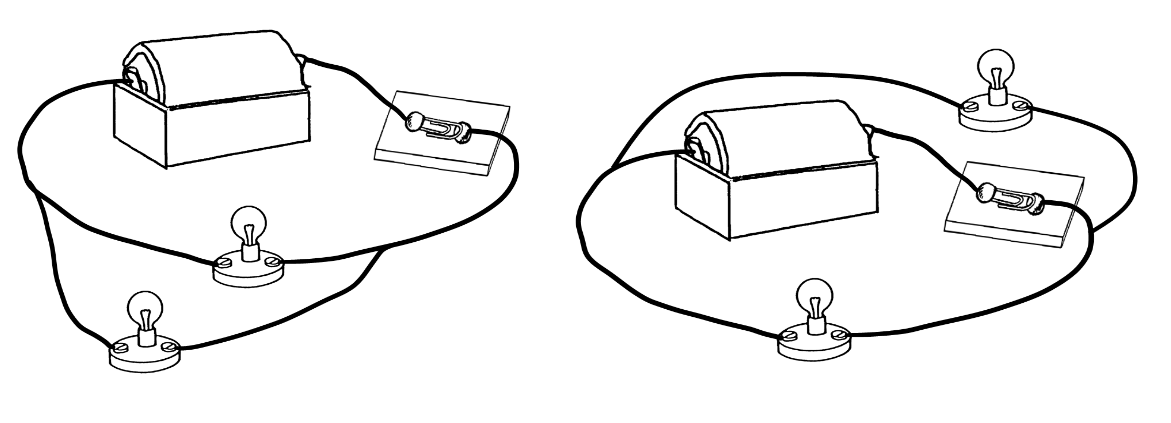
Making parallel circuits
I can use circuit diagrams to build parallel circuits and draw circuit diagrams of parallel circuits.


- Year 9
Making parallel circuits
I can use circuit diagrams to build parallel circuits and draw circuit diagrams of parallel circuits.
Lesson details
Key learning points
- A parallel circuit is a circuit with more than one complete loop, from one end of a battery to the other end.
- A circuit is built systematically following a circuit diagram, round in one direction, starting from any point.
- A parallel circuit is built systematically, completing each loop of the circuit in turn.
- A circuit diagram is drawn systematically, following each loop round and completing each one in turn.
- Wires in a circuit diagram are drawn with a ruler for clarity, with no tiny gaps that would break the circuit.
Keywords
Series circuit - An electric circuit with one complete loop from one end of a cell or battery to the other end.
Complete circuit - A circuit that has no gaps, allowing electricity to flow continuously around the circuit.
Parallel circuit - An electric circuit with more than one complete loop from one end of a cell or battery to the other end.
Circuit diagram - A simple and clear way of showing the setup and components in an electrical circuit.
Common misconception
Components of a parallel circuit must match the exact layout of a circuit diagram.
Focus on pupils starting at one end of the battery and building each loop up in turn, focusing on putting the connections in the correct order.


Equipment
Electrical leads, cells, bulbs and holders, switches.

Content guidance
- Risk assessment required - equipment

Supervision
Adult supervision required

Licence
Lesson video
Loading...
Prior knowledge starter quiz
6 Questions
Q1.Which of the following statements about series circuits is correct?

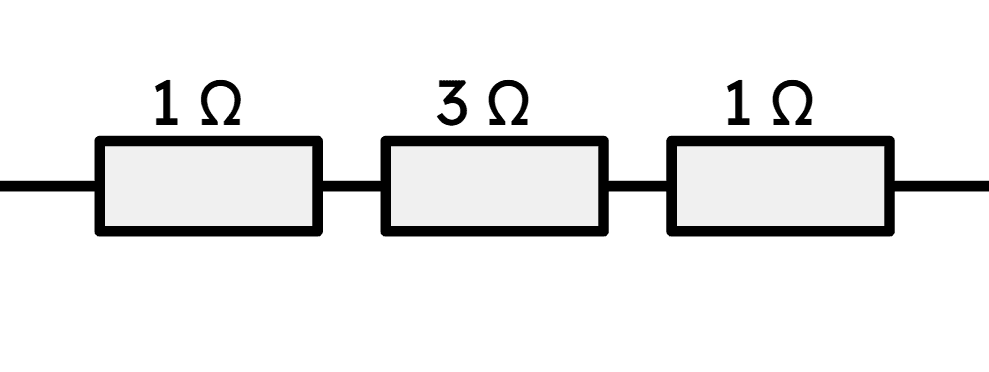
Q2.Which of the following resistances is the total resistance of the combination of resistors shown?
Q3.A 20 cm wire has a resistance of 60 $$\Omega$$.
Which of the following lengths of wire would have a resistance of 15 $$\Omega$$?
Q4.Which of the following statements describes how an ammeter should be connected to measure the current through a component?
Q5.Which of the following statements describes how a voltmeter should be connected to measure the voltage across a component?
Q6.Which of the following rules are important when drawing circuit diagrams?
Assessment exit quiz
6 Questions
Q1.Which of the following statements about parallel circuits are correct?
Q2.Which of the following rules are not important when building a circuit from a circuit diagram?
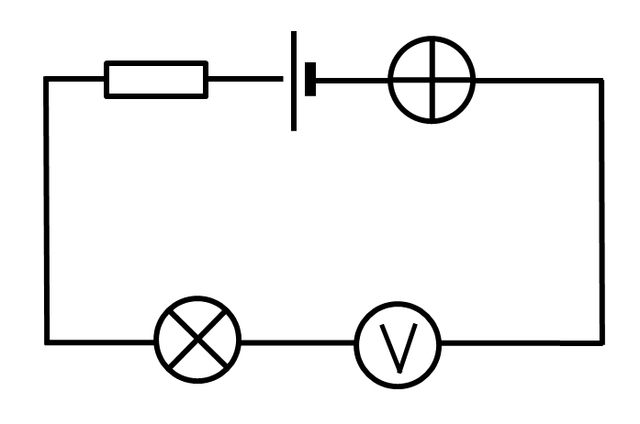
Q3.A pupil has drawn a circuit diagram of a circuit they used to measure the voltage across a lamp.
Which of the following errors have they made when constructing the circuit diagram shown?
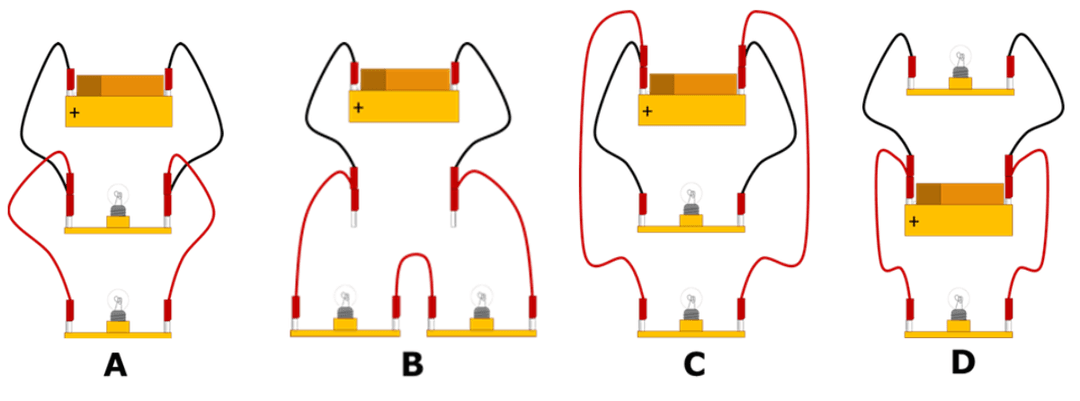
Q4.Which of the circuits shown, A, B, C, or D, is the odd one out?
Q5.Which of the following statements about voltage and current are correct?
Q6.Which of the following statements about the two circuits shown are correct?