


New
New
Measure mass in whole kilograms and grams
I can use whole kilograms and grams to measure the mass of objects.


Lesson 3 of 10
New
New
- Year 3
Measure mass in whole kilograms and grams
I can use whole kilograms and grams to measure the mass of objects.
Lesson details
Key learning points
- 1 kg is equivalent to 1000 g.
- The mass of heavy objects can be given in whole kilograms and grams.
- We can use our knowledge of 1 kg and the composition of 1000 to determine the mass of objects.
Keywords
Mass - Mass is a measure of how much matter something contains. It is measured by how much something weighs. Mass can be measured in kg and g.
Gram - A gram is a metric measure of mass. A paper clip has a mass of about 1 gram. The abbreviation is g.
Kilogram - Kilograms are use to measure the mass objects that are heavy. A pineapple has a mass of about 1 kilogram. The abbreviation is kg.
Common misconception
Composition of 1,000 is Year 4 content so children may make mistakes when giving masses in kg and g.
Use of stem sentences to help: 1,000 is composed of __ equal parts of __.
This lesson should be completed practically where possible to give the children hands on experience of what kilograms feel like and of reading scales where an object is not an exact number of kilograms.

Teacher tip

Licence
This content is © Oak National Academy Limited (2025), licensed on Open Government Licence version 3.0 except where otherwise stated. See Oak's terms & conditions (Collection 2).
Lesson video
Loading...
Prior knowledge starter quiz
6 Questions
Q1.Which of these units should the mass of a pebble be measured in?
Which of these units should the mass of a pebble be measured in?
centimetres
metres
litres

Q2.Look at the bar model. 100 is composed of five equal parts of .
Look at the bar model. 100 is composed of five equal parts of .

Q3.Look at the scales. What is the mass of this box?
Look at the scales. What is the mass of this box?
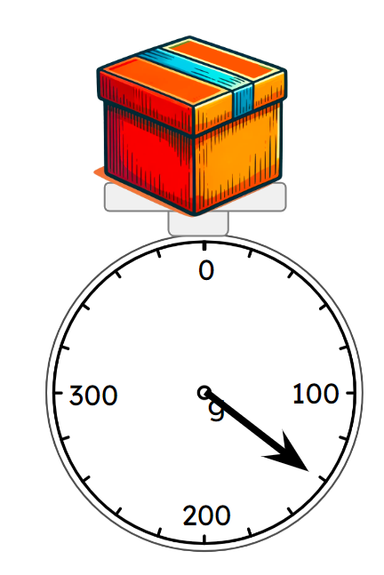
120 g
150 g
Q4.Look at these scales. Which is showing the greater mass?
Look at these scales. Which is showing the greater mass?
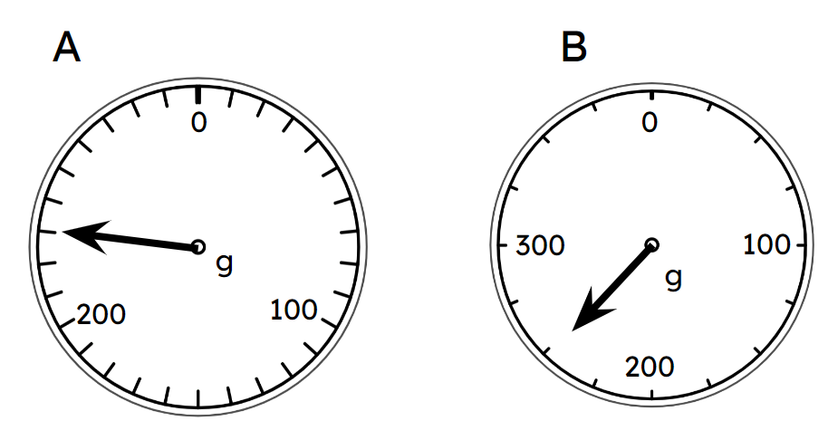
A
They both show the same mass.
Q5.Starting with the smallest mass, put the scales in order of the mass they are showing.
Starting with the smallest mass, put the scales in order of the mass they are showing.
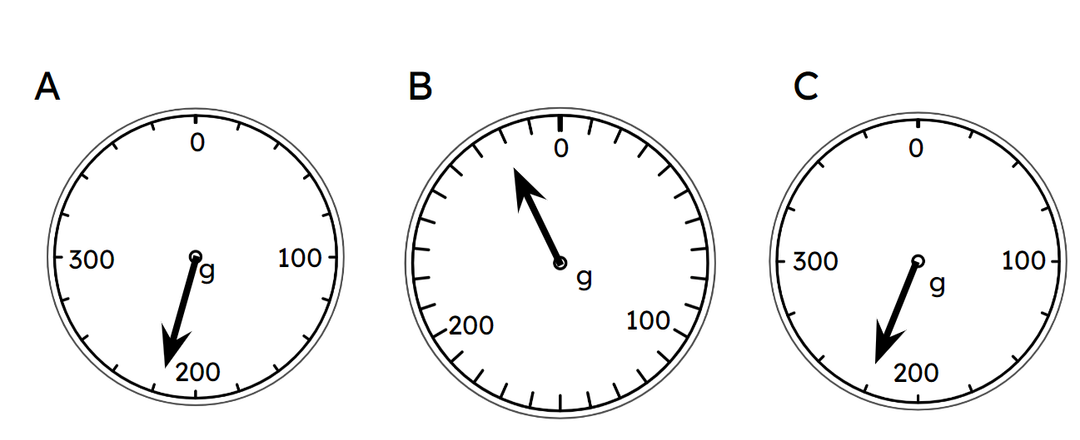
Q6.Look at these scales. What is the total mass of the orange and lemon?
Look at these scales. What is the total mass of the orange and lemon?
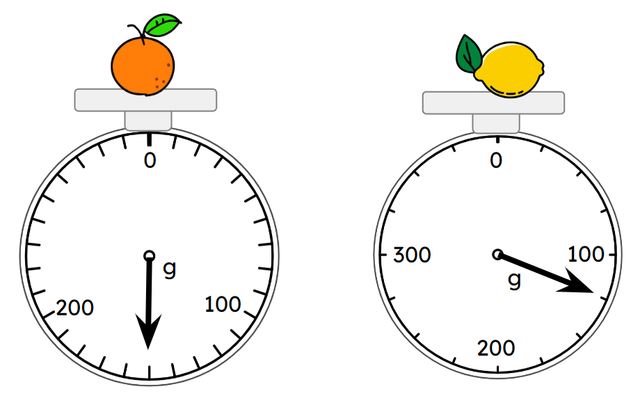
260 g
270 g
Assessment exit quiz
6 Questions
Q1.1 kg is composed of grams.
1 kg is composed of grams.
10
100
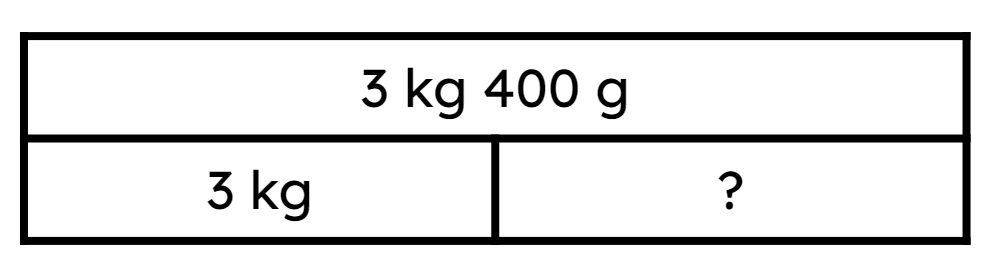
Q2.Look at the bar model. What is the missing part?
Look at the bar model. What is the missing part?
Q3.Look at the scales. What is the mass of the bowling ball?
Look at the scales. What is the mass of the bowling ball?
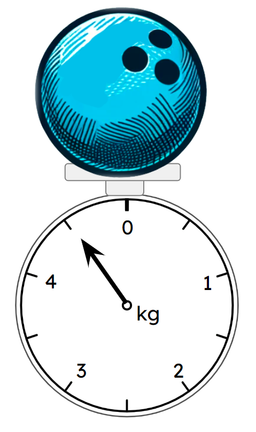
4 kg 100 g
4 kg 200 g
4 kg 250 g
Q4.Starting with the lightest, put these masses in order.
Starting with the lightest, put these masses in order.
Q5.Look at the scales. What is the difference in the mass that these scales are showing?
Look at the scales. What is the difference in the mass that these scales are showing?
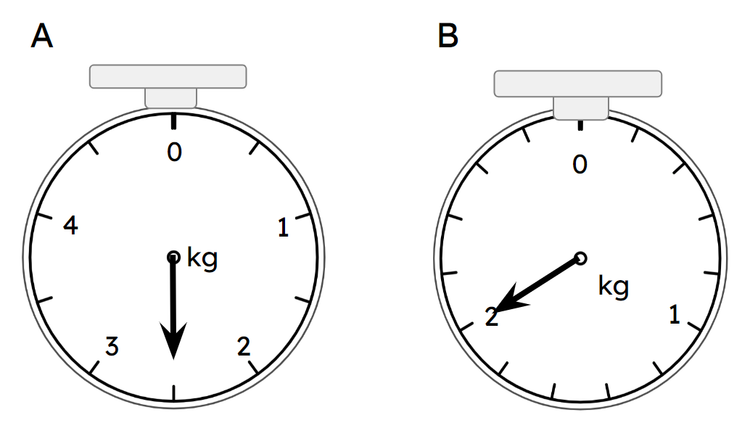
100 g
200 g
250 g
Q6.Aisha has some apples and pears. The apples have a mass of 3 kg and the pears have a mass of 800 g. Aisha puts the apples and pears on the same scales. What is their total mass?
Aisha has some apples and pears. The apples have a mass of 3 kg and the pears have a mass of 800 g. Aisha puts the apples and pears on the same scales. What is their total mass?
