Measuring reflected light: do and review
I can investigate how changing the angle of a mirror affects the angle of reflected light.


- Year 6
Measuring reflected light: do and review
I can investigate how changing the angle of a mirror affects the angle of reflected light.
Lesson details
Key learning points
- If you change the angle that light hits a surface, the angle of reflection will also change.
- Mirrors are highly reflective. They are sometimes used to deliberately change the direction that light travels.
- Reflected light bounces off the surface at the same angle as it hits it.
- When you measure angles, it is acceptable for results to vary slightly because it is difficult to measure perfectly.
Keywords
Reflected - If light is reflected it is bounced off a surface.
Angle - An angle is the space between two straight lines which join at a vertex or point.
Protractor - A protractor is a piece of equipment used to measure and draw angles.
Results - The results of a test or enquiry is what happened or what was found out.
Evidence - Evidence is information which helps us to prove that something is true or not true.
Common misconception
Only shiny surfaces reflect light. Light does not always travel in straight lines when it bounces off a mirror.
The lesson gives the children a chance to explore reflection of light in mirrors to see for themselves that it does reflect in a straight line.


Equipment
Torches, mirrors, sticky tack, protractors, large sheets of paper, marker pens.

Content guidance
- Risk assessment required - equipment

Supervision
Adult supervision required

Licence
Lesson video
Loading...
Prior knowledge starter quiz
6 Questions
Q1.What is the name of the equipment shown in the image?

Q2.Mirrors are highly reflective and are sometimes used to deliberately the direction that light travels.
Q3.What do you measure using a protractor?
Q4.What units are used to describe the size of angles?
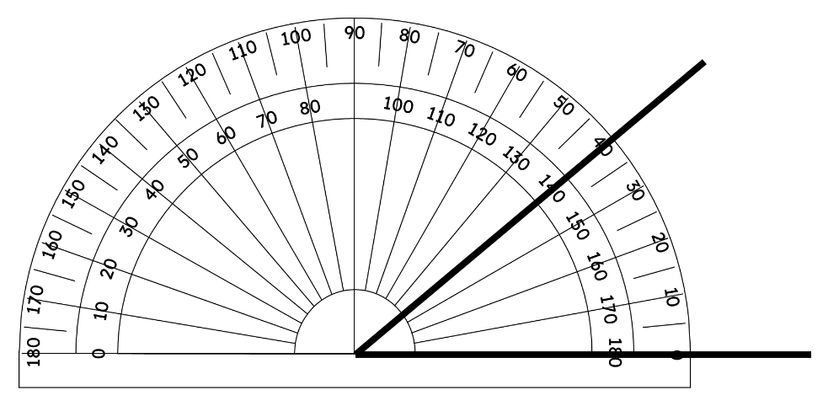
Q5.What angle is shown in this image?
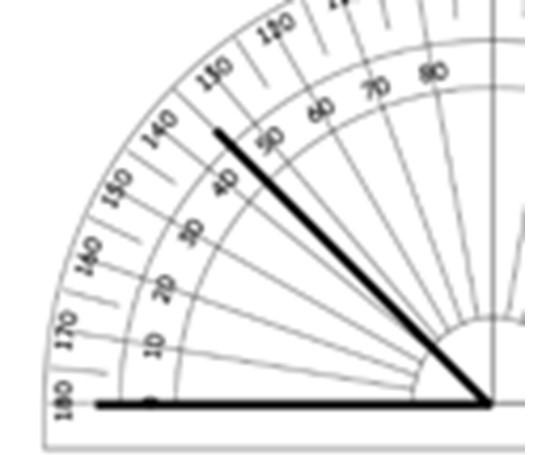
Q6.How could you change the angle of reflected light?
Assessment exit quiz
6 Questions
Q1.Mirrors, metal spoons and kitchen foil are made from highly materials.
Q2.Because they are highly reflective, mirrors are used to...
Q3.Reflected light bounces off surfaces at the same as it hits them.
Q4.If light hits a mirror at an angle of 30° against the normal line, what will the angle of the reflected light be?
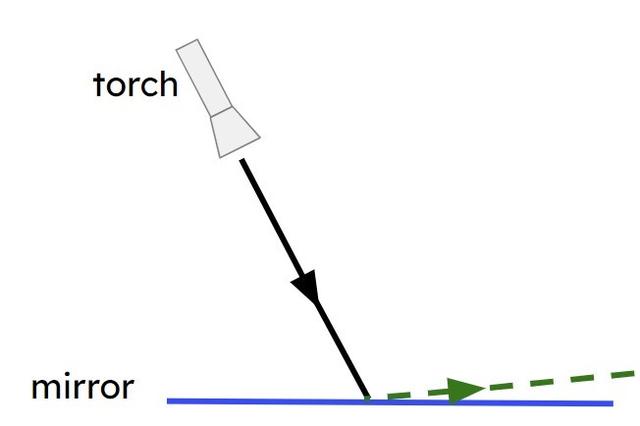
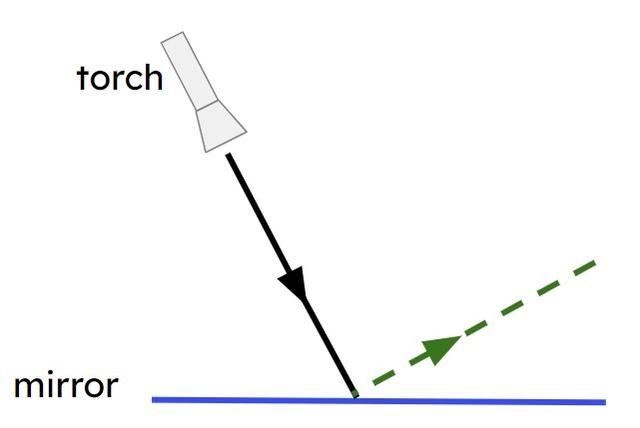
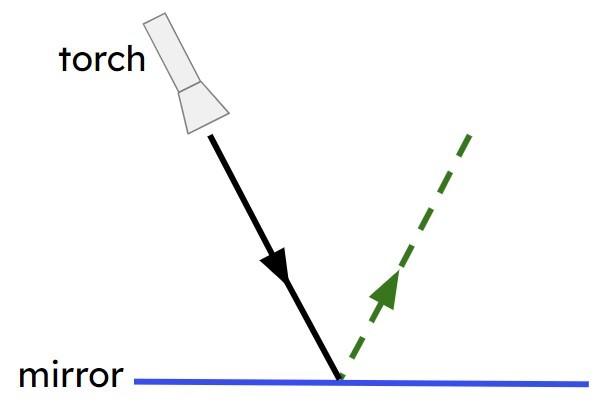
Q5.Which of these images shows the correct angle of the reflected light?