Measuring reflected light: plan
I can plan an investigation to see how changing the angle of a mirror affects the angle of reflected light.


- Year 6
Measuring reflected light: plan
I can plan an investigation to see how changing the angle of a mirror affects the angle of reflected light.
Lesson details
Key learning points
- An angle is the space between two straight lines which join at a vertex or point.
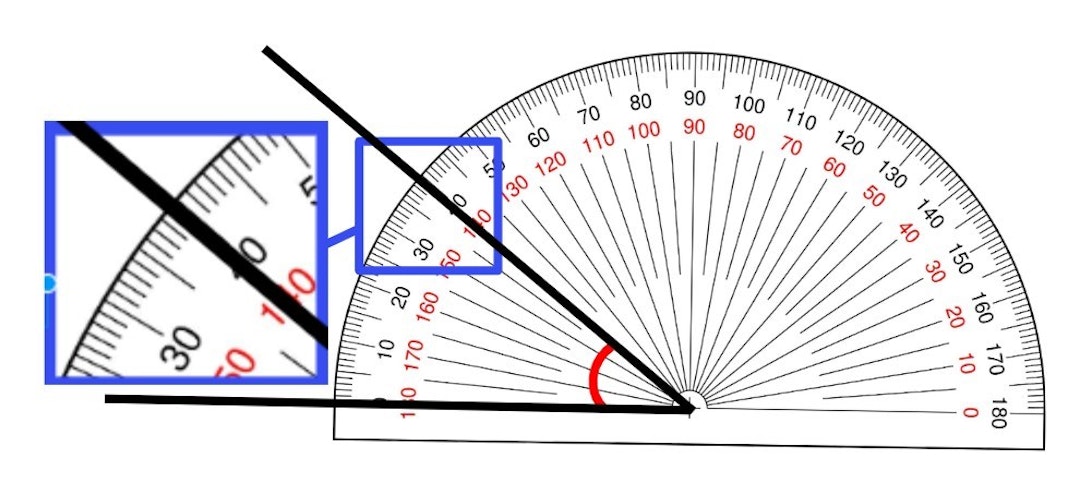
- A protractor is a piece of equipment used to measure and draw angles.
- When we measure the angle of light hitting a surface, we measure the angle between that light and the normal line.
- The normal line is an imaginary line that is at a right angle to the surface.
Keywords
Reflected - If light is reflected it is bounced off a surface.
Angle - An angle is the space between two straight lines which join at a vertex or point.
Protractor - A protractor is a piece of equipment used to measure and draw angles.
Patterns - Scientists look for patterns in data to answer their questions.
Normal line - The normal line is an imaginary line that is at a right angle to a surface on which light is reflected.
Common misconception
To measure the angle where light hits a surface, measure in between the beam of light and the surface.
The lesson gives children an opportunity to explore a new concept: the normal line. They should become familiar with measuring between the beam of light and the normal line drawn at a right angle to the surface.


Equipment
Protractors, mirrors, torches.

Content guidance
- Risk assessment required - equipment

Supervision
Adult supervision required

Licence
Lesson video
Loading...
Prior knowledge starter quiz
6 Questions
Q1.What is darkness?
Q2.What is the name of the equipment shown in the image?
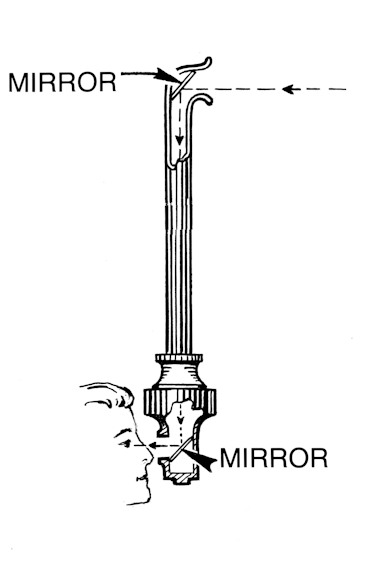
Q3.What do periscopes help us to do?
Q4.In the eye, what is the pupil?
Q5.How are mirrors useful to us?
Q6.Match the method of recording to the description.

Assessment exit quiz
6 Questions
Q1.When light is off the surface of an object, it changes direction.
Q2.An is the space between two straight lines which join at a vertex or point.
Q3.What piece of equipment is used to measure the size of angles?
Q4.Match the unit to the measurement they are used for.
Q5.What is the size of the angle in this diagram?