


New
New
Measuring the volume of liquids using millilitres.
I can measure the volume of liquids using millilitres.


Lesson 5 of 10
New
New
- Year 3
Measuring the volume of liquids using millilitres.
I can measure the volume of liquids using millilitres.
Lesson details
Key learning points
- The volume of liquid in a container can be measured in millilitres.
- When comparing volume, if the containers are the same, we can compare the level of liquid in the container.
- When comparing volume, if the containers are different, we need to take read the scale on the measuring container.
- Counting in 10s, 20s, 25s and 50s helps to read scales.
Keywords
Volume - Volume is the amount of space that an object takes up. In this case, the specific amount of liquid in a container.
Millilitre - The millilitre is a metric measure of capacity or volume. A millilitre is a very small amount of liquid. The abbreviation is ml.
Common misconception
Children may read the scale incorrectly - confusion between equal parts and marks on the scale.
The scale is a number line. Remember to look at the number of equal parts between the marked numbers not the marks themselves.
This should be a practical lesson where possible. Children need to have physical experience of using different containers and reading different scales when measuring volume. No more than 1,000 ml for this lesson.

Teacher tip

Licence
This content is © Oak National Academy Limited (2026), licensed on Open Government Licence version 3.0 except where otherwise stated. See Oak's terms & conditions (Collection 2).
Lesson video
Loading...
Prior knowledge starter quiz
6 Questions
Q1.Look at this sequence of numbers. Which number would come next?
Look at this sequence of numbers. Which number would come next?

Q2.Look at the number line. Label the missing number.
Look at the number line. Label the missing number.

Q3.Look at the scale on the jug. Which number is missing?
Look at the scale on the jug. Which number is missing?
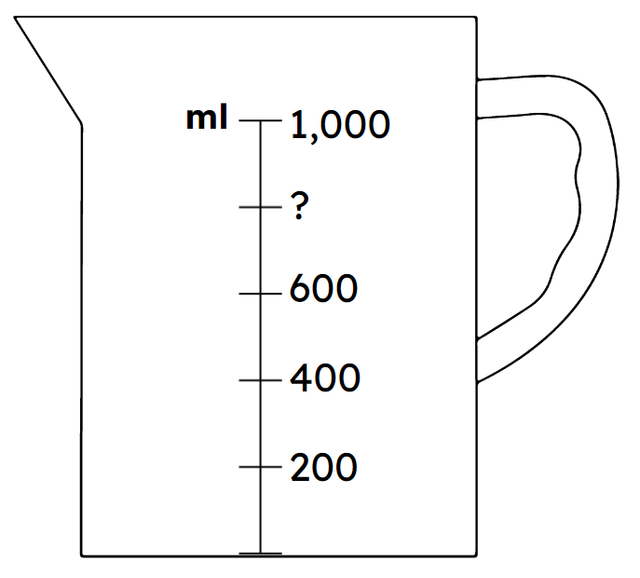
650
700
750
Q4.Look at the containers. Which has the smallest capacity?
Look at the containers. Which has the smallest capacity?
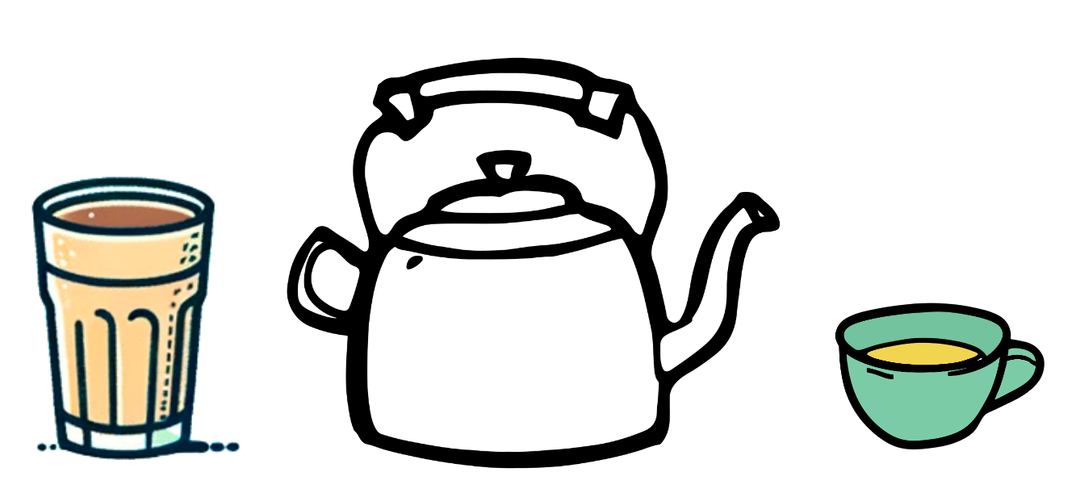
The glass has the smallest capacity.
The kettle has the smallest capacity.
Q5.Look at the jugs. Which contains the greatest volume of liquid?
Look at the jugs. Which contains the greatest volume of liquid?
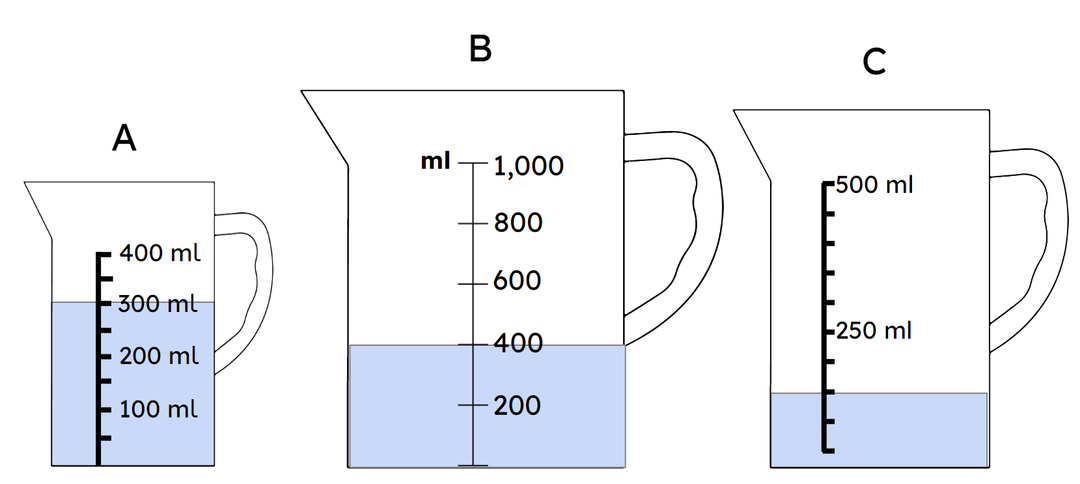
A
C
Q6.Starting with the smallest volume, put these jugs in the order of the volume of liquid that they contain.
Starting with the smallest volume, put these jugs in the order of the volume of liquid that they contain.
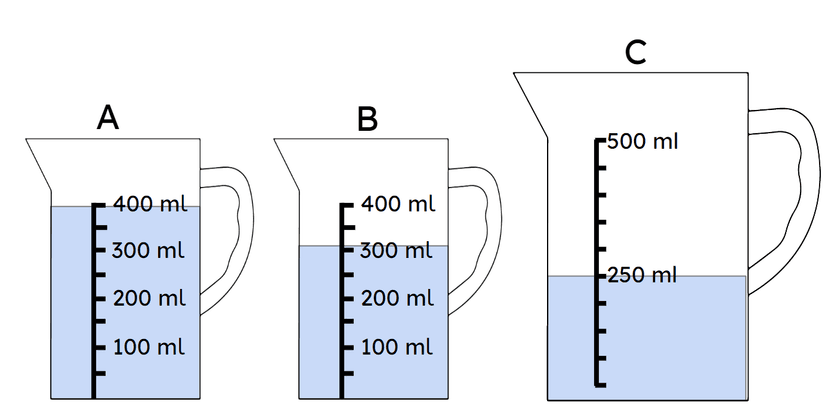
Assessment exit quiz
6 Questions
Q1.Look at the scale on this jug. How many equal parts are there between the marked interval of 1,000?
Look at the scale on this jug. How many equal parts are there between the marked interval of 1,000?
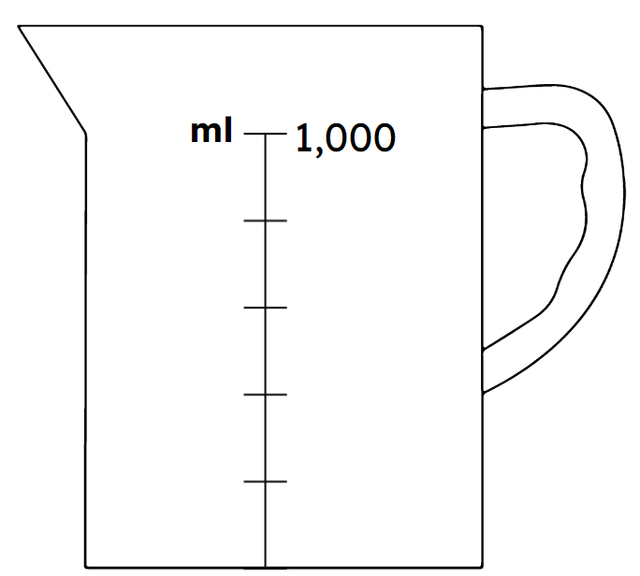
4
6
Q2.Look at the scale on this jug. What is the value of each unmarked part?
Look at the scale on this jug. What is the value of each unmarked part?
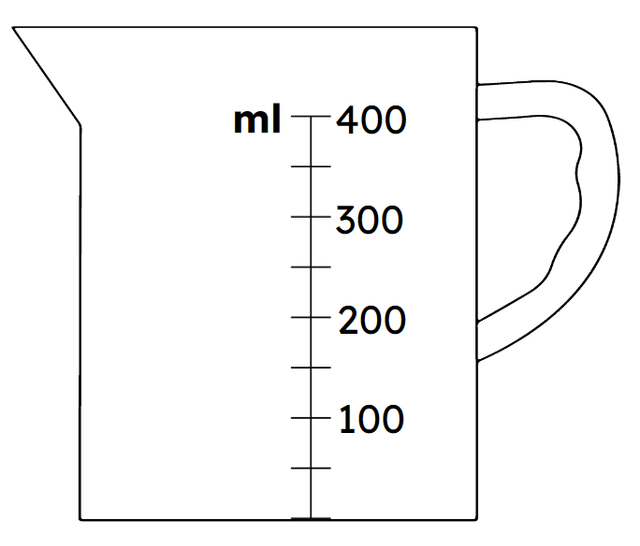
Q3.True or false? The volume of liquid in this jug is 120 ml?
True or false? The volume of liquid in this jug is 120 ml?
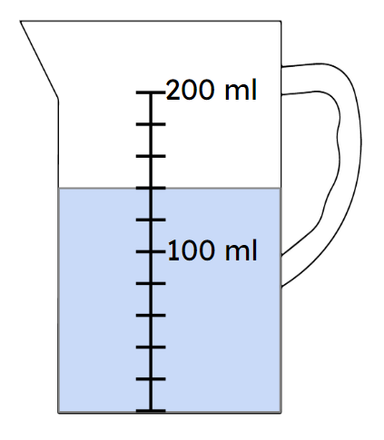
True
Q4.Match the jug to the volume of liquid that it is holding.
Match the jug to the volume of liquid that it is holding.
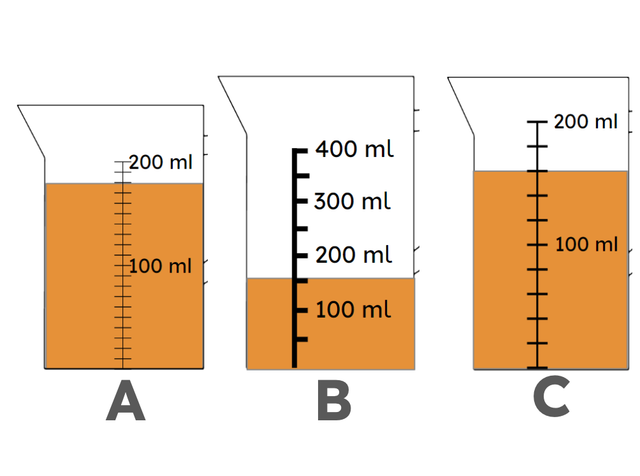

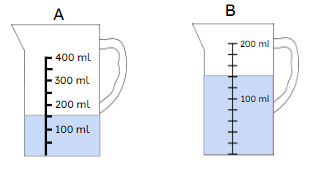
Q5.Look at the jugs. How much more water is in Jug A then Jug B?
Look at the jugs. How much more water is in Jug A then Jug B?
They both hold the same volume of water.
30 ml
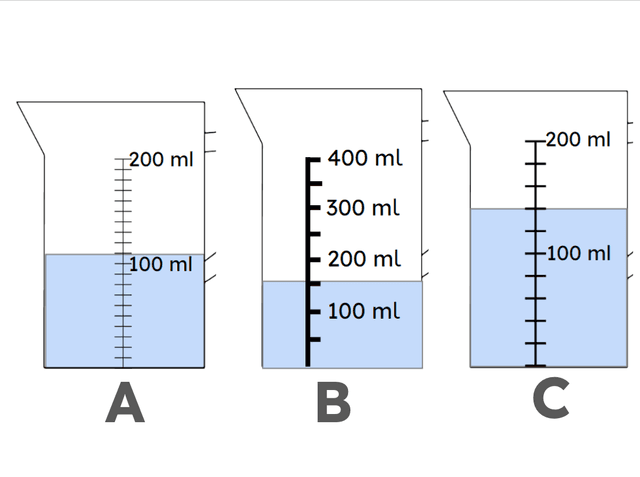
Q6.A jug contains 75 ml water. Another 75 ml of water is poured into the jug. Which of these jugs represents the volume of water that would now be in the jug?
A jug contains 75 ml water. Another 75 ml of water is poured into the jug. Which of these jugs represents the volume of water that would now be in the jug?
A
C
