


Metallic elements
I can describe the properties of metal elements and compare them to non-metal elements.


- Year 8
Metallic elements
I can describe the properties of metal elements and compare them to non-metal elements.
Lesson details
Key learning points
- Metals are good thermal and electrical conductors, they are strong, shiny, malleable and ductile.
- Non-metals are normally poor thermal and electrical conductors, they are not strong, and are dull and brittle.
- Graphite is a non-metal that is a good electrical and thermal conductor.
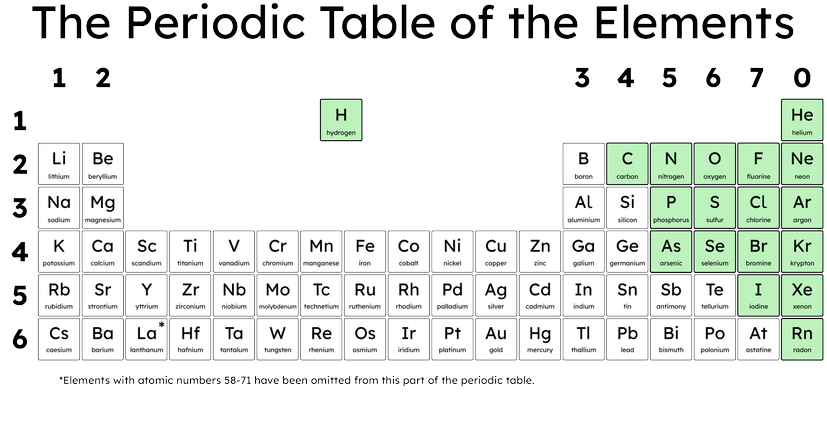
- Metals are found on the left side and in the middle of the periodic table, non-metals on the right side.
Keywords
Thermal conductor - A thermal conductor is a substance that transfers heat from one place to another place.
Electrical conductor - An electrical conductor is a substance that allows a flow of charge (electrical current).
Malleable - A malleable substance has the ability to be formed into a shape.
Brittle - A brittle substance has the ability to break up easily.
Ductile - A ductile substance has the ability to be pulled into a wire.
Common misconception
There are exceptions for both metals and non-metals, which have different properties.
Use examples such as mercury and graphite in your teaching.


Equipment

Licence
Lesson video
Loading...
Prior knowledge starter quiz
6 Questions
Q1.An element is a pure substance made from only one of atom.
Q2.Which of the following are physical properties of substances?
Q3.Match the physical property with its description.

Q4.Which of the following is a pure substance?
Q5.When sodium metal is added to chlorine gas a yellow-orange flame and white solid form. Select what had happened and why.
Q6.Use the periodic table provided to match the names of the elements with their symbols.
Assessment exit quiz
6 Questions
Q1.Which of the following properties are most likely associated with metals?
Q2.Graphite is a non-metal. Why is it unique?
Q3.What does 'malleable' mean?
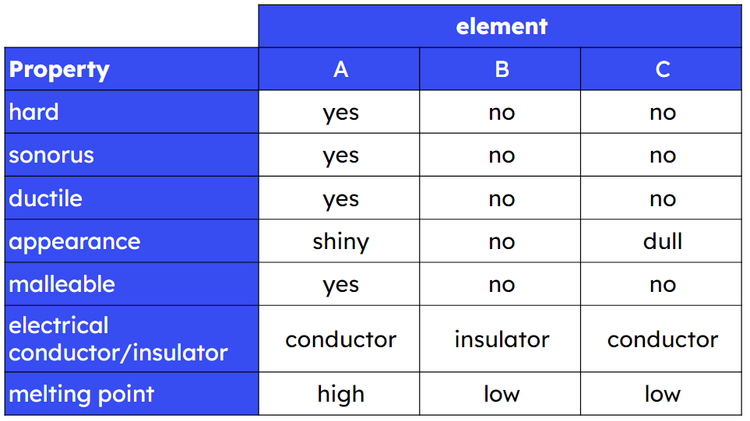
Q4.Look at the table below and select which element is most likely to be a metal.
Q5.True or false? The elements highlighted in green in this image are all metals.
Q6.Match the properties to their meanings.
