More about fossil formation
I can describe a range of different ways in which fossils can be formed.


- Year 3
More about fossil formation
I can describe a range of different ways in which fossils can be formed.
Lesson details
Key learning points
- Palaeontology is the study of fossils.
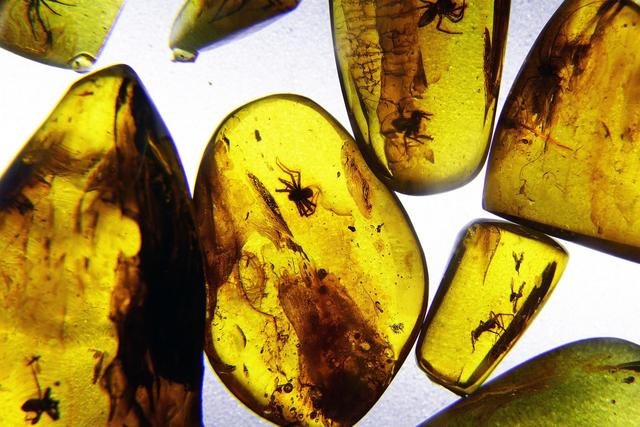
- Some fossils are formed when tree resin hardens into amber, with living things trapped inside.
- Models can be used to show how fossils are formed in different ways.
- Some fossils are formed when sediment and minerals fill the hard parts of living things that have died.
Keywords
Palaeontology - Palaeontology is the study of fossils and how life on Earth has changed over millions of years.
Fossil - A fossil is the remains or imprint of living things that are sometimes preserved in rock.
Resin - Resin is a sticky substance which is produced by some trees.
Minerals - Minerals occur naturally and can be dug out of the ground.
Sediment - Sediment is solid material that is moved and deposited in a new location.
Common misconception
Pupils may believe that old discovered objects, like bits of pottery, coins and jewellery are fossils. They also may believe that the fossil is always the actual plant or animal itself.
Being clear that only things that have been alive may become fossils, and not all living things are fossilised.


Equipment
See additional guidance.

Content guidance
- Risk assessment required - equipment

Supervision
Adult supervision required

Licence
Lesson video
Loading...
Prior knowledge starter quiz
6 Questions
Q1. tell us about living things that have lived over 10,000 years ago.

Q2.Which of these things may form a fossil?
Q3.Does every living thing that dies become a fossil over time?
Q4.Which of these things would rarely form a fossil because their bodies are too soft and they would decay too quickly?
Q5.Which of these things may form an imprint fossil?
Q6.Scientists can use models to show how imprint fossils are formed. Put these steps in the right order to create your own imprint fossil model.
Assessment exit quiz
6 Questions
Q1.Palaeontology is the study of .
Q2.Look at the amber fossil in the image. What natural material is this fossil made from?