


New
New


Lesson 3 of 4
New
New
- Year 7
Movement
I can explain how muscles work together to move bones at joints.
Lesson details
Key learning points
- Bones meet at joints.
- Muscles can move bones.
- Muscles can only pull, by contracting, and cannot push.
- Some muscles work together in antagonistic pairs to move bones at a joint.
Keywords
Tendon - A tendon attaches muscle to a bone.
Ligament - A ligament holds two or more bones together at a joint.
Joint - A joint is where two or more bones meet.
Cartilage - Cartilage is a strong, smooth tissue that is found inside a joint.
Antagonistic muscles - Antagonistic muscles work in pairs to move a bone at a joint.
Common misconception
Thinking that muscles can push bones (when in fact they can only pull).
The lesson makes clear that muscles can only pull bones, and work in antagonistic pairs to pull bones in opposite directions.
The second part of the lesson includes photographs and videos from a dissection of a chicken leg, which could also be demonstrated to the class with a real chicken leg and a visualiser.

Teacher tip

Equipment

Content guidance
- Depiction or discussion of sensitive content

Supervision
Adult supervision recommended

Licence
This content is © Oak National Academy Limited (2026), licensed on Open Government Licence version 3.0 except where otherwise stated. See Oak's terms & conditions (Collection 2).
Lesson video
Loading...
Prior knowledge starter quiz
6 Questions
Q1.Muscle tissue is made up of specialised cells called cells.
Muscle tissue is made up of specialised cells called cells.

Q2.Which piece of equipment would enable us to see a muscle cell?
Which piece of equipment would enable us to see a muscle cell?
Oscilloscope
Periscope
Telescope
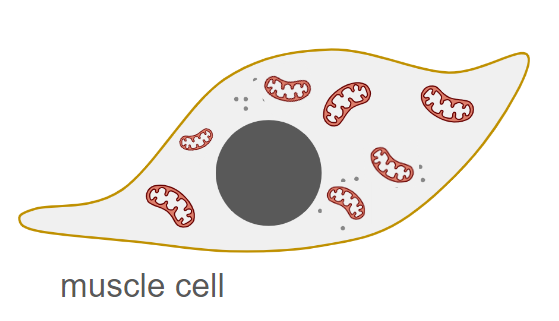
Q3.True or false? Muscle cells have lots of mitochondria to help them contract.
True or false? Muscle cells have lots of mitochondria to help them contract.
False
Q4.Which of the following are real types of muscle tissue?
Which of the following are real types of muscle tissue?
Bone muscle
Digestive muscle
Q5.What is the name of the junction where two bones meet?
What is the name of the junction where two bones meet?
Q6.Which types of muscles are involuntary?
Which types of muscles are involuntary?
Skeletal muscle
Assessment exit quiz
6 Questions
Q1.Which joint is fixed and unable to move?
Which joint is fixed and unable to move?
elbow
knee
Q2.Which statements about hinge joints are correct?
Which statements about hinge joints are correct?
They are found in the skull.
They fix the bones in position.
They allow a circular movement.
Q3.Who is correct?
Who is correct?
Sofia: “Muscles attach directly onto bone.”
Lucas: “Ligaments attach muscle to bone.”
Q4.When a skeletal muscle it pulls on a tendon to move a bone.
When a skeletal muscle it pulls on a tendon to move a bone.
Q5.True or false? Biceps and hamstrings are an example of an antagonistic pair of muscles.
True or false? Biceps and hamstrings are an example of an antagonistic pair of muscles.
True
Q6.When the biceps muscle contracts, the triceps muscle...
When the biceps muscle contracts, the triceps muscle...
