


New
New
Multiply 1-digit numbers by decimal fractions using written methods
I can explain how to multiply 1-digit numbers by decimal fractions using written methods.


Lesson 12 of 15
New
New
- Year 5
Multiply 1-digit numbers by decimal fractions using written methods
I can explain how to multiply 1-digit numbers by decimal fractions using written methods.
Lesson details
Key learning points
- Use scaling to convert the decimal fraction to a whole number then multiply; use scaling to adjust the product.
- If using short multiplication with decimal fractions, align the decimal point in the decimal fraction and product.
Keywords
Estimation - When we estimate, we find a value that is close enough to the right answer, usually with some thought or calculation involved.
Scaling - Scaling is when a given quantity is made ___ times the size. It can be used to adjust the size of a factor. In this lesson, scaling will involve making values 10 or 100 times the size.
Common misconception
The short multiplication algorithm may not be correctly aligned.
Check that the decimal point aligns in the decimal fraction and the product. Scaffolding with place value columns may support further.
Provide additional scaffolds for those children who are not confident with their times tables. Revisit the short multiplication algorithm prior to the lesson with whole numbers to support children to make connections.

Teacher tip

Licence
This content is © Oak National Academy Limited (2025), licensed on Open Government Licence version 3.0 except where otherwise stated. See Oak's terms & conditions (Collection 2).
Lesson video
Loading...
Prior knowledge starter quiz
6 Questions
Q1.Match the equation to its answer.
Match the equation to its answer.

Q2.Match the equation to its answer.
Match the equation to its answer.
Q3.Round 9.8 to the nearest whole number.
Round 9.8 to the nearest whole number.
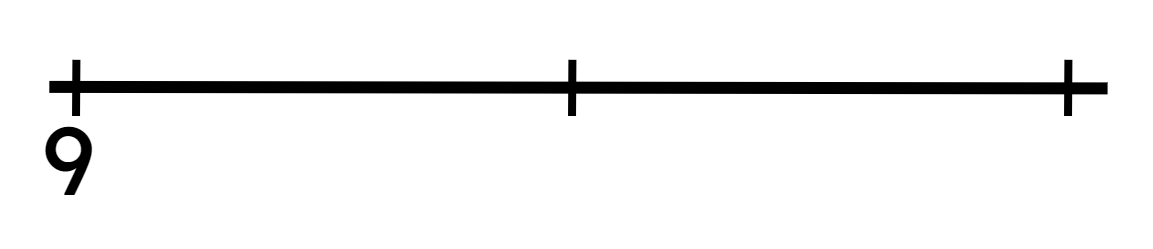
8
9
Q4.Calculate this using short multiplication 48 × 7 =
Calculate this using short multiplication 48 × 7 =
Q5.Calculate this using short multiplication 126 × 5 =
Calculate this using short multiplication 126 × 5 =
Q6.Sofia has £93. Lucas has four times this amount. How much money does Lucas have? £
Sofia has £93. Lucas has four times this amount. How much money does Lucas have? £
Assessment exit quiz
6 Questions
Q1.Calculate 4.3 × 5 =
Use scaling to convert 4.3 into a whole number.
Calculate 4.3 × 5 =
Use scaling to convert 4.3 into a whole number.
Q2.Which of these would be the most sensible estimate to check if this calculation is correct? 5.14 × 3 = 15.42
Which of these would be the most sensible estimate to check if this calculation is correct? 5.14 × 3 = 15.42
5.1 × 3
5.2 × 3
6 × 3
Q3.Calculate 41.8 × 3 =
Calculate 41.8 × 3 =
Q4.Calculate 3.27 × 5 =
Calculate 3.27 × 5 =
Q5.Lucas has 1.9 litres of water. Sofia has three times this amount. How much water does Sofia have? litres
Lucas has 1.9 litres of water. Sofia has three times this amount. How much water does Sofia have? litres
Q6.Sofia has 2.46 kg of flour. Lucas has three times this amount. How much flour does Lucas have? kg
Sofia has 2.46 kg of flour. Lucas has three times this amount. How much flour does Lucas have? kg
