Newton's Third Law
I can draw force diagrams and identify pairs of forces that obey Newton’s Third Law.


- Year 11
- AQA
Newton's Third Law
I can draw force diagrams and identify pairs of forces that obey Newton’s Third Law.
Lesson details
Key learning points
- Some forces require contact between objects, while others do not.
- Forces are vectors and can be drawn as arrows on diagrams.
- A free body diagram shows all of the individual forces acting on a single object.
- For every force there is an equal sized force acting in the opposite direction.
- Force pairs have the same magnitude and type and act in opposite directions between two objects.
Keywords
Non-contact force - A force that exists between objects, even if they are not touching.
Contact force - A force that exists between objects when they are touching.
Resultant force - The overall effect of a set of forces acting on an object is represented by a single resultant force.
Free body diagram - A diagram showing all of the forces acting on a single object.
Newton’s Third Law - Forces come in equal and opposite pairs, which act on pairs of different objects.
Common misconception
Pupils may regard force as a property of an object, expressing ideas such as ‘the object has a force’ and ‘the object runs out of force’.
Describe forces as interactions between two objects, using the phrasing ‘the force of object A on object B’.


Equipment
None required.

Licence
Lesson video
Loading...
Prior knowledge starter quiz
6 Questions
Q1.What is the difference between scalar quantities and vector quantities?
Q2.Which of the following are vector quantities?
Q3.What is the meaning of the prefix 'm' in the units mm and mg?
Q4.What is the meaning of the prefix 'k' in the units km and kg?
Q5.What is the meaning of the prefix 'M' in the units MW and MJ?
Q6.Which of the following lengths are equal to 8.2 m?
Assessment exit quiz
6 Questions
Q1.Match the following key terms to their definition.

Q2.A block rests on a table. Which of the following diagrams correctly shows the weight of the block?
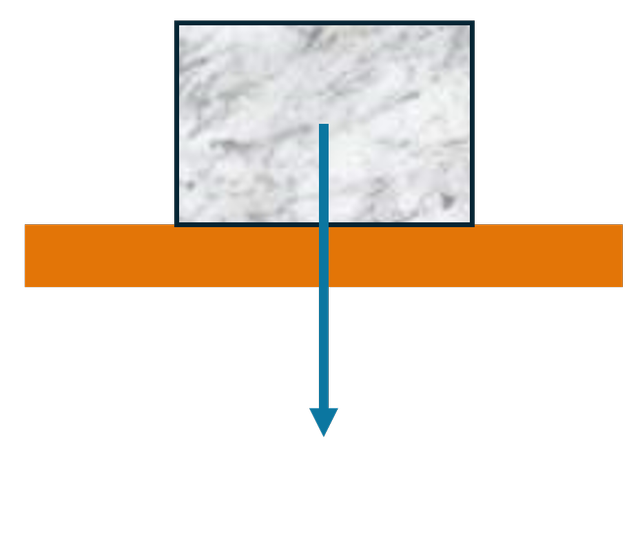
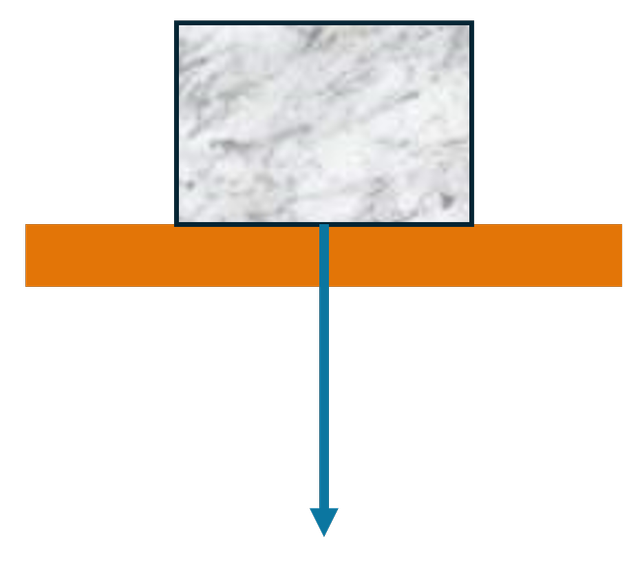
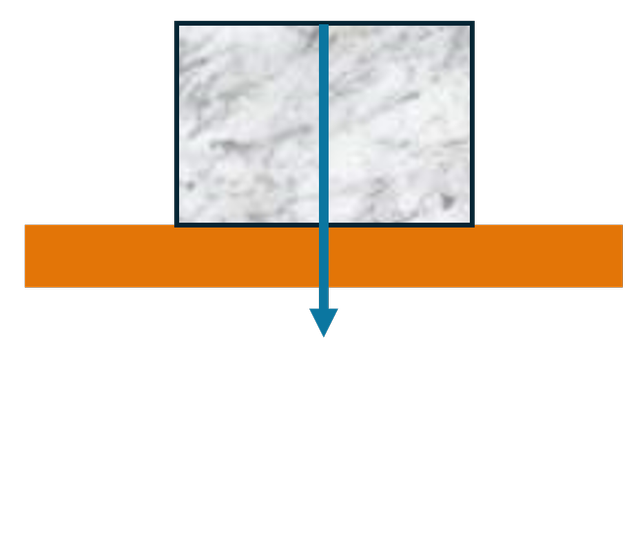
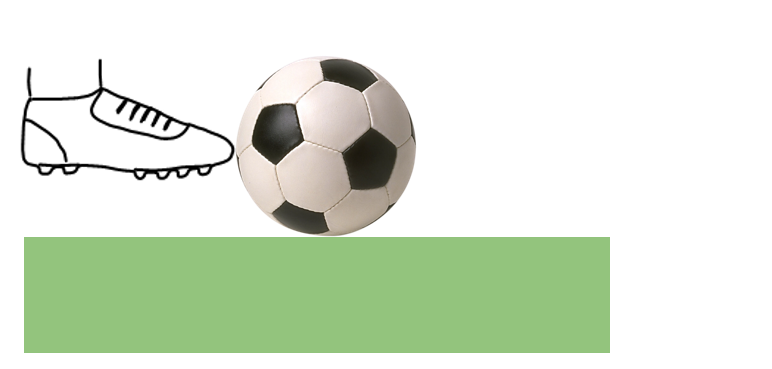
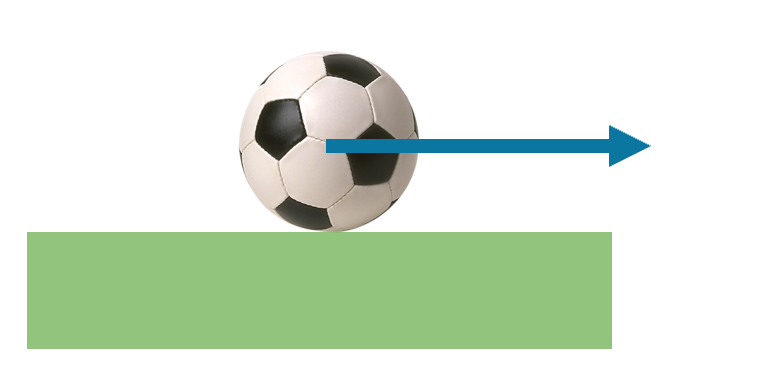
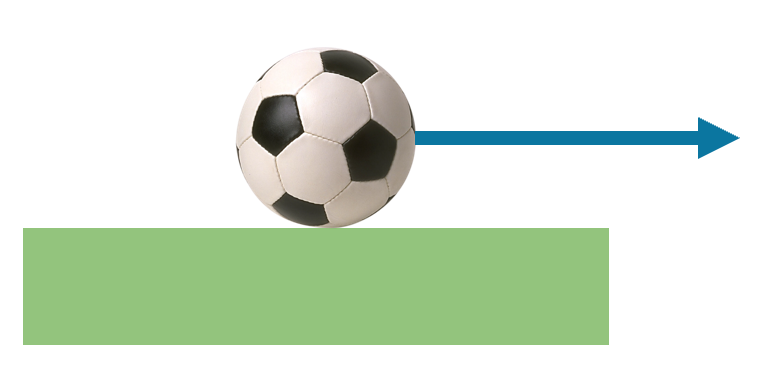
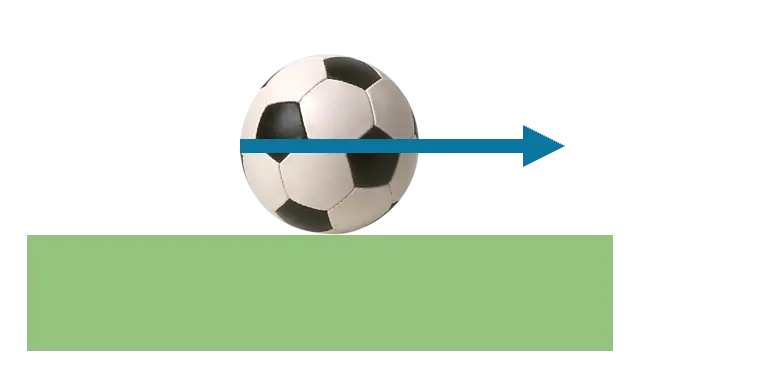
Q3.A footballer kicks a football. Which of the following diagrams correctly shows the force of the boot on the football?
Q4.Newton’s Third Law explains that interactions can be described by a pair of forces, sometimes called a ‘third law pair’. Which of the following are characteristics of the forces in a third law pair?
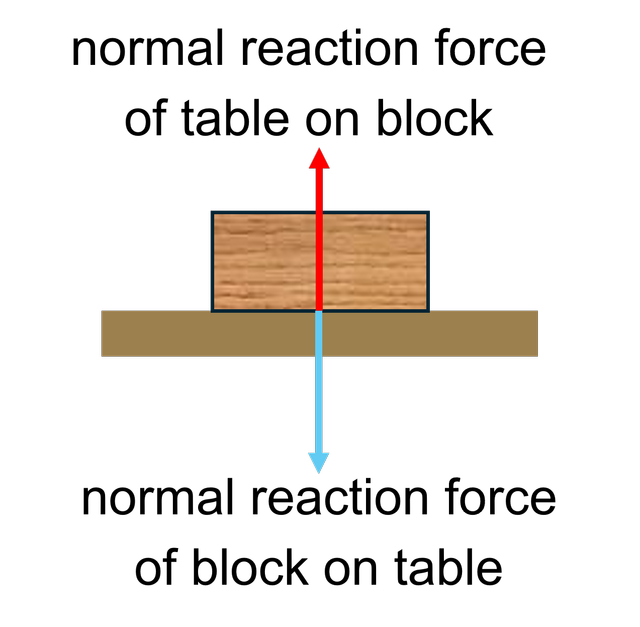
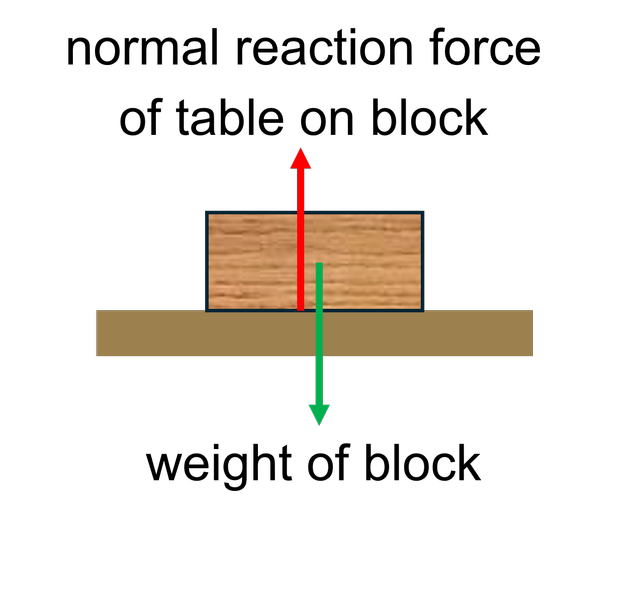
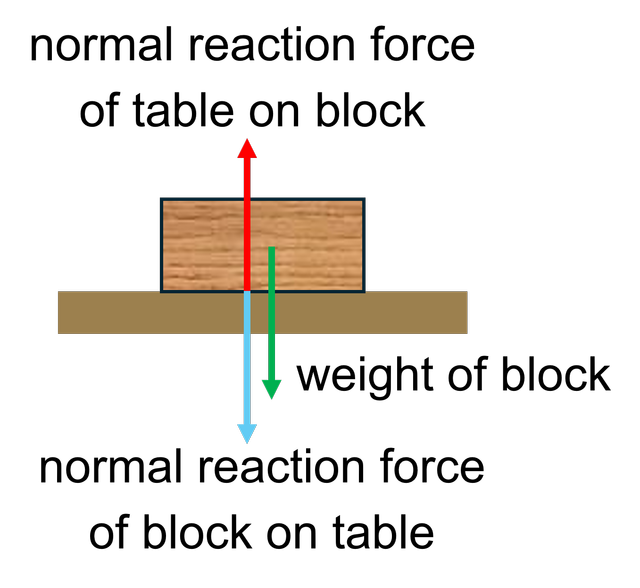
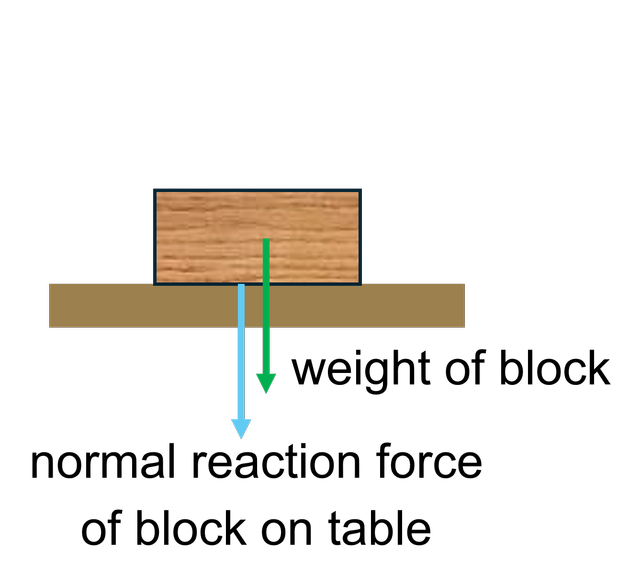
Q5.A block rests on a table. Which of the following is the correct free body diagram for the block?
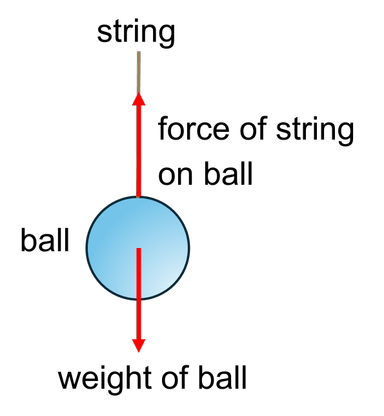
Q6.The diagram shows a ball hanging from a string without moving. Two forces are shown.
Which of the following statements are correct?