


New
New
Patterns in nature
I can carefully observe patterns in nature and record them in my sketchbook.


Lesson 1 of 6
New
New
- Year 3
Patterns in nature
I can carefully observe patterns in nature and record them in my sketchbook.
Lesson details
Key learning points
- Patterns can be found in nature, such as in leaves, shells, animal markings and flowers.
- Natural patterns can be symmetrical, spiral, or repeating.
- Observing and recording patterns in a sketchbook helps us develop ideas for artwork.
- Thick, thin, wavy or curvy lines can be used to create unique patterns.
Keywords
Pattern - a design in which lines, shapes, forms or colours are repeated
Line - a mark made by a moving point, such as a pencil or brush
Symmetry - a shape or object that can be split into two matching halves
Common misconception
Pupils may think that all repeating patterns are natural patterns, even if they are man-made.
To help clarify, you could emphasise that natural patterns are found in nature. Nature walks can be a hands-on way to help students discover natural patterns.
Encourage students to look closely at the world around them—patterns in nature can be found everywhere. Inspire curiosity by integrating cross-curricular links, such as the connection between maths, science and art, to show how patterns form and repeat in different contexts.

Teacher tip

Equipment
Mark-making media, images of patterns in nature, tracing paper.

Licence
This content is © Oak National Academy Limited (2026), licensed on Open Government Licence version 3.0 except where otherwise stated. See Oak's terms & conditions (Collection 2).
Lesson video
Loading...
Prior knowledge starter quiz
6 Questions
Q1.Which of these are natural?
Which of these are natural?
car
iPad
Q2.Which of these best describes a pattern?
Which of these best describes a pattern?
A picture with lots of colour
Anything you can see in nature
Q3.Match the pattern to the correct word.
Match the pattern to the correct word.

Q4.True or false: we can find patterns in nature
True or false: we can find patterns in nature
False
Q5.When we trace something, what are we doing?
When we trace something, what are we doing?
Copying something just by looking at it
Take a photo to look at it later
Q6.True or false: the butterfly's wings in this picture is symmetrical
True or false: the butterfly's wings in this picture is symmetrical
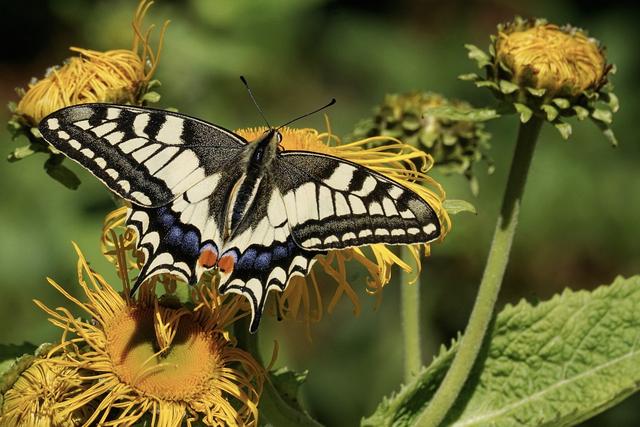
False
Assessment exit quiz
5 Questions
Q1.What is a pattern?
What is a pattern?
A type of animal
A colour of the rainbow
Q2.Which of the following is an example of a natural pattern?
Which of the following is an example of a natural pattern?
The lines on a notebook page
The design on a t-shirt
Q3.What does symmetry mean in patterns?
What does symmetry mean in patterns?
A shape that has no matching sides
A pattern that is colourful
Q4.How can artists use patterns found in nature?
How can artists use patterns found in nature?
They can ignore them
They can only use them in their sketches
Q5.Match where you might find these patterns on a pattern hunt.
Match where you might find these patterns on a pattern hunt.
