


New
New
Pure substances
I can describe the difference between a pure substance and a mixture.


Lesson 1 of 11
New
New
- Year 7
Pure substances
I can describe the difference between a pure substance and a mixture.
Lesson details
Key learning points
- A pure material is made of only one type of substance
- A pure material has a fixed melting point and boiling point
- Impurities change the melting and boiling point of a material
- A mixture contains two or more types of substances which can be easily separated
- Mixtures melt or boil over a range of temperatures
Keywords
Pure substance - A pure substance contains only one type of chemical
Mixture - A mixture is a material that contains two or more different substances which can be physically separated
Impurity - An impurity is a chemical that is found in a material in very small amounts, but can change the material's properties
Common misconception
Pupils mistake common (everyday) usage of pure (i.e. 'pure orange juice) as being a pure substance
'Everyday' usage refers to one *source* whereas scientific usage refers to particle composition. Take particular care when discussing water.
Demo finding the boiling point of water vs the boiling point of different concentrations of salt water or extend into a whole class practical whereby pupils measure the boiling point of different mixtures of salt water and compare.

Teacher tip

Equipment
See additional materials.

Content guidance
- Risk assessment required - chemicals
- Risk assessment required - equipment

Supervision
Adult supervision required

Licence
This content is © Oak National Academy Limited (2026), licensed on Open Government Licence version 3.0 except where otherwise stated. See Oak's terms & conditions (Collection 2).
Lesson video
Loading...
Prior knowledge starter quiz
6 Questions
Q1.The three states of matter are: solid, , and gas.
The three states of matter are: solid, , and gas.
Q2.Which of the following are examples of materials in the solid state at room temperature?
Which of the following are examples of materials in the solid state at room temperature?
oxygen
fizzy drink
milk
Q3.All matter is made up of .
All matter is made up of .
Q4.Match the state of matter with the correct particle diagram.
Match the state of matter with the correct particle diagram.


Q5.Which description correctly describes a substance's melting point?
Which description correctly describes a substance's melting point?
The temperature at which a liquid turns into a gas.
The temperature at which a liquid turns into a solid.
The temperature at which a gas turns into a liquid.
Q6.What properties would you expect of a material with this particle arrangement?
What properties would you expect of a material with this particle arrangement?

can be compressed
particles only vibrate in fixed positions
cannot change shape
Assessment exit quiz
6 Questions
Q1.A material is composed of only one type of chemical.
A material is composed of only one type of chemical.
Q2.Which of the following is an example of a pure substance?
Which of the following is an example of a pure substance?
sea water
air
Q3.What is the name given to a substance found in a material in very small amounts, but which can alter the material's properties?
What is the name given to a substance found in a material in very small amounts, but which can alter the material's properties?
Q4.Complete this sentence: A significant feature of a mixture is that it...
Complete this sentence: A significant feature of a mixture is that it...
is composed of only two chemicals.
boils at a single, distinct temperature.
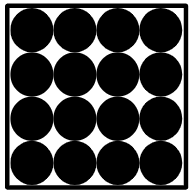
Q5.Which diagram correctly represents a mixture in the solid state?
Which diagram correctly represents a mixture in the solid state?


Q6.Which of these statements about mixtures are true?
Which of these statements about mixtures are true?
Mixtures boil at a single, specific temperature.
Mixtures contain only three types of chemicals.
Mixtures always include water.
