Reaction profiles
I can draw, label and interpret reaction profiles for exothermic and endothermic reactions, and understand the changes these cause in the surroundings.


- Year 10
- AQA
Reaction profiles
I can draw, label and interpret reaction profiles for exothermic and endothermic reactions, and understand the changes these cause in the surroundings.
Lesson details
Key learning points
- A reaction profile compares the amount of energy the products of a reaction have compared to the reactants.
- Exothermic chemical reactions transfer energy from reactants to the surroundings causing an increase in temperature.
- Endothermic chemical reactions transfer energy from the surroundings to the products causing a decrease in temperature.
- Activation energy is the minimum amount of energy transferred to reactants that allows a chemical reaction to start.
Keywords
Exothermic - An exothermic chemical reaction is a type of reaction in which energy is transferred from the reactants to the surroundings, e.g. combustion.
Endothermic - An endothermic chemical reaction is a type of reaction in which energy is transferred from the surroundings to the products, e.g. photosynthesis.
Activation energy - The minimum energy that the particles must have in order to react is known as the activation energy.
Reaction profile - A reaction profile is a diagram showing the energy changes during exothermic and endothermic reactions.
Common misconception
Pupils often confuse energy with temperature and therefore expect the products to be higher than the reactants for exothermic reactions i.e. due to temperature increase, and lower for endothermic.
It is useful to discuss the energy transfers occurring during the reaction e.g. exothermic reactions involve the reactant's chemical energy store converting to a smaller chemical energy store in the products and a thermal energy store.


Licence
Lesson video
Loading...
Prior knowledge starter quiz
6 Questions
Q1.What is the role of a catalyst in a chemical reaction?

Q2.What happens during an exothermic reaction?
Q3. What happens during an endothermic reaction?
Q4. is needed for a chemical reaction to start.
Q5.What is energy transfer in a chemical reaction?
Q6.What is the role of activation energy in a chemical reaction?
Assessment exit quiz
6 Questions
Q1.What does a reaction profile show?
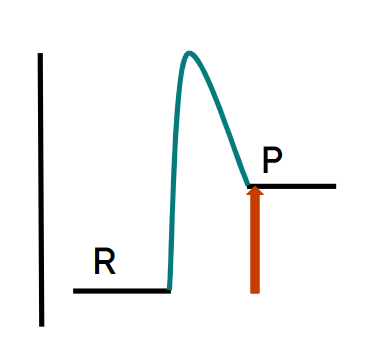
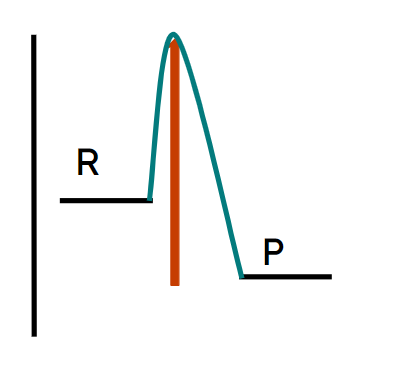
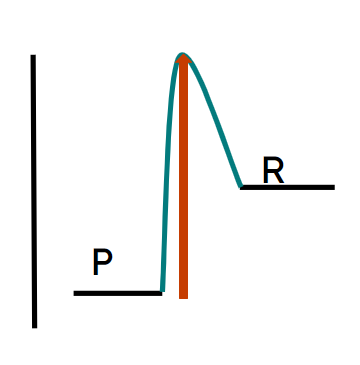
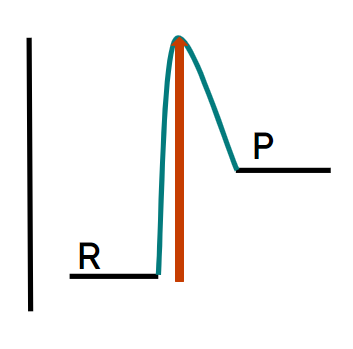
Q2.Which of the following reaction profiles shows an endothermic reaction?
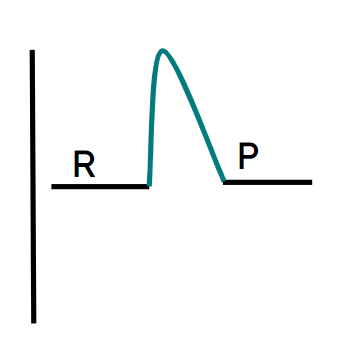
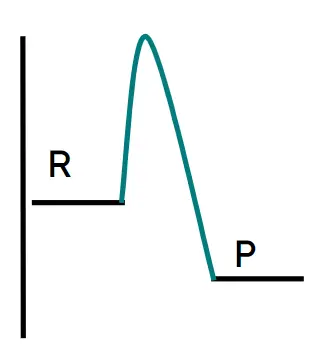
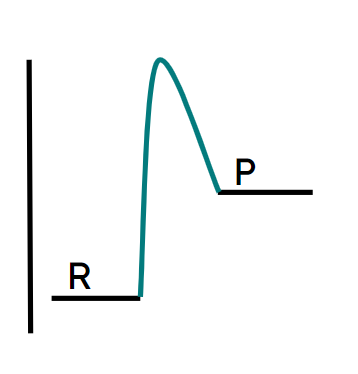
Q3.Which of the following reaction profiles correctly represents the activation energy of the reaction with a red arrow, and where R is the reactant and P is the product?