Reflected light: do and review
I can carry out and review an investigation to compare different materials based on how reflective they are.


- Year 3
Reflected light: do and review
I can carry out and review an investigation to compare different materials based on how reflective they are.


Lesson details
Key learning points
- When light travels towards a surface and bounces off it, this is called reflected light.
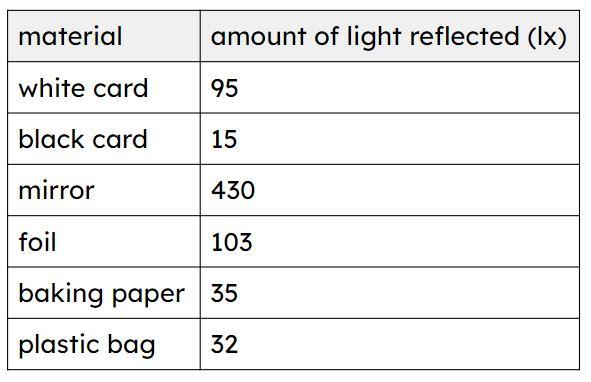
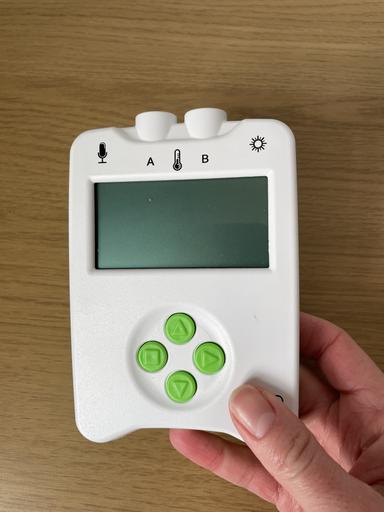
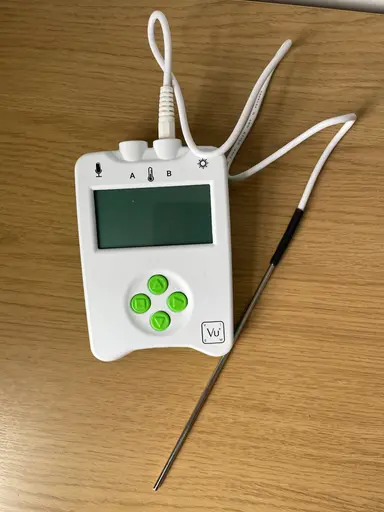
- A data logger can be used to record the amount of light reflected from different surfaces in lux.
- The results of an investigation can be recorded in a table and used to make decisions about different materials.
- The best surfaces for reflecting light are very smooth, such as a glass mirror or polished metal.
- Scientists evaluate every stage of an investigation to suggest improvements.
Keywords
Reflect - To reflect light is when light hits a surface and bounces off.
Surface - The surface is the top or outside layer of something.
Result - The result of a test or enquiry is what happened or what was found out.
Evaluate - To evaluate is to think about what you did and suggest any changes or improvements.
Improvement - An improvement is when something gets better or when you make it better.
Common misconception
All materials reflect the same amount of light.
Explanation that we can measure the differing amounts of light reflected by different materials.


Equipment
Rulers, data loggers, torches, materials: white card, black card, foil, baking paper, plastic bag, cotton fabric, mirror, laminated paper.

Content guidance
- Exploration of objects

Supervision
Adult supervision recommended

Licence
Lesson video
Loading...
Prior knowledge starter quiz
6 Questions
Q1.When light is reflected, it ...

Q2.Which of these is a light source?
Q3.Which of these is needed to reflect light?
Q4.Which word describes a surface that sends back most of the light that shines on it?
Q5.Which of these can we use to record how much light there is?
Q6.Light is measured in ...
Assessment exit quiz
6 Questions
Q1.What is reflected light?
Q2.What do we use to measure the amount of light?
Q3.What are the results of an investigation?
Q4.The results below have been recorded in a .....