New
New
Reflection of light
I can recognise, draw and describe how light and other waves can reflect from different surfaces, using rays and wavefronts.


Lesson 1 of 7
New
New
- Year 11
- AQA
Reflection of light
I can recognise, draw and describe how light and other waves can reflect from different surfaces, using rays and wavefronts.
Lesson details
Key learning points
- Different surfaces can scatter light or reflect light in a regular way.
- The angle of incidence equals the angle of reflection. Angles are measured from the normal.
- Light can be thought of as a wave (ripples) in electric and magnetic fields.
- Like all waves, light can be represented using rays or wavefronts.
Keywords
Ray - A ray is a straight line drawn to represent the direction that a light wave travels.
Normal - The normal is an imaginary line drawn at 90° to a surface.
Wavefront - Wavefronts are lines drawn to represent peaks of a wave.
Common misconception
Pupils often think that light rays are actual physical things that are the constituents of light.
It needs to be made explicit through teaching that light rays are imaginary lines that show the direction in which light is travelling.
Scattering and more regular reflection can be demonstrated engagingly using a torch or laserpen aimed at flat kitchen foil and then crumpled kitchen foil. 'Pepper's ghost' is a well-known and engaging illusion that demonstrates the partial transmission and reflection of light.

Teacher tip

Equipment

Licence
This content is © Oak National Academy Limited (2025), licensed on Open Government Licence version 3.0 except where otherwise stated. See Oak's terms & conditions (Collection 2).
Lesson video
Loading...
Prior knowledge starter quiz
6 Questions
Q1.Match each angle to its description.
Match each angle to its description.

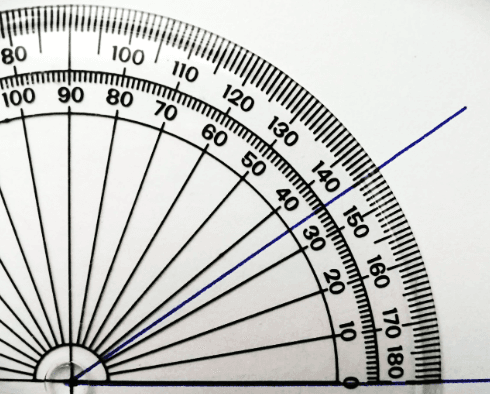
Q2.The protractor is measuring the angle between the two lines. What is the correct measurement?
The protractor is measuring the angle between the two lines. What is the correct measurement?
45°
145°
155°
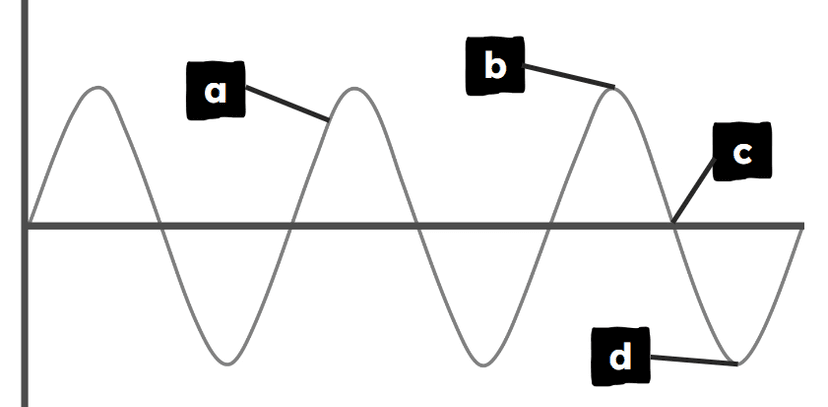
Q3.Which letter is labelling a peak (also called a crest) of this wave?
Which letter is labelling a peak (also called a crest) of this wave?
a
c
d
Q4.A person holds a lit candle in front of a mirror and is looking at the candle’s reflection. Starting with where the light is given out, put these objects into the order of the path the light takes.
A person holds a lit candle in front of a mirror and is looking at the candle’s reflection. Starting with where the light is given out, put these objects into the order of the path the light takes.
Q5.What happens to light when it reflects off an object?
What happens to light when it reflects off an object?
the light enters the object but does not come back out
the light passes through the object
the light continues travelling in the same direction
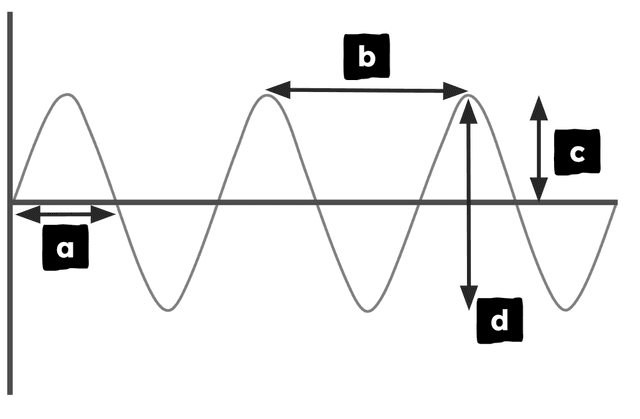
Q6.Which letter represents one wavelength?
Which letter represents one wavelength?
a
c
d
Assessment exit quiz
6 Questions
Q1.Match each word with its definition.
Match each word with its definition.
Q2.A ray diagram shows a light ray. Which statement about the ray is correct?
A ray diagram shows a light ray. Which statement about the ray is correct?
The ray in the diagram represents one of the many rays that make up the light.
The length of the ray represents the wavelength of the wave.
Q3.A person speaks to another person across a room. Which statements are correct?
A person speaks to another person across a room. Which statements are correct?
Speaking makes air particles travel from the speaker to the listener.
Q4.Which statement describes the law of reflection?
Which statement describes the law of reflection?
The incident ray equals the reflected ray.
The incident ray is perpendicular to the reflected ray.
The angle of incidence and the angle of reflection add to 90°.
Q5.Here is a ray diagram for the reflection of a wave. In which diagram is the angle of reflection shaded?
Here is a ray diagram for the reflection of a wave. In which diagram is the angle of reflection shaded?
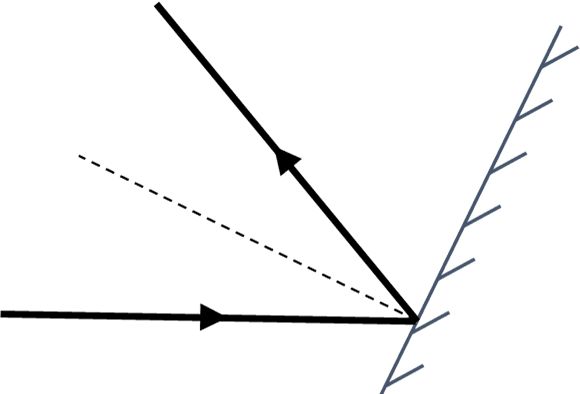
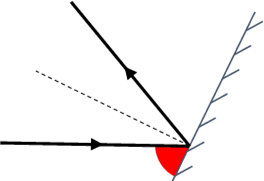
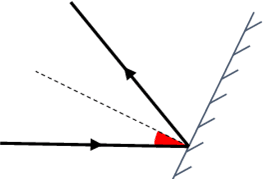
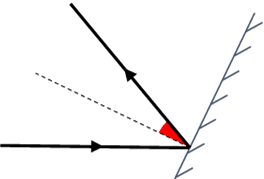
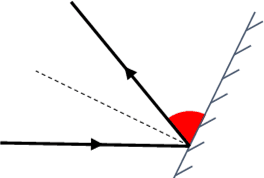
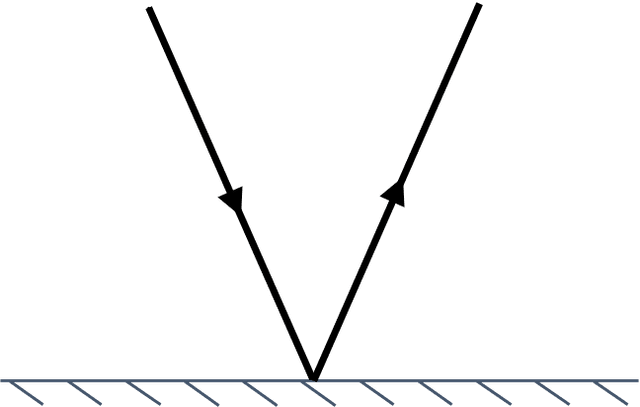
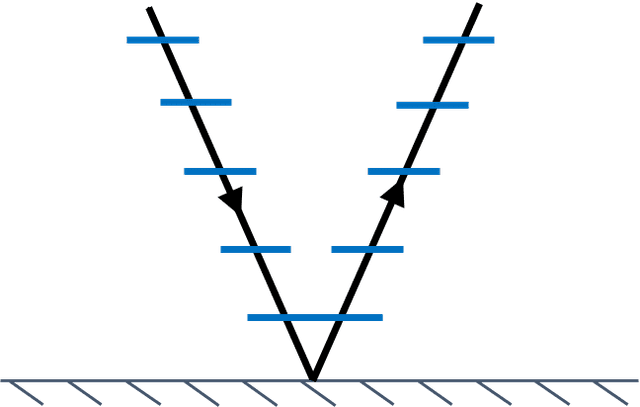
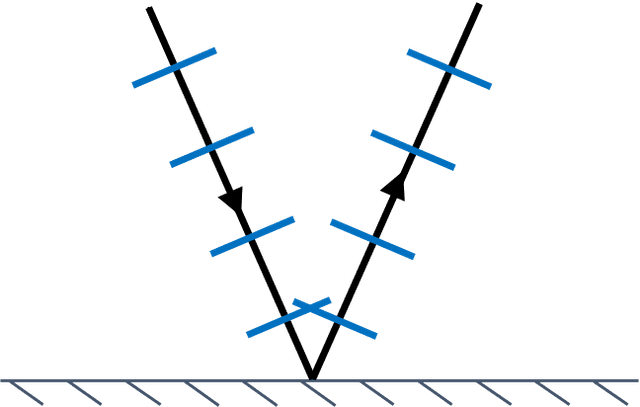
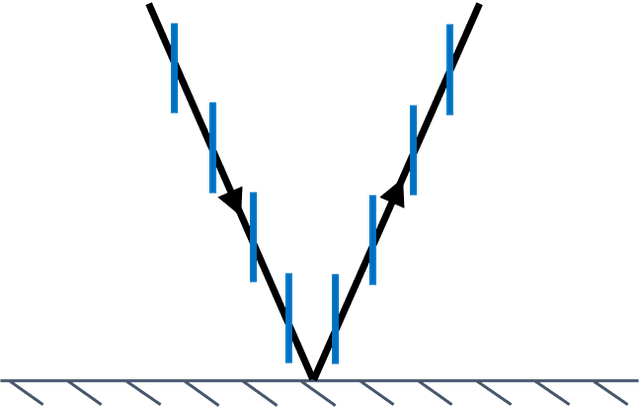
Q6.The ray diagram represents the reflection of a light wave by a mirror. Which diagram correctly shows the wavefronts?
The ray diagram represents the reflection of a light wave by a mirror. Which diagram correctly shows the wavefronts?