


New
New
Represent counting in sevens as the 7 times table
I can represent counting in sevens as the 7 times table.


Lesson 1 of 10
New
New
- Year 4
Represent counting in sevens as the 7 times table
I can represent counting in sevens as the 7 times table.
Lesson details
Key learning points
- Counting in sevens is the pattern of the 7 times table.
- Counting in sevens can be represented in different ways.
- Counting in sevens can help you to solve problems.
Keywords
Multiple - A multiple is the result of multiplying a number by another whole number.
Skip count - Counting in steps of equal size. For example, skip counting in twos means to count in equal steps of two.
Common misconception
Pupils may think that the 7 times table is just counting by sevens without recognising it as multiplication.
Emphasise that the 7 times table is not just counting by sevens but a series of products of 7 and whole numbers (e.g., 7 × 1, 7 × 2, etc.).
Use visual aids like number lines or arrays to show how multiplying by 7 repeatedly adds seven to the previous product. Continue to practice 7 times tables at any given opportunity.

Teacher tip

Licence
This content is © Oak National Academy Limited (2025), licensed on Open Government Licence version 3.0 except where otherwise stated. See Oak's terms & conditions (Collection 2).
Lesson video
Loading...
Prior knowledge starter quiz
6 Questions
Q1.Look at this image. Which numbers are factors for the total number of spots on the dice?
Look at this image. Which numbers are factors for the total number of spots on the dice?
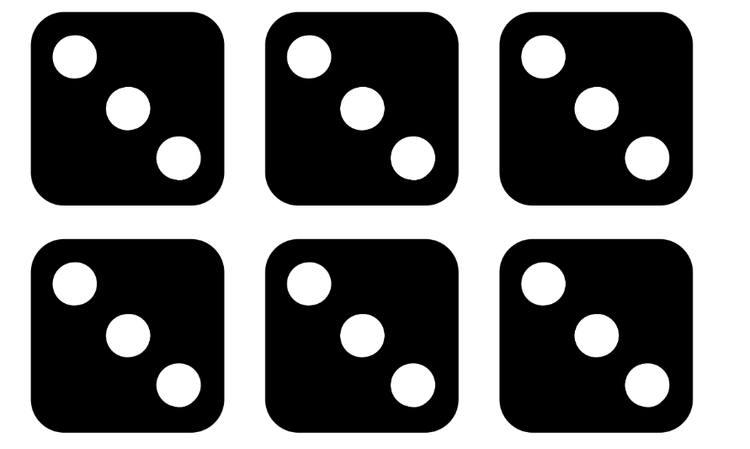
2
18
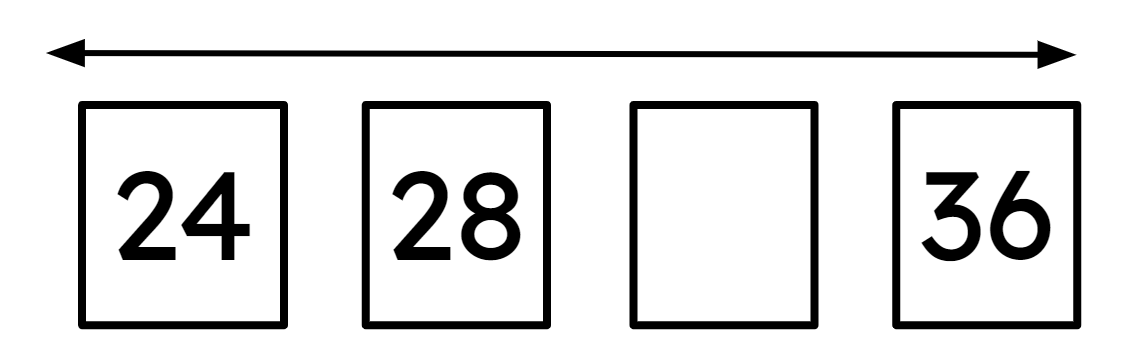
Q2.What is the missing multiple of 4 in this sequence?
What is the missing multiple of 4 in this sequence?
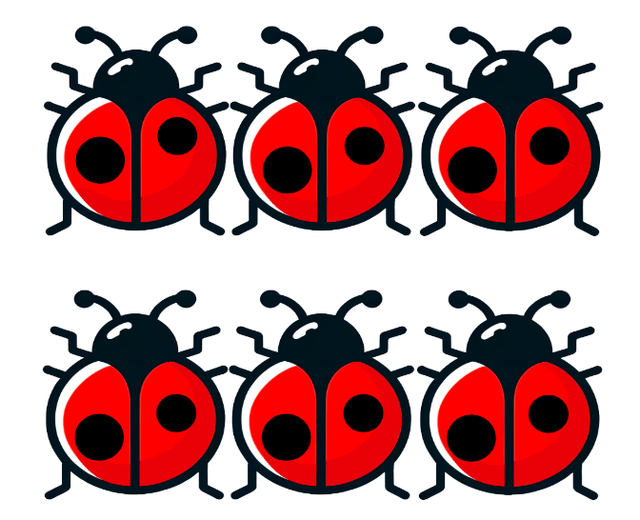
Q3.Each ladybird has 6 legs. How many legs are there altogether? legs.
Each ladybird has 6 legs. How many legs are there altogether? legs.
Q4.Which of these numbers are multiples of 9?
Which of these numbers are multiples of 9?
55
80
Q5.Here is part of the 8 times table. What could you do to find 13 × 8?
Here is part of the 8 times table. What could you do to find 13 × 8?
Skip count in 12s
Q6.Match the multiplication expression to the correct product.
Match the multiplication expression to the correct product.

Assessment exit quiz
6 Questions
Q1.Skip count in 7s to find the number of tomatoes. There are tomatoes.
Skip count in 7s to find the number of tomatoes. There are tomatoes.

Q2.Laura is skip counting in 7s from zero. What multiple of 7 will she say after 49?
Laura is skip counting in 7s from zero. What multiple of 7 will she say after 49?
63
54
57
Q3.Which of these numbers are multiples of 7?
Which of these numbers are multiples of 7?
30
Q4.Match the number of groups to the product.
Match the number of groups to the product.
Q5.Look at this equation. 7 × 7 = 49 49 is the __________.
Look at this equation. 7 × 7 = 49 49 is the __________.
factor
sum
adjacent multiple
Q6.A netball team has 7 members. If 8 teams gather together for a netball tournament, how many members are there altogether? members
A netball team has 7 members. If 8 teams gather together for a netball tournament, how many members are there altogether? members
