


New
New
Represent the structure of a problem with two unknowns in context
I can represent the structure of a problem with two unknowns by drawing a model.


Lesson 2 of 10
New
New
- Year 6
Represent the structure of a problem with two unknowns in context
I can represent the structure of a problem with two unknowns by drawing a model.
Lesson details
Key learning points
- Problems can be represented using bar models.
- Problems can be solved using trial and improvement.
- Different strategies work for different problems.
Keywords
Systematically - Working systematically means to solve a problem in an ordered and methodical way to ensure all outcomes are recorded.
Efficient - To solve something efficiently means to solve a problem quickly whilst also maintaining accuracy.
Common misconception
Pupils opt for a trial and improvement approach, without working systematically either.
Encourage pupils to identify the structure of the problem and represent the maths in a way that makes sense for them. You can then take their representations of the maths and refine them so they are more efficient.
Allow pupils time to explore this problem for themselves and to represent the problem how they like. In the first instance, the focus is on exploring the different strategies and what is positive/requires improvement about each one, considering efficiency.

Teacher tip

Equipment

Licence
This content is © Oak National Academy Limited (2026), licensed on Open Government Licence version 3.0 except where otherwise stated. See Oak's terms & conditions (Collection 2).
Lesson video
Loading...
Prior knowledge starter quiz
6 Questions
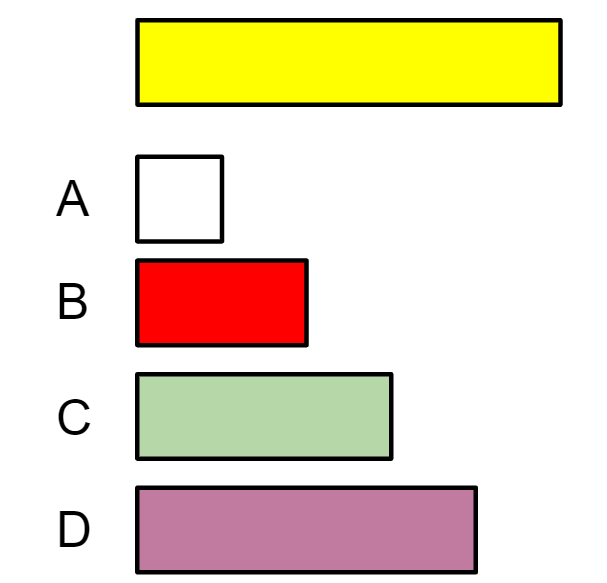
Q1.Two rods are equivalent to the yellow rod. One of them is red. What is the missing rod?
Two rods are equivalent to the yellow rod. One of them is red. What is the missing rod?
A: white
B: red

D: pink
Q2.Two rods are equivalent to the yellow rod. One of them is white. What is the missing rod?
Two rods are equivalent to the yellow rod. One of them is white. What is the missing rod?
A: white
B: red
C: light green
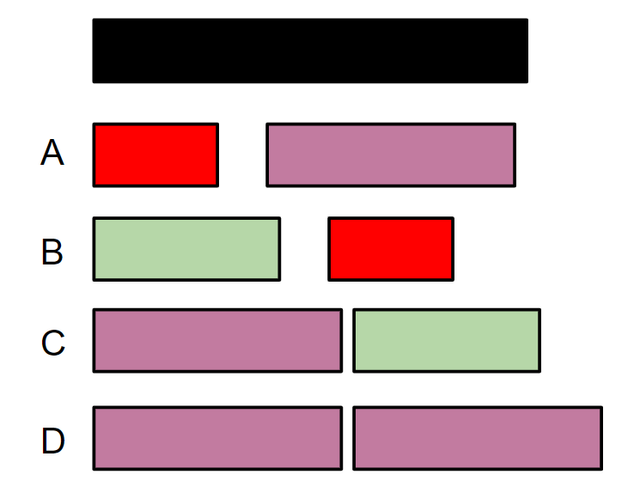
Q3.Two rods are equivalent to the black rod. What could the missing rods be?
Two rods are equivalent to the black rod. What could the missing rods be?
A: red and pink
B: light green and red
D: pink and pink
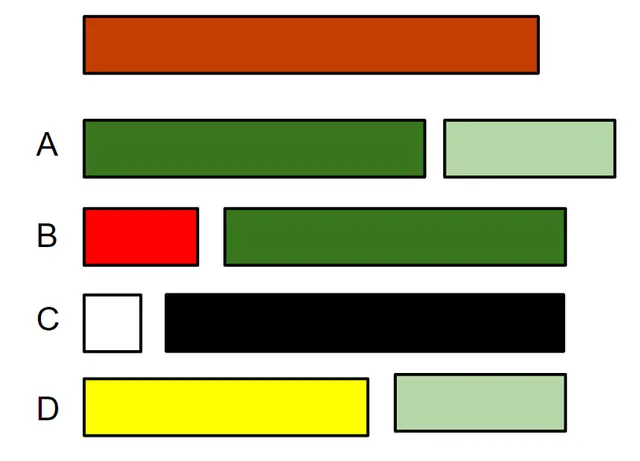
Q4.Two rods are equivalent to the brown rod. What could the missing rods be?
Two rods are equivalent to the brown rod. What could the missing rods be?
A: dark green and light green
Q5.Two rods are equivalent to the brown rod. One rod is twice the size of the other. What rods could they be?
Two rods are equivalent to the brown rod. One rod is twice the size of the other. What rods could they be?
A: dark green and light green
B: red and dark green
C: white and black
Q6.Two rods are equivalent to the yellow. One rod is four times the size of the other rod. What rods could they be?
Two rods are equivalent to the yellow. One rod is four times the size of the other rod. What rods could they be?
red and pink
red and white
white and light green
Assessment exit quiz
6 Questions
Q1.An efficient strategy is a when a problem can be solved:
An efficient strategy is a when a problem can be solved:
quickly
accurately
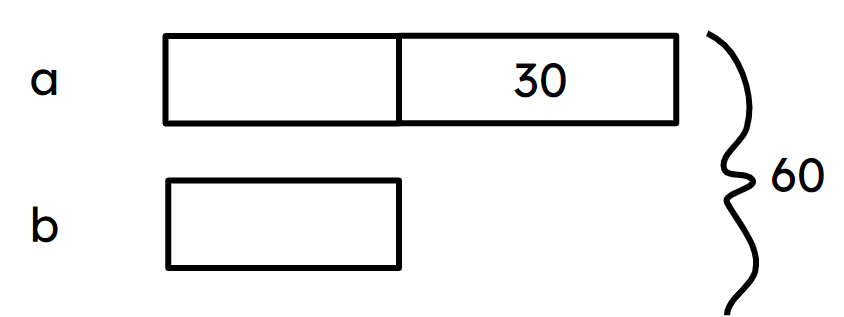
Q2.The bar model shows two values a and b. What is the value of a?
The bar model shows two values a and b. What is the value of a?
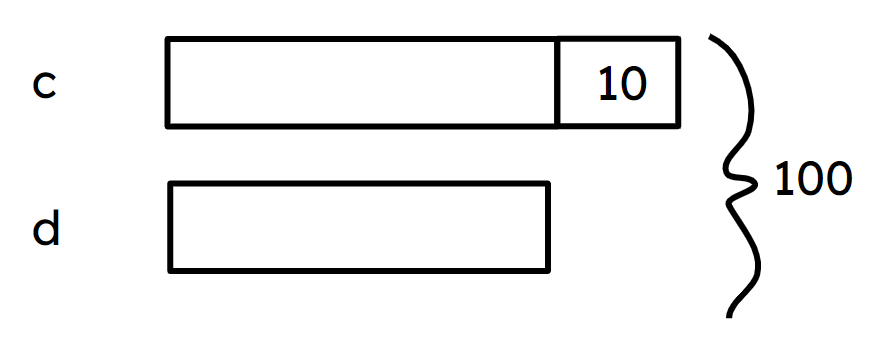
Q3.The bar model shows two values c and d. What is the value of c?
The bar model shows two values c and d. What is the value of c?
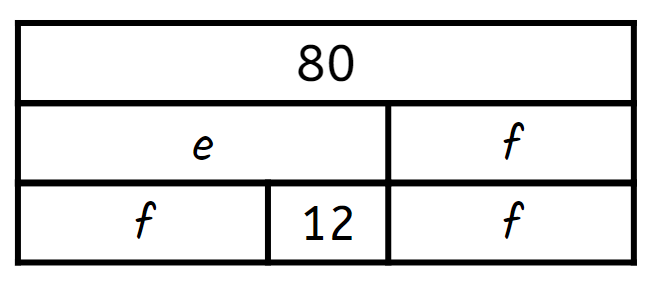
Q4.Calculate the size of e in the bar model.
Calculate the size of e in the bar model.
Q5.A supermarket sells 90 burgers and sausages altogether. They sell 40 more sausages than burgers. How many sausages do they sell?
A supermarket sells 90 burgers and sausages altogether. They sell 40 more sausages than burgers. How many sausages do they sell?
50
55
60
Q6.Andeep is travelling to see his relatives. The whole journey is 182 km. He travels by train for 36 km further than he does by bus. How far does he travel by train altogether? km
Andeep is travelling to see his relatives. The whole journey is 182 km. He travels by train for 36 km further than he does by bus. How far does he travel by train altogether? km
