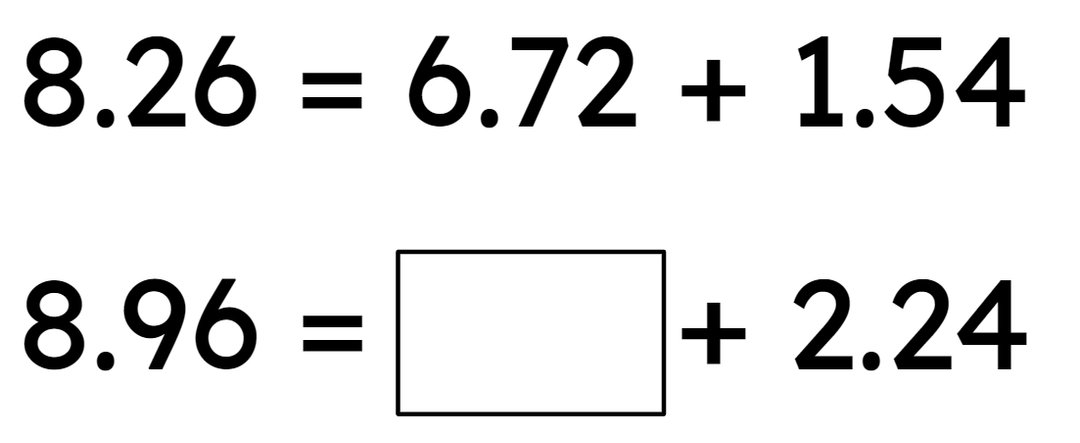
Solve calculations with missing parts
I can solve addition calculations with missing parts.


- Year 6
Solve calculations with missing parts
I can solve addition calculations with missing parts.
Lesson details
Key learning points
- The change in the sum is equal to the change in the missing addend.
- To calculate the missing addend, the known addend must be subtracted from the sum.
- A bar model can be used to represent a calculation with a missing addend.
Keywords
Equation - An equation is used to show that one number, calculation or expression is equal to another.
Unknown - An unknown is a quantity that has a set value but it is represented by a symbol or letter.
Whole - The whole is all the parts or everything, the total amount.
Part - A part is a piece or section of the whole.
Common misconception
The children might be inclined not to look at previous equations to help them. They might not make use of the adjustments to the whole.
Practise some really simple versions. Start with 1 + 2 = 3 and then ask them to adjust 3 by a single-digit number. Write this underneath and then ask them which part has changed and by how much? How do they know?


Licence
Lesson video
Loading...
Prior knowledge starter quiz
6 Questions
Q1.Tick the equivalent expressions.

Q2.Tick the two numbers that are complements to 1,000
Q3.Tick the two numbers that are decimal complements to 10
Q4.What is the missing number in this equation?
+ 61 = 150
Q5.What is the missing number in this equation?
26 + + 11 = 70
Q6.What is the missing number in this equation?
+ 45 + 18 = 89 + 6
Assessment exit quiz
6 Questions
Q1.Which of the following best describes an unknown?
Q2.What is the mass of the plasticine on the balance scale?
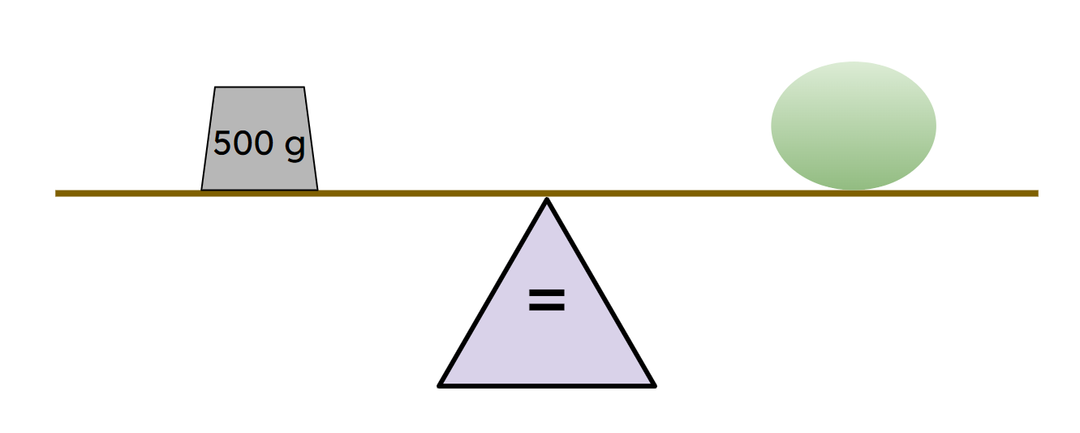
Q3.What is the mass of the plasticine on the balance scale?
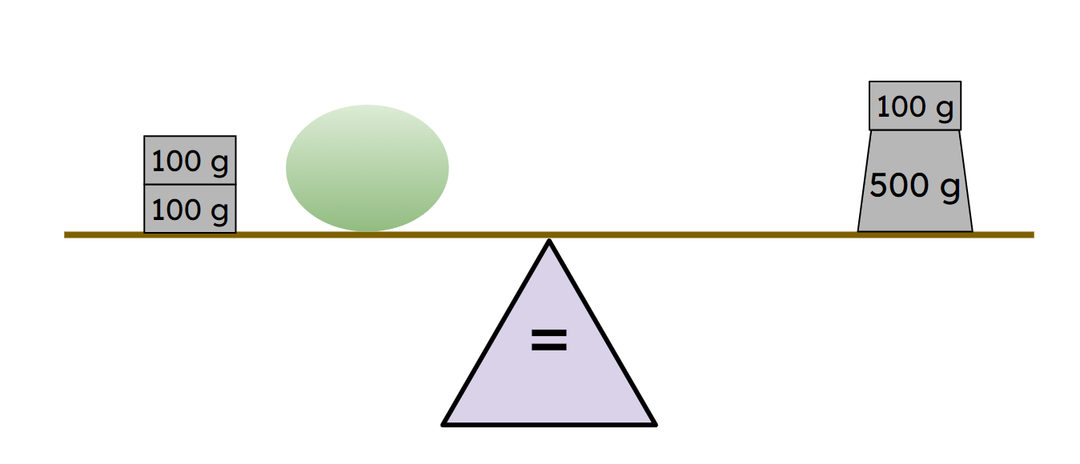
Q4.Without using a written method, calculate the unknown value in the pair of equations shown.
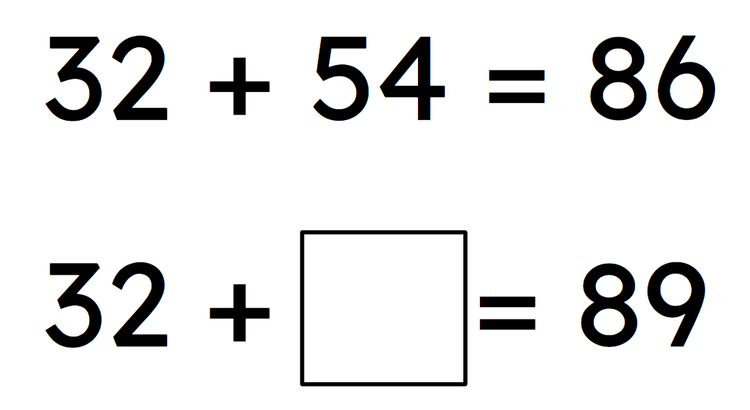
Q5.Without using a written method, calculate the unknown.
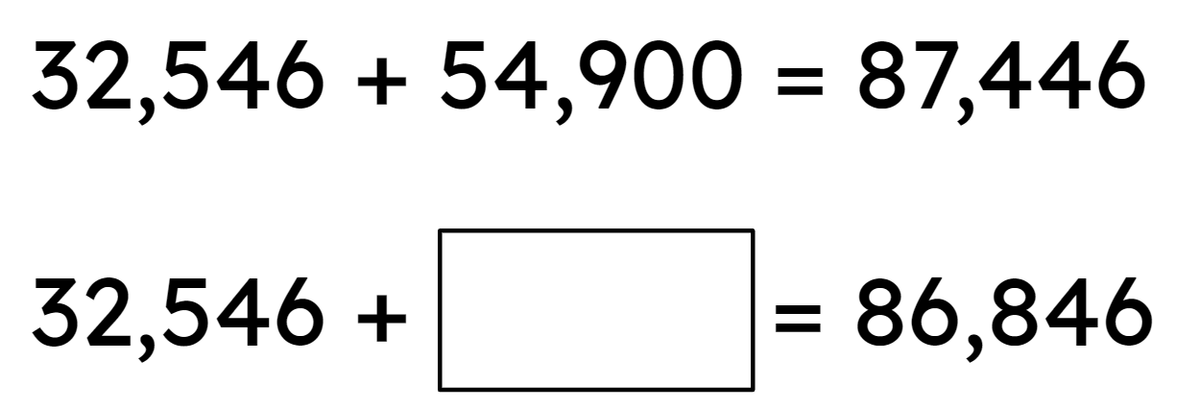
Q6.Without using a written method, calculate the unknown value in the pair of equations shown.