


New
New
Solve problems involving multiples of 6
I can use known facts from the 5 times table to solve problems involving multiples of 6


Lesson 5 of 5
New
New
- Year 4
Solve problems involving multiples of 6
I can use known facts from the 5 times table to solve problems involving multiples of 6
Lesson details
Key learning points
- If 4 times 5 is 20 then 4 times 6 is four more than 20
- If you know 5 times a number you can add the number again to work out 6 times the number
- 5 times a number and 6 times a number are adjacent multiples
Keywords
Multiple - A multiple is the result of multiplying a number by another whole number.
Common misconception
Lack of fluency in 6 times tables and not understanding the divisibility rules or the problems.
To clearly model highlighting key words of worded problems to understand the problem and the operation required for the calculation. Continue to use language stems such as 'If I know...' 'Then I know...,' to support mathematical thinking.
By this lesson, pupils should be fluent in the 5s and 6s and the divisibility rules for both. Continue to use language which reflects the relational pattern between 5s and 6s e.g. 'If I know that 5 × 6 = 30 then I know that 6 × 6 is 36 because you add one more group of 6'

Teacher tip

Equipment

Licence
This content is © Oak National Academy Limited (2025), licensed on Open Government Licence version 3.0 except where otherwise stated. See Oak's terms & conditions (Collection 2).
Lesson video
Loading...
Prior knowledge starter quiz
6 Questions
Q1.Identify the multiples of 6
Identify the multiples of 6
35
49
Q2.Match the number to the adjacent multiple of 6
Match the number to the adjacent multiple of 6

Q3.In each sequence, which multiple of 6 will come next?
In each sequence, which multiple of 6 will come next?
Q4.Izzy has 5 flowers. Each flower has 6 petals. There are 30 petals altogether. Match the numbers in this problem to the word that describes them.
Izzy has 5 flowers. Each flower has 6 petals. There are 30 petals altogether. Match the numbers in this problem to the word that describes them.
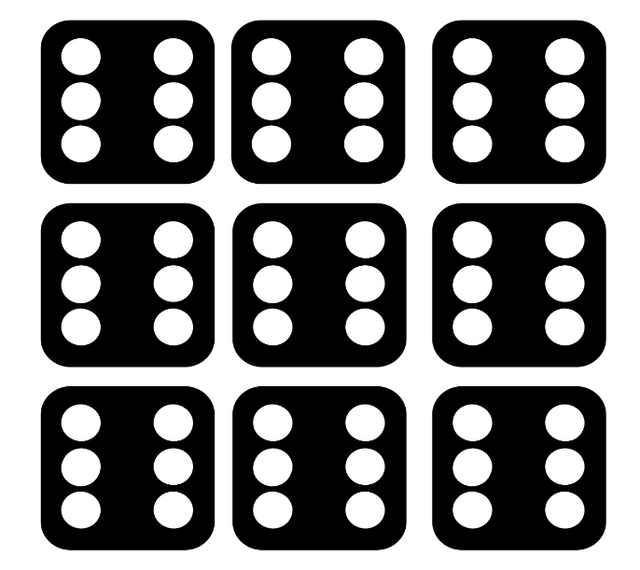
Q5.Each dice has 6 spots. There are 9 dice. How many spots are there altogether?
Each dice has 6 spots. There are 9 dice. How many spots are there altogether?
54 = 1 × 54
54 = 27 × 2
Q6.A hexagon has 6 sides. Imagine 7 hexagons. How many sides will there be in total?
A hexagon has 6 sides. Imagine 7 hexagons. How many sides will there be in total?
Assessment exit quiz
6 Questions
Q1.Look at this multiplication equation: 8 × 6 = 48 Using this, match the numbers to the parts correctly.
Look at this multiplication equation: 8 × 6 = 48 Using this, match the numbers to the parts correctly.
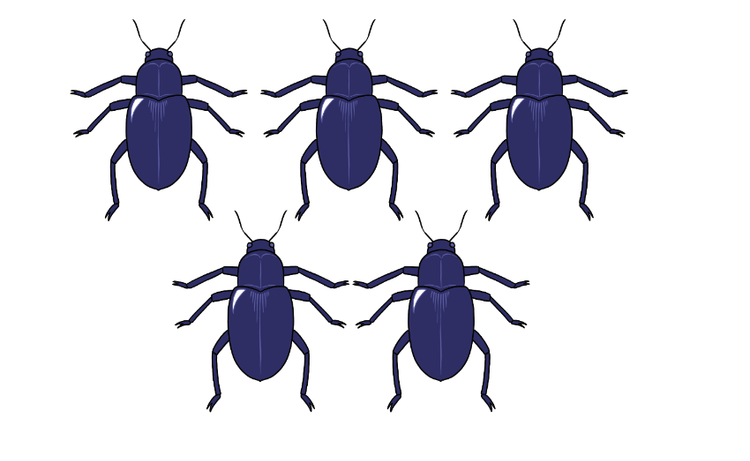
Q2.Look at this image. What is the total number of legs on the beetles? legs
Look at this image. What is the total number of legs on the beetles? legs
Q3.What is the product of the factors 6 and 9?
What is the product of the factors 6 and 9?
Q4.Match the expressions with the correct answer.
Match the expressions with the correct answer.
Q5.Order the expressions from the greatest to the smallest.
Order the expressions from the greatest to the smallest.
Q6.Each of the lines in the expressions match an inequality symbol. Match the expression to the symbol which makes it correct.
Each of the lines in the expressions match an inequality symbol. Match the expression to the symbol which makes it correct.
