New
New
Solve problems with two unknowns with one, several and infinite solutions
I can systematically solve problems with two unknowns with one, several and infinite solutions.


Lesson 10 of 10
New
New
- Year 6
Solve problems with two unknowns with one, several and infinite solutions
I can systematically solve problems with two unknowns with one, several and infinite solutions.
Lesson details
Key learning points
- Problems can be represented using bar models.
- Problems can be solved using trial and improvement.
- Different strategies work for different problems.
Keywords
Precise - If something is precise, it is exact, accurate and careful about the details.
Infinite - Infinite means without an end. If something is unlimited, you could say it has an infinite number of things.
Common misconception
Pupils resort to trial and improvement each time to solve every problem.
Pupils should look to apply what they know from previous learning and explore the structure of each problem to help them identify how best to solve it. You could come up with a checklist as a class for how best to explore a new problem each time.
There is no set criteria to identify whether a problem has one, multiple or an infinite number of solutions. However, similarities can be found between problems. Encourage pupils to reason each time why they think a problem has one, multiple or infinite solutions.

Teacher tip

Equipment

Licence
This content is © Oak National Academy Limited (2025), licensed on Open Government Licence version 3.0 except where otherwise stated. See Oak's terms & conditions (Collection 2).
Lesson video
Loading...
Prior knowledge starter quiz
6 Questions
Q1.In this problem, the difference between the known addends is 15 Match the expressions correctly.
In this problem, the difference between the known addends is 15 Match the expressions correctly.
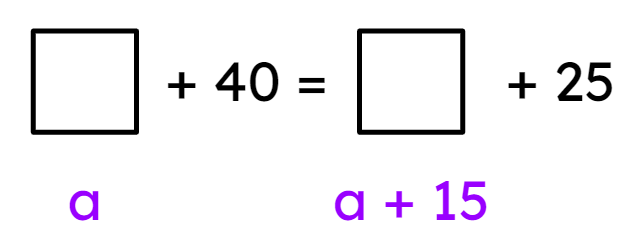

Q2.If we call the first missing addend a, match the expressions correctly.
If we call the first missing addend a, match the expressions correctly.
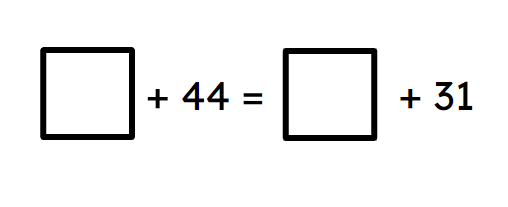
Q3.If we call the first missing addend a, what is the second addend when a = 10?
If we call the first missing addend a, what is the second addend when a = 10?
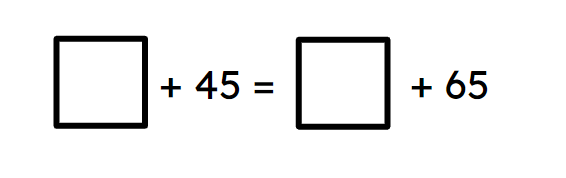
Q4.Match the value of the first missing number with the correct value of the second missing number.
Match the value of the first missing number with the correct value of the second missing number.
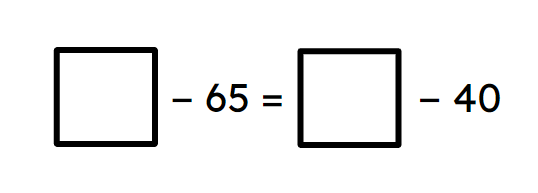
Q5.Match the value of the second missing number with the correct value of the first missing number.
Match the value of the second missing number with the correct value of the first missing number.
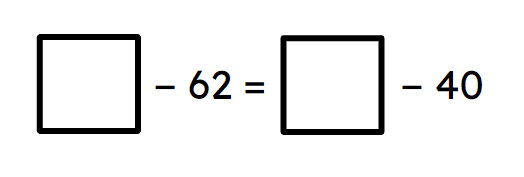
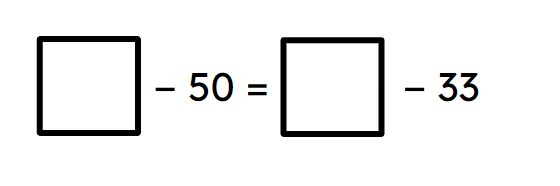
Q6.If the value of the first missing number is a, what is the value of the second missing number when a = 77?
If the value of the first missing number is a, what is the value of the second missing number when a = 77?
Assessment exit quiz
6 Questions
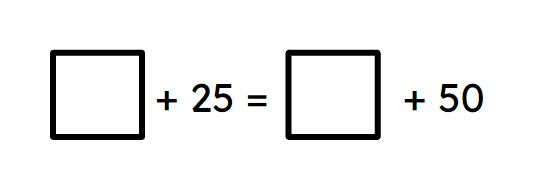
Q1.How many solutions do you think this problem has?
How many solutions do you think this problem has?
One solution
Multiple solutions
Q2.What are the possible values of c if c is an integer? 4c < 13
What are the possible values of c if c is an integer? 4c < 13
4
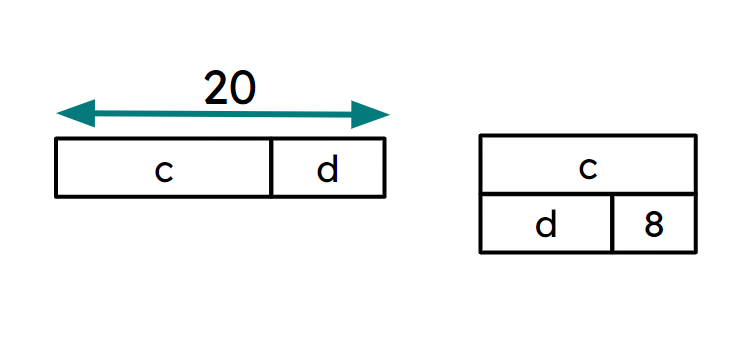
Q3.c and d are integer values. What is the value of c? You will need to find the value of d to help you. c =
c and d are integer values. What is the value of c? You will need to find the value of d to help you. c =
Q4.A baker is packing cakes into boxes to take to a shop. He has 72 cakes. A small box can hold 6 cakes and a large box can hold 8 cakes.
Correctly match the numbers of small and large boxes.
A baker is packing cakes into boxes to take to a shop. He has 72 cakes. A small box can hold 6 cakes and a large box can hold 8 cakes.
Correctly match the numbers of small and large boxes.
Q5.Which of the solutions are correct?
Which of the solutions are correct?
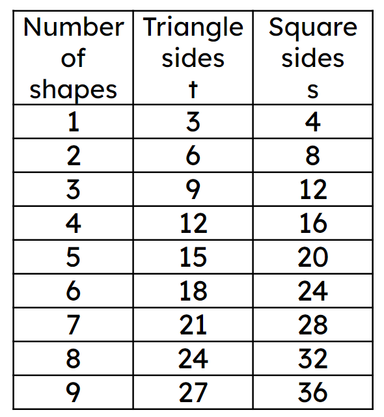
44 = 8t + 5s
44 = 5t + 8s
44 = 6t + 9s
44 = 9t + 5s
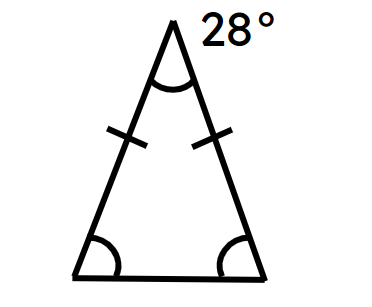
Q6.Look at this isosceles triangle. What are the sizes of the remaining two angles? °
Look at this isosceles triangle. What are the sizes of the remaining two angles? °