Static electricity: charge
I can describe what charges are and how they are transferred between some objects, giving them opposite charges.

Static electricity: charge
I can describe what charges are and how they are transferred between some objects, giving them opposite charges.
Lesson details
Key learning points
- Atoms contain positive and negative electric charges.
- The particles in atoms with a negative electric charge are called electrons.
- Electrons can sometimes be transferred from one object to another, depending on the materials the objects are made of.
- Metals are difficult to charge because electric charge flows through them, preventing charge from building up.
- When static electricity builds up, it can be useful but also problematic.
Keywords
Atom - Atoms are the particles that make up chemical elements, consisting of equal numbers of positively charged protons and negatively charged electrons.
Positive charge - A positive charge is a type of electrical charge that is attracted to a negative charge.
Negative charge - A negative charge is a type of electrical charge that is attracted to a positive charge.
Electron - Electrons are negatively charged particles in conductors that flow to produce an electric current.
Common misconception
Pupils often think that both positive and negative charges can move when objects are charged by rubbing.
Emphasise that only electrons can move, explaining that they are found on the outer part of atoms. Use this to explain how a positive charge is created by the removal of electrons.


Equipment

Licence
Lesson video
Loading...
Prior knowledge starter quiz
6 Questions
Q1.In which of the following examples could you find static charge building up?

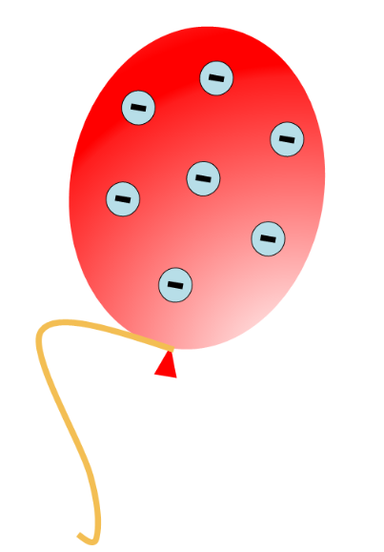
Q2.What is the charge shown on the balloon?
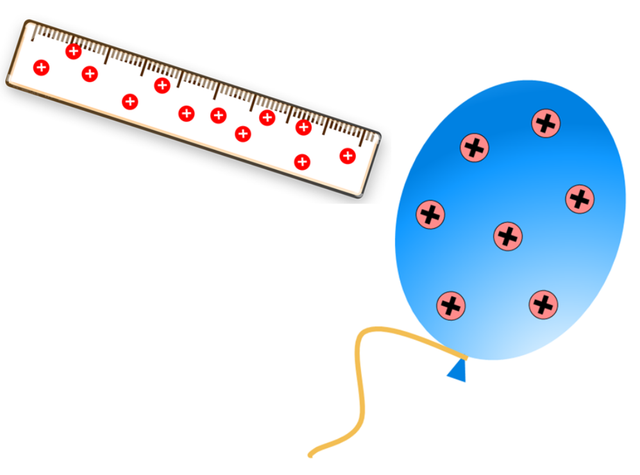
Q3.A ruler and a balloon both have a positive charge.
Which of the following will happen as the ruler is brought closer to the balloon?
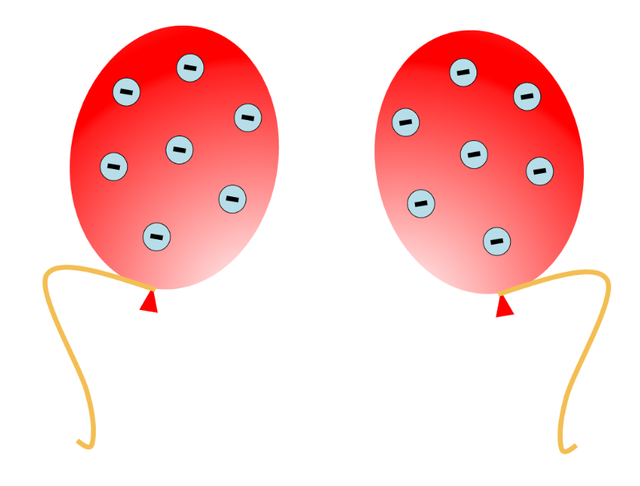
Q4.The balloons shown both have a negative charge.
Which of the following will the balloons do when brought close to each other?
Q5.Which of the following explains why the balloon shown sticks to the wall?
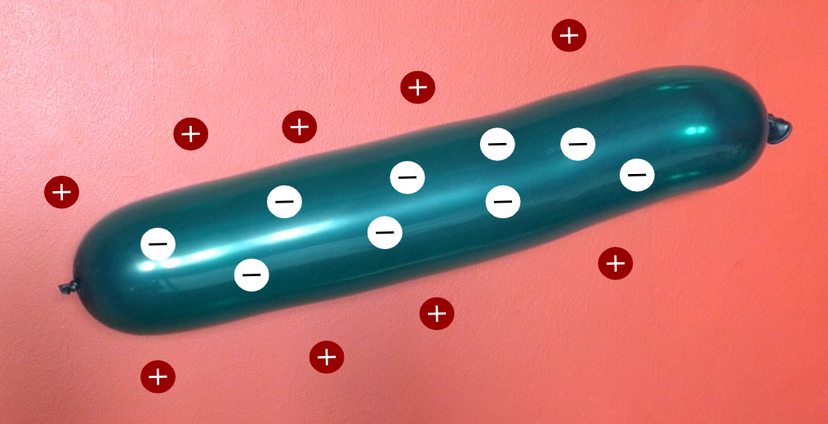
Q6.Which of the following explains why static charge does not build up in normal circuits?
Assessment exit quiz
6 Questions
Q1.In a conductor, negative charges called can flow to give an electric current.
Q2.A neutral object is rubbed and becomes positively charged.
Which of the following is the correct explanation for this?
Q3.Which of the following correctly explains why is it difficult to charge an object that is made of metal?
Q4.Which of the following statements is correct for a neutral object?
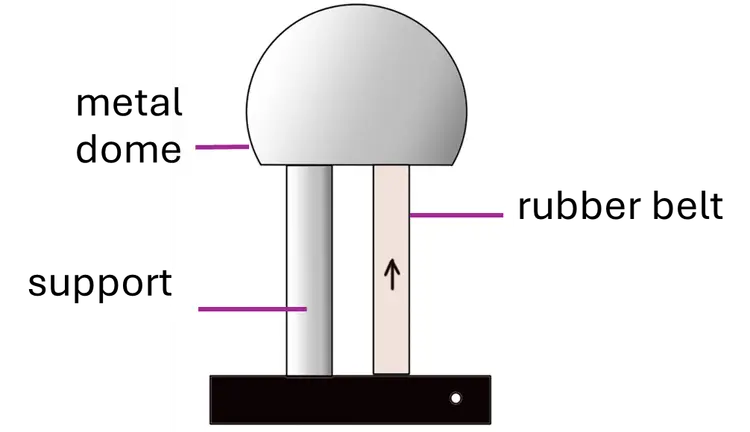
Q5.A Van der Graaf generator has a moving rubber belt which becomes charged by friction. The charge is transferred to a metal dome.
Why can the dome become charged, even though it is made of metal?