Stem cells in animals
I can explain what stem cells are, and give examples of where they are found in animals.


- Year 10
- AQA
Stem cells in animals
I can explain what stem cells are, and give examples of where they are found in animals.
Lesson details
Key learning points
- An early animal embryo is made of unspecialised cells; these are embryonic stem cells.
- Embryonic stem cells can differentiate to become all types of cells in the animal’s body.
- As an animal develops into an adult, some cells remain unspecialised; these are adult stem cells.
- Adult stem cells can differentiate to become most but not all types of cells in the animal’s body.
- An example of adult stem cells in humans (e.g. in bone marrow; these can divide and differentiate to make blood cells).
Keywords
Embryo - Formed from a zygote by cell division; it is the early stages of development.
Unspecialised cell - A cell with no specific function, but has the capability to turn into different types of cells.
Embryonic stem cell - A cell from an embryo which can differentiate into any type of cell.
Differentiation - The process of an unspecialised cell becoming specialised through the mechanism of turning genes on and off.
Adult stem cell - Can differentiate into related cells.
Common misconception
Adult stem cells don't exist or can differentiate in the same way as embryonic stem cells.
Give examples of adult stem cells and the types of cells they will differentiate into, using examples that pupils might be familiar with.


Equipment

Licence
Lesson video
Loading...
Prior knowledge starter quiz
6 Questions
Q1.How are multicellular organisms organised?

Q2.Put the following in order starting with the smallest.
Q3.What features does an egg cell have?
Q4.True or false? When a cell such as a muscle cell divides by mitosis, stem cells are produced.
Q5.Who is correct?
Q6.True or false? Only animals have specialised cells.
Assessment exit quiz
6 Questions
Q1.True or false? Embryo cells are unspecialised and can become any type of specialised cell.
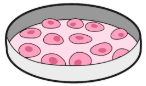
Q2.Cells that remain unspecialised in an organism are called stem cells.
Q3.What can adult stem cells found in bone marrow not differentiate into?
Q4.By what process do adult stem cells renew?
Q5.Who is correct?