Tests for biological molecules
I can carry out tests for biological molecules, including sugars, starch, proteins and lipids.


- Year 10
- AQA
Tests for biological molecules
I can carry out tests for biological molecules, including sugars, starch, proteins and lipids.
Lesson details
Key learning points
- A reagent called Benedict’s solution is used to test for reducing sugars, including glucose.
- A reagent called iodine solution is used to test for starch, a type of carbohydrate.
- A reagent called Biuret solution is used to test for protein.
- Ethanol (a type of alcohol) is used to test for lipids.
- Interpretation of qualitative food test results.
Keywords
Reagent - A chemical used to test for a type of biological molecule.
Qualitative - A test in which the result is based on an observation.
Quantitative - A test in which a measurement produces numerical data.
Common misconception
Mistakes on method, results confusion, and poor descriptions using inaccurate terminology.
Methods and results are described, demonstrated and tested throughout, and methods tried by pupils with results gathered and analysed. Repeated review of results occurs throughout the lesson, and methods and results are applied to novel questions.


Equipment
Distilled water, Benedict's solution, Biuret's solution, sodium hydroxide, iodine solution, ethanol, test/boiling tubes, bung, pipettes, 60ºC water bath, safety goggles.

Content guidance
- Risk assessment required - equipment

Supervision
Adult supervision required

Licence
Lesson video
Loading...
Prior knowledge starter quiz
6 Questions
Q1.True or false? Proteins and carbohydrates are polymers.
Q2.Join the polymer to its monomer.

Q3.True or false? Enzymes are proteins.
Q4.Which of these is a use for lipids in an organism?
Q5.True or false? Animals store carbohydrate as glycogen.
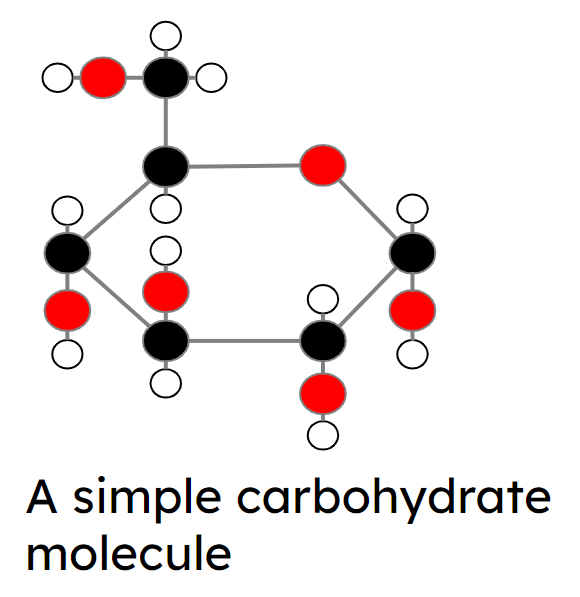
Q6.What elements do carbohydrates contain?
Assessment exit quiz
6 Questions
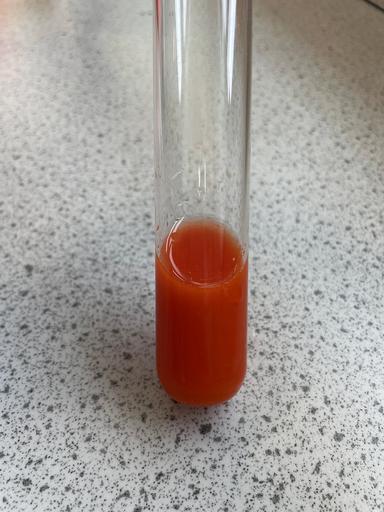
Q1.Match the reagent to the nutrient it us used to test for?
Q2.What colour does iodine turn in the presence of starch?
Q3.What substance can be used to test for the presence of lipids?
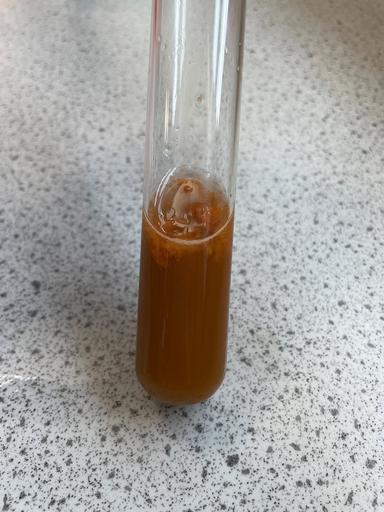
Q4.Is this a positive or a negative test for Benedict's solution?
Q5.What colour does Biuret solution turn if it comes into contact with protein?
Q6.True or false? This food contains a small amount of reducing sugar?