


New
New
The different kinds of force
I can identify and describe different kinds of force and their effects.


Lesson 2 of 10
New
New
- Year 7
The different kinds of force
I can identify and describe different kinds of force and their effects.
Lesson details
Key learning points
- Contact forces only act when objects are touching.
- Non-contact forces can act with or without the objects touching.
- Friction is a contact force that slows or prevents movement.
- Drag is a contact force that pushes against objects moving through liquids or gases.
Keywords
Contact force - Contact forces only act when objects are touching.
Friction - Friction is the force of one surface gripping or rubbing on another.
Drag - Objects moving through liquids and gases experience drag, a force that acts against the object’s motion.
Non-contact force - Non-contact forces can act with or without objects touching.
Common misconception
An object 'has' force that provides it some kind of agency, which is independent of other objects.
Describe forces as interactions between two objects using the structure 'the force of object A on object B'.
When introducing drag forces, get students to hold out their hand and 'swish' it through the air in front of them so they can feel/experience air resistance for themselves. They could then also swish their hands through water or stir a thick mixture.

Teacher tip

Licence
This content is © Oak National Academy Limited (2026), licensed on Open Government Licence version 3.0 except where otherwise stated. See Oak's terms & conditions (Collection 2).
Lesson video
Loading...
Prior knowledge starter quiz
6 Questions
Q1.Which kind of force pulls objects down towards Earth's surface?
Which kind of force pulls objects down towards Earth's surface?
friction force
magnetic force
lift force
Q2.The force that acts when surfaces grip or rub against each other is called .
The force that acts when surfaces grip or rub against each other is called .
Q3.Which is the correct name for the force that makes things float in water?
Which is the correct name for the force that makes things float in water?
gravity
thrust
water resistance
Q4.What do forces do? Forces cause objects to their speed, direction of motion or shape.
What do forces do? Forces cause objects to their speed, direction of motion or shape.
Q5.Which of these forces only acts when the two objects are touching?
Which of these forces only acts when the two objects are touching?
The force of one magnet attracting an iron nail.
The force of one magnet repelling another magnet.
The gravitational force of planet Earth on a ball thrown in the air.
Q6.What is the best way of describing this force?
What is the best way of describing this force?
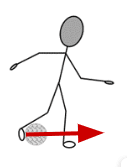
The force of the foot.
The force of the ball.
The force between the foot and the ball.
Assessment exit quiz
6 Questions
Q1.Match the correct definitions to the keywords.
Match the correct definitions to the keywords.

Q2.Find the non-contact forces.
Find the non-contact forces.
tension
friction
Q3.Match up each kind of force with its definition.
Match up each kind of force with its definition.
Q4.Which is the best explanation for why gravitational forces are non-contact forces?
Which is the best explanation for why gravitational forces are non-contact forces?
Gravitational forces are the attraction of Earth.
Gravitational forces work by magnetism.
Gravitational forces only act when objects are touching Earth’s surface.
Gravitational forces only act when objects are not touching Earth’s surface.
Q5.Which force does not act on this boat? The boat is not moving.
Which force does not act on this boat? The boat is not moving.
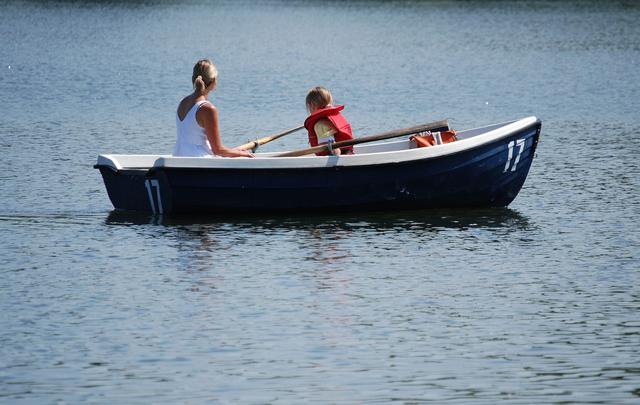
gravitational force
upthrust
Q6.Look at the picture. Which of the following forces does not act on the moving sled?
Look at the picture. Which of the following forces does not act on the moving sled?
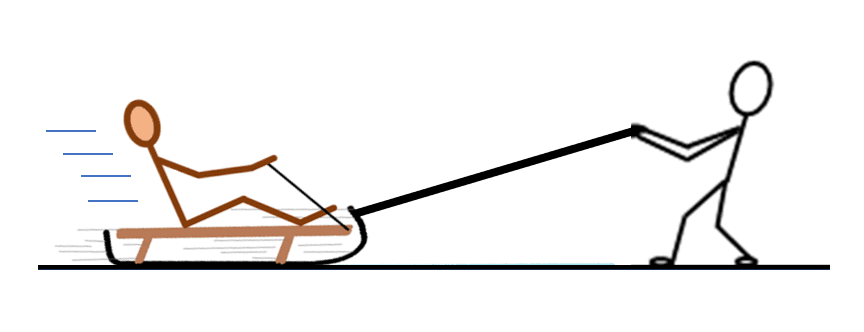
The friction force of the ground on the sled.
The tension force of the rope on the sled.
The gravitational force of Earth on the sled.
