The effect of pH on the rate of an enzyme reaction: data analysis
I can analyse and explain data from an investigation into the effect of changing pH on the rate of an enzyme reaction.


- Year 10
- AQA
The effect of pH on the rate of an enzyme reaction: data analysis
I can analyse and explain data from an investigation into the effect of changing pH on the rate of an enzyme reaction.
Lesson details
Key learning points
- Interpretation of graphs showing data from an investigation of the effect of pH on the rate of an enzyme reaction.
- Consideration of whether the data increase or decrease confidence in the original prediction or hypothesis.
- Enzyme reaction rate is highest at an optimum pH, at which all active sites are full.
- Enzyme reaction rate decreases at pH values below and above the optimum as the active site becomes denatured.
Keywords
Rate of reaction - How fast a chemical reaction occurs.
PH - A measure of how acidic or alkaline a solution is.
End point - The point at which the chemical reaction has finished.
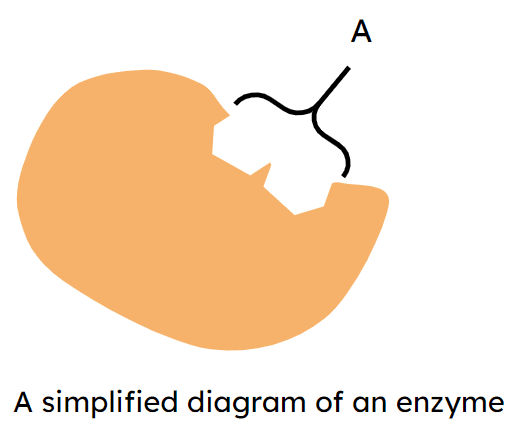
Active site - The part of an enzyme where the substrate binds.
Denatured - A permanent change in the shape of an enzyme which stops it from working.
Common misconception
As pH increases above the optimum, enzymes denature and reaction rate falls, but this is not what happens at pHs below the optimum, so the graph and explanation resemble temperature.
The process of denaturing an enzyme is explored in detail, and a graph of reaction rate is explained carefully to make it clear that the changes to rate occur above and below the optimum pH.


Equipment

Licence
Lesson video
Loading...
Prior knowledge starter quiz
6 Questions
Q1.What is iodine used to test for the presence of?

Q2.Which piece of equipment would you use in this practical to heat the test tubes of starch and amylase to a specific temperature?
Q3.Which of these are examples of continuous sampling?
Q4.What does amylase break starch down into?
Q5.What is this piece of equipment called?

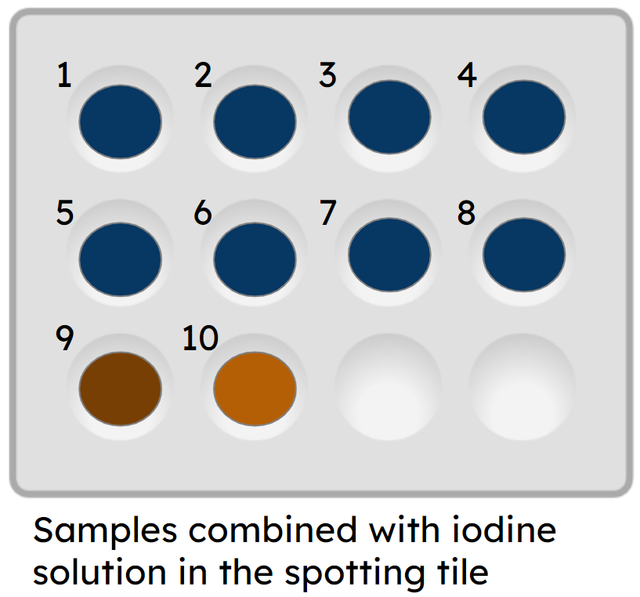
Q6.Which numbered dimple(s) shows that all the starch has been digested?
Assessment exit quiz
6 Questions
Q1.Which statement defines the term ‘rate of reaction’?
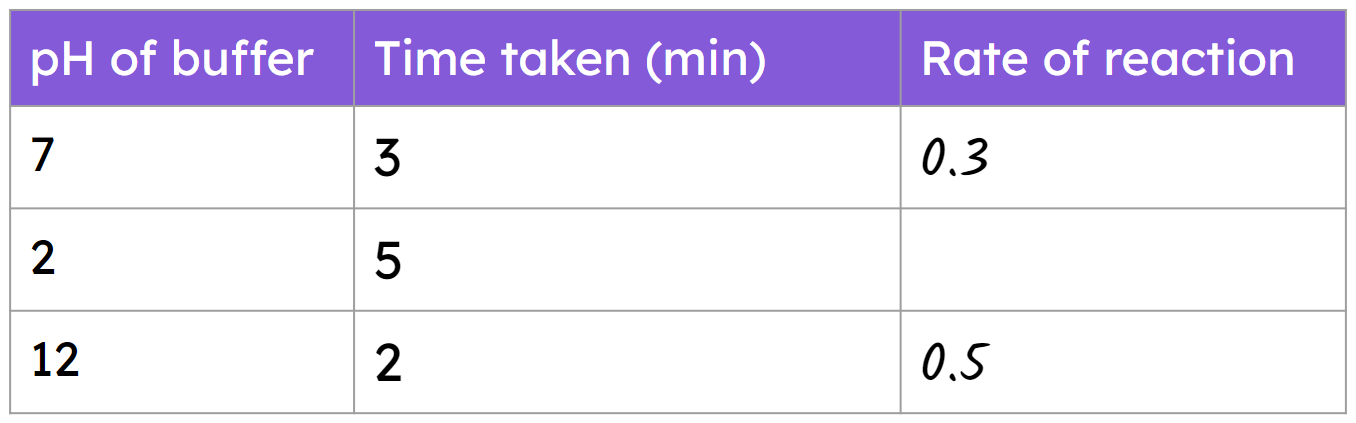
Q2.Calculate the missing rate of reaction.
Q3.On which axis would you plot the rate of a reaction, when it is plotted against pH?
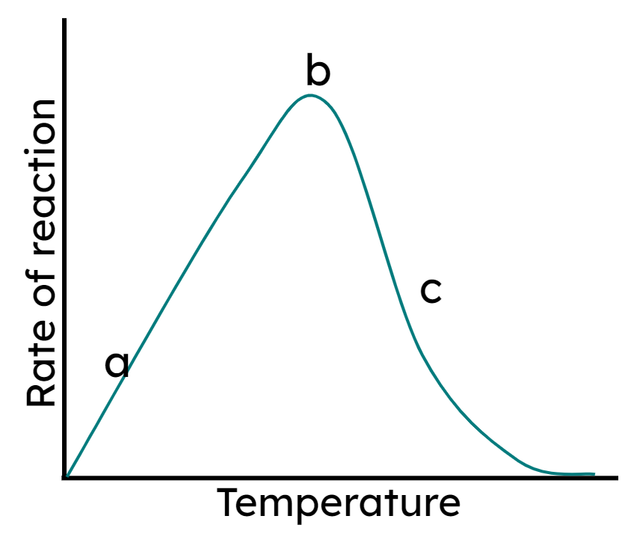
Q4.In the graph below which letter shows when an enzyme is at its optimum temperature?
Q5.When enzyme reaction rate is at its highest all the sites are full.