


The river's journey
I can describe changes in a river and its landforms as it flows along its course.


- Year 3
The river's journey
I can describe changes in a river and its landforms as it flows along its course.
Lesson details
Key learning points
- The width and depth of rivers get larger and the river gets faster as it flows from source to mouth.
- The rocks in the river usually get smaller as the river flows downstream.
- Landforms like waterfalls are usually found in the upper course of a river.
- Landforms like meanders and floodplains are found in the middle and lower course of a river.
Keywords
Course - The course of a river is the path it takes from its source at the start to its mouth at the end
Downstream - Downstream is the direction a river flows as it moves towards the mouth
Tributary - A tributary is a smaller river or stream that joins a bigger river
Landform - A landform is a natural feature created by a process such as erosion or deposition
Common misconception
Rivers are fast near the source and become slower as they flow downstream.
Rivers are, on average, slower in the upper course. The reason for this is due to small rivers being slowed down by friction with the bed and the banks.


Licence
Lesson video
Loading...
Prior knowledge starter quiz
6 Questions
Q1.What process causes the Earth’s surface, e.g. rock or soil, being worn away and transported from its original site.
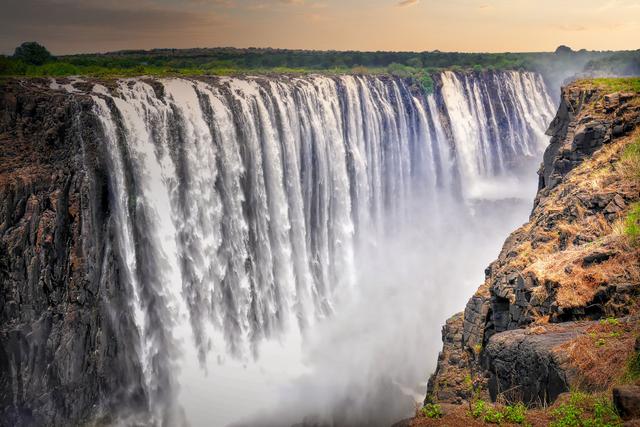
Q2.What is this landform?
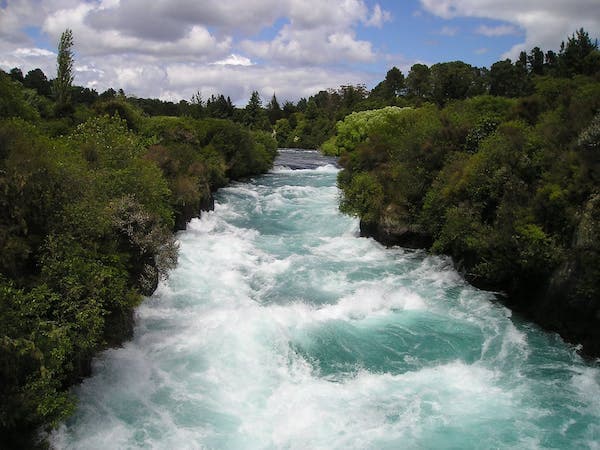
Q3.Which statements describe this river?
Q4.A meander is a bend in the river., which of these statements correctly describe the processes taking place?
Q5.Where are estuaries found?
Q6.As a river slows down it loses energy. This means what process increases?
Assessment exit quiz
6 Questions
Q1.Which of these describe the three parts of a river's course?
Q2.Which of these statements describe the lower course?
Q3.Where on the river are these landforms found?

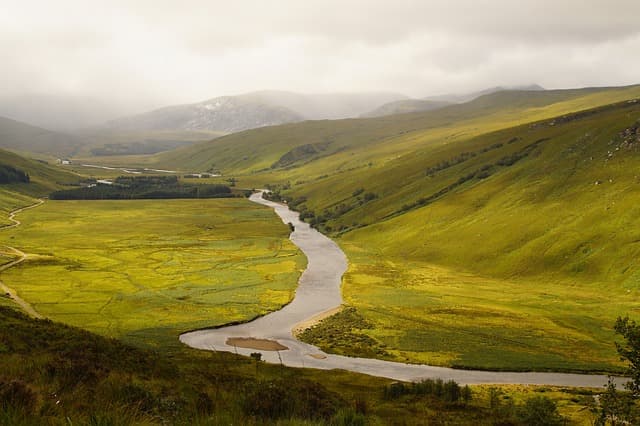
Q4.What landforms can you see on this image?
Q5.What happens to rocks in the river as they are eroded?
Q6.Can you match the river course to the correct description?
