


New
New
Use a bar model to represent spatial problems with two unknowns
I can use a bar model to represent spatial problems with two unknowns.


Lesson 5 of 10
New
New
- Year 6
Use a bar model to represent spatial problems with two unknowns
I can use a bar model to represent spatial problems with two unknowns.
Lesson details
Key learning points
- The model can represent a scaling structure with one part being __ times the size of the other.
- The model can represent an additive structure.
- The model can represent values of measures in a problem involving shape.
- The model can represent different elements of a problem involving shapes.
Keywords
Represent - To represent something means to show something in a different way.
Common misconception
Pupils cannot identify the lengths of the shapes that make up the length provided in each problem.
Encourage pupils to draw a line over the sides of the shapes that represent the length within the problem. This can help pupils to see how many 'lots of' the smaller shapes length are used and how many 'lots of' the larger shapes lengths.
You might like to compare these sort of problems to problems with the same structure that pupils have encountered in previous lessons. Making this connection can support pupils to represent the problem efficiently.

Teacher tip

Equipment

Licence
This content is © Oak National Academy Limited (2026), licensed on Open Government Licence version 3.0 except where otherwise stated. See Oak's terms & conditions (Collection 2).
Lesson video
Loading...
Prior knowledge starter quiz
6 Questions
Q1.7 × c + 4 × f can also be written as:
7 × c + 4 × f can also be written as:
4 × 7 + f × c

c7 × f4
Q2.Tick the properties of a square.
Tick the properties of a square.
4 unequal sides.
4 unequal interior angles.
Q3.What is the value of the gap marked ? in the bar model? Give your answer in pounds. £
What is the value of the gap marked ? in the bar model? Give your answer in pounds. £
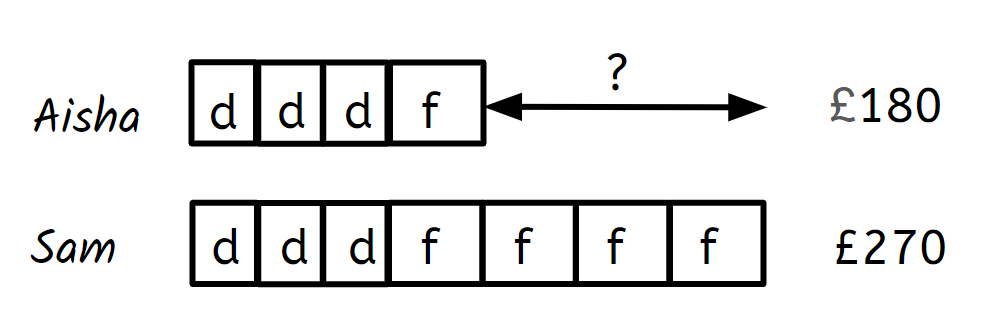
Q4.What is the value of f in the bar model? Give your answer in pounds. £
What is the value of f in the bar model? Give your answer in pounds. £
Q5.What is the value of d in the bar model? Give your answer in pounds. £
What is the value of d in the bar model? Give your answer in pounds. £
Q6.Aisha buys 3 croissants and 2 baguettes for €2.80 Sam buys 5 croissants and and 2 baguettes for €4.40
What is the cost of a croissant?
Aisha buys 3 croissants and 2 baguettes for €2.80 Sam buys 5 croissants and and 2 baguettes for €4.40
What is the cost of a croissant?
€0.60
€0.70
€0.90
€1
Assessment exit quiz
6 Questions
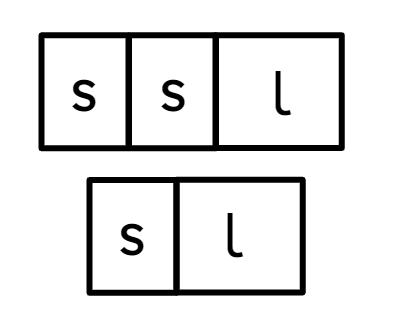
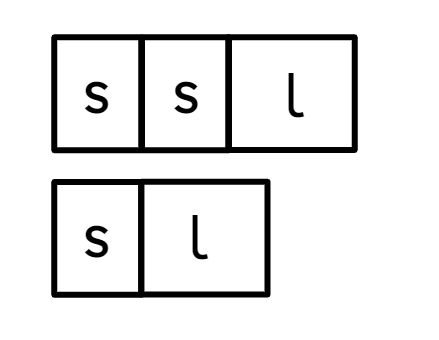
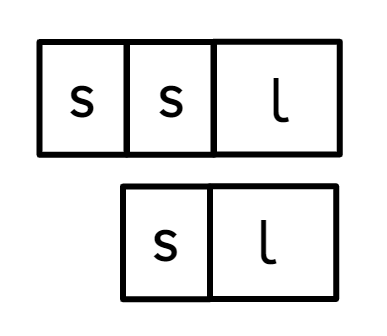
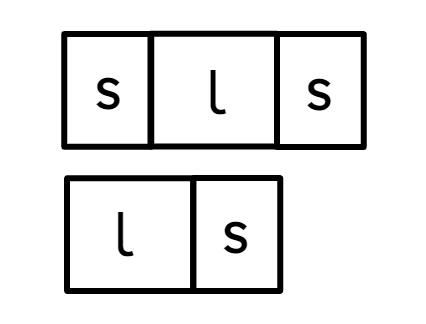
Q1.Which set of bar models is it best to compare with?
Which set of bar models is it best to compare with?
A
B
D
Q2.This pattern is made from two different-sized equilateral triangles. It is not to scale. What is the side-length of the smaller equilateral triangle? cm
This pattern is made from two different-sized equilateral triangles. It is not to scale. What is the side-length of the smaller equilateral triangle? cm
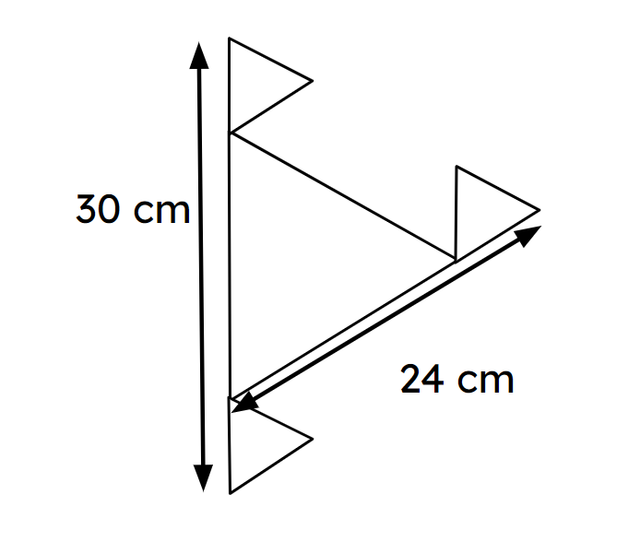
Q3.This pattern is made from two different-sized equilateral triangles. It is not to scale. What is the side-length of the larger equilateral triangle? cm
This pattern is made from two different-sized equilateral triangles. It is not to scale. What is the side-length of the larger equilateral triangle? cm
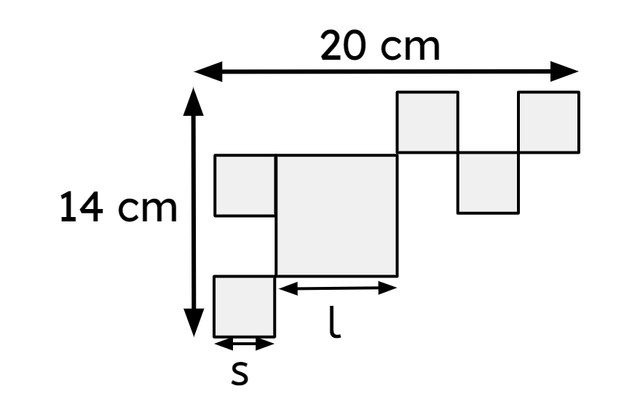
Q4.This pattern is made up of two different-sized squares. Tick the pair of equations that represent the problem.
This pattern is made up of two different-sized squares. Tick the pair of equations that represent the problem.
3s + l = 20 cm and s + l = 14 cm
4s + l = 20 cm and s + l = 14 cm
4s + 2l = 20 cm and s + 2l = 14 cm
Q5.This pattern is made up of two different-sized squares. What is the length of the shorter sided square? cm
This pattern is made up of two different-sized squares. What is the length of the shorter sided square? cm
Q6.This pattern is made up of two different-sized squares. What is the length of the longer sided square? cm
This pattern is made up of two different-sized squares. What is the length of the longer sided square? cm
