New
New
Use a model to interpret a part-part-whole problem with three addends
I can use a model to interpret and represent a part-whole problem with three addends.


Lesson 4 of 10
New
New
- Year 6
Use a model to interpret a part-part-whole problem with three addends
I can use a model to interpret and represent a part-whole problem with three addends.
Lesson details
Key learning points
- Bar models represent additive problems with two addends.
- Bar models represent additive problems with three addends.
- Three addends relate to three parts of a whole.
Keywords
Represent - To represent something means to show something in a different way.
Addend - Addends are any numbers added together.
Common misconception
Pupils struggle to represent each problem with an accurate bar model.
You could continue to use number rods to represent each of the problems at first and then draw around these as a second scaffold, however, pupils do need to make the leap to representing as bar models for themselves.
Continue to encourage pupils to identify what each part of the whole represents when they draw their part-part-whole models. It is important that pupils move towards bar models rather than 'cherry' models as this will encourage pupils to think about the proportionate size of each part.

Teacher tip

Licence
This content is © Oak National Academy Limited (2025), licensed on Open Government Licence version 3.0 except where otherwise stated. See Oak's terms & conditions (Collection 2).
Lesson video
Loading...
Prior knowledge starter quiz
6 Questions
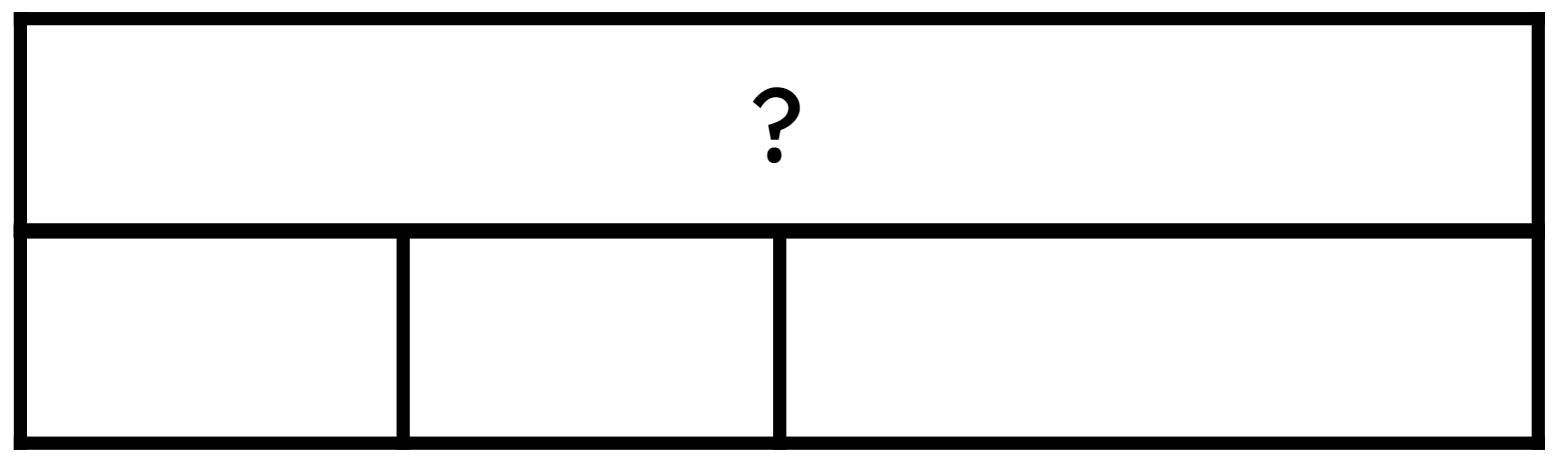
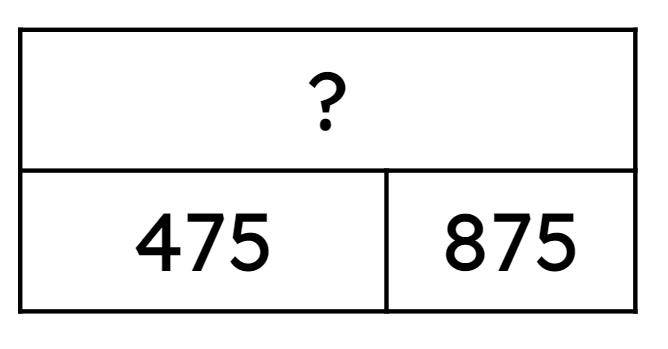
Q1.Calculate the missing whole in this bar model.
Calculate the missing whole in this bar model.

Q2.What is the unknown? Jacob watches television for 1 hour and 20 minutes. He watches the news, a cartoon and a wildlife show. The cartoon is 20 minutes long and the wildlife show is 50 minutes long.
What is the unknown? Jacob watches television for 1 hour and 20 minutes. He watches the news, a cartoon and a wildlife show. The cartoon is 20 minutes long and the wildlife show is 50 minutes long.
The total time Jacob watches TV for.
The duration of the cartoon.
The duration of the wildlife show.
Q3.Select the worded problem that requires addition to solve it.
Select the worded problem that requires addition to solve it.
Altogether there are 27 stickers. 12 are shiny. How many are not shiny.
There are 12 shiny stickers, 15 not shiny. How many more stickers are not shiny?
In 27 stickers, there are 3 fewer shiny than not shiny. How many are not shiny?
Q4.Calculate using an efficient strategy. Lucas buys a cup of tea for £1.59 and a cookie for £1.99 How much does he spend? £
Calculate using an efficient strategy. Lucas buys a cup of tea for £1.59 and a cookie for £1.99 How much does he spend? £
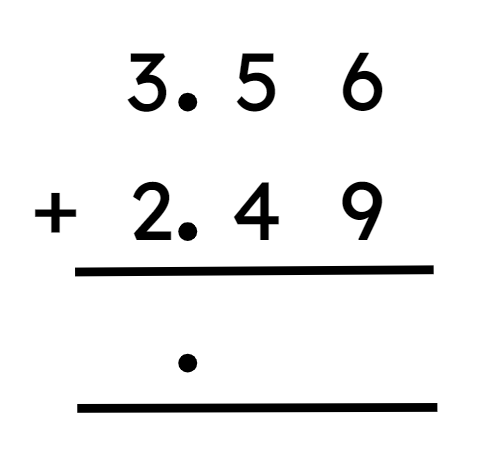
Q5.Complete the column addition to find the sum.
Complete the column addition to find the sum.
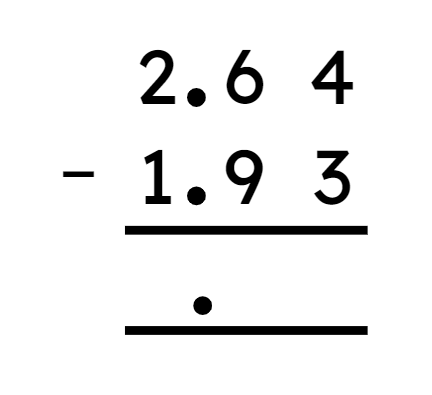
Q6.Complete the column subtraction to find the difference.
Complete the column subtraction to find the difference.
Assessment exit quiz
6 Questions
Q1.Which bar model correctly represents this problem? Aisha spent £45, Sofia spent £8 and Izzy spent £32 on different items. How much money did they spend altogether?
Which bar model correctly represents this problem? Aisha spent £45, Sofia spent £8 and Izzy spent £32 on different items. How much money did they spend altogether?
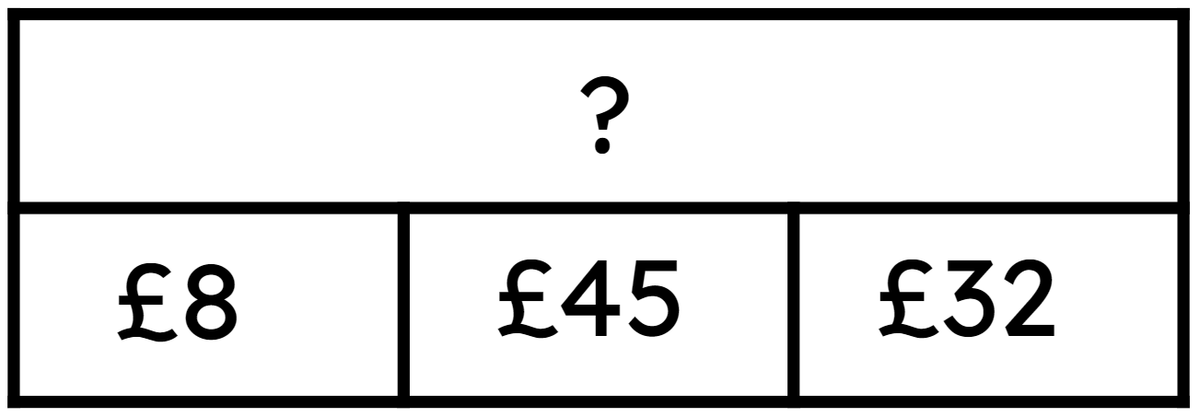
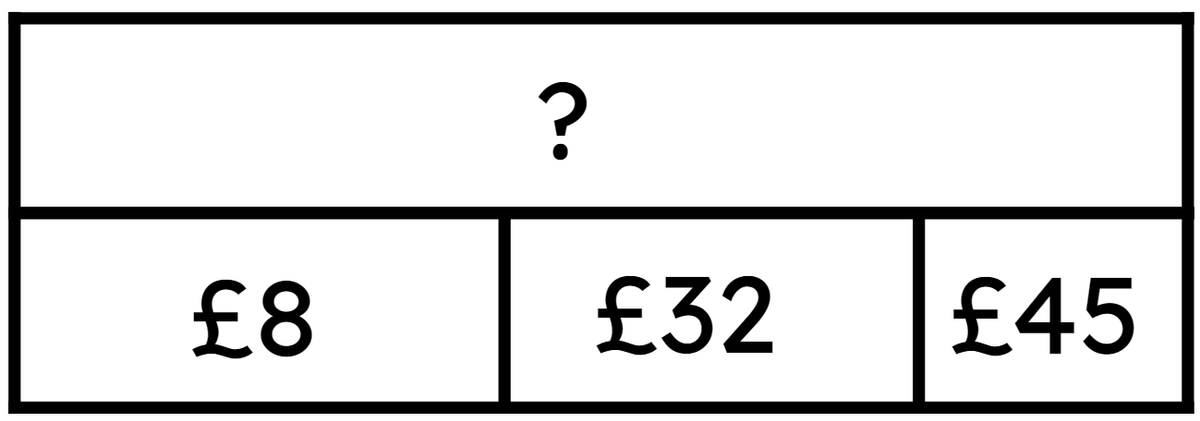
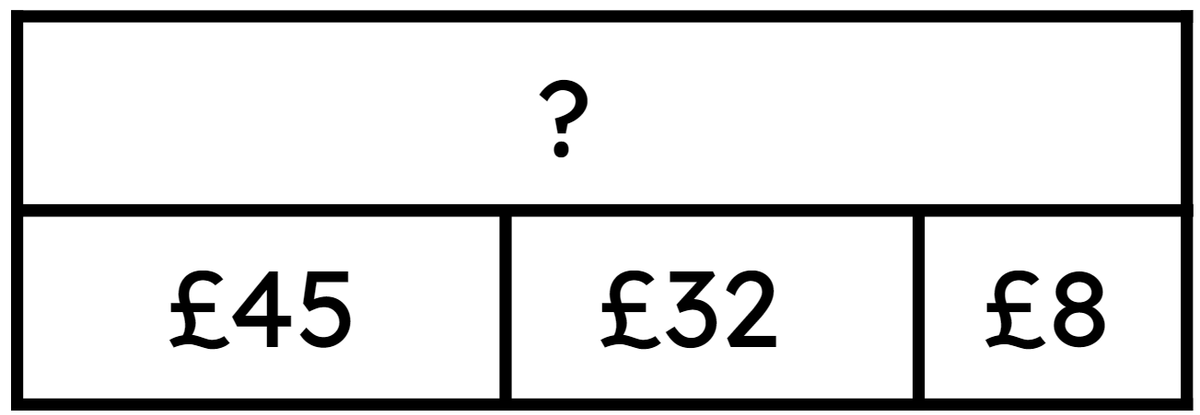
Q2.Use the bar model to answer the question. Aisha spent £45, Sofia spent £8 and Izzy spent £32 on different items. How much money did they spend altogether? £ altogether.
Use the bar model to answer the question. Aisha spent £45, Sofia spent £8 and Izzy spent £32 on different items. How much money did they spend altogether? £ altogether.
Q3.Izzy swam 1.5 km on Monday, 0.7 km on Tuesday and 1.1 km on Wednesday. How far did she swim in total? km
Izzy swam 1.5 km on Monday, 0.7 km on Tuesday and 1.1 km on Wednesday. How far did she swim in total? km
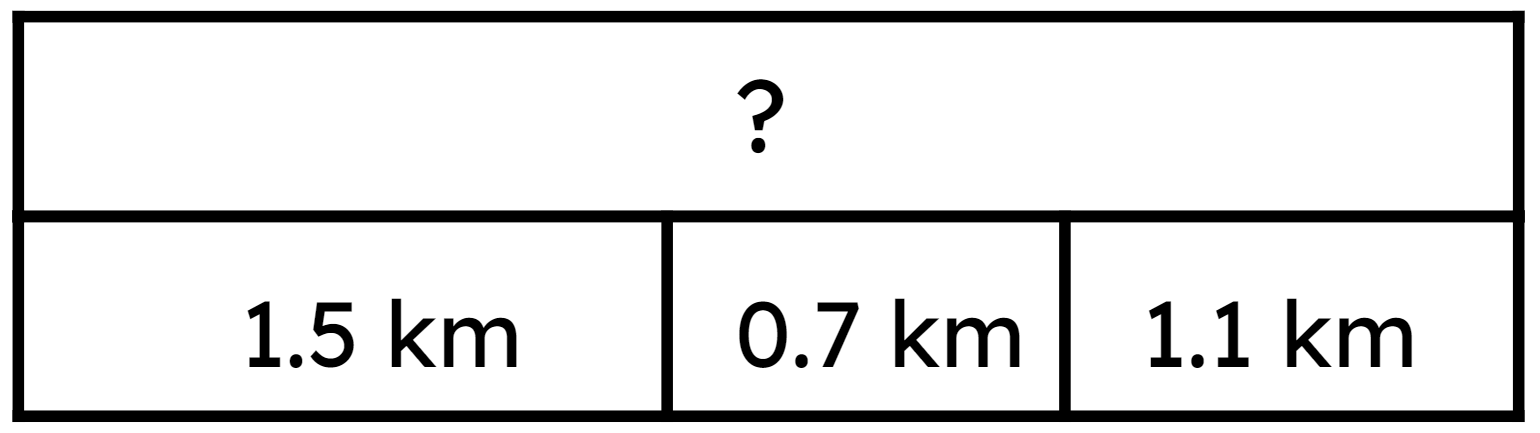
Q4.Which problems could be represented by this bar model?
Which problems could be represented by this bar model?
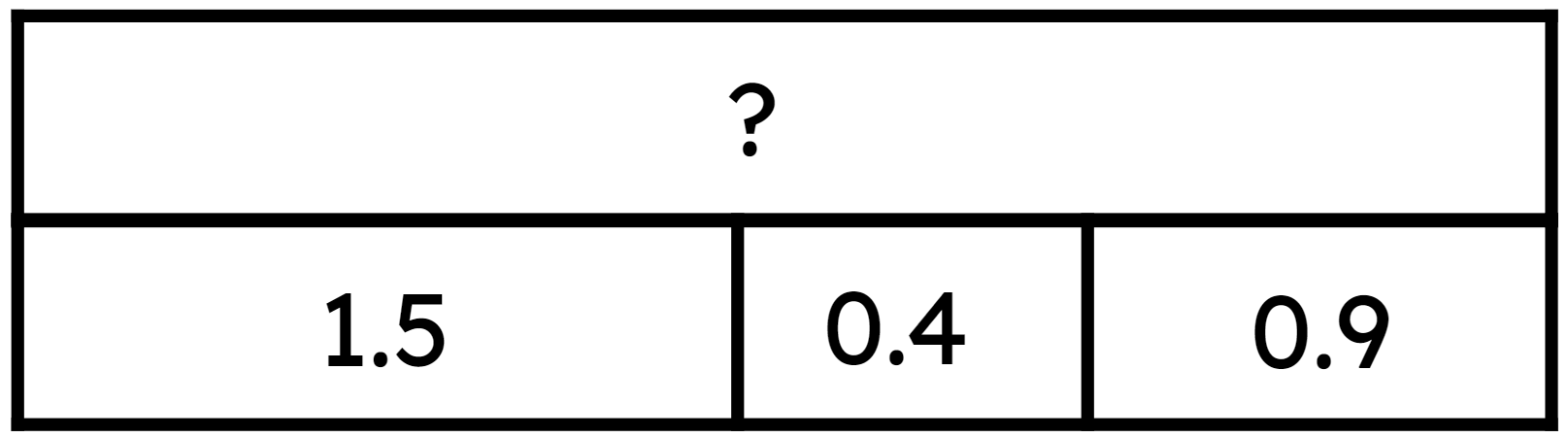
Aisha spent £1.50 on a comic, £4 on a book and 90 p on a pen.
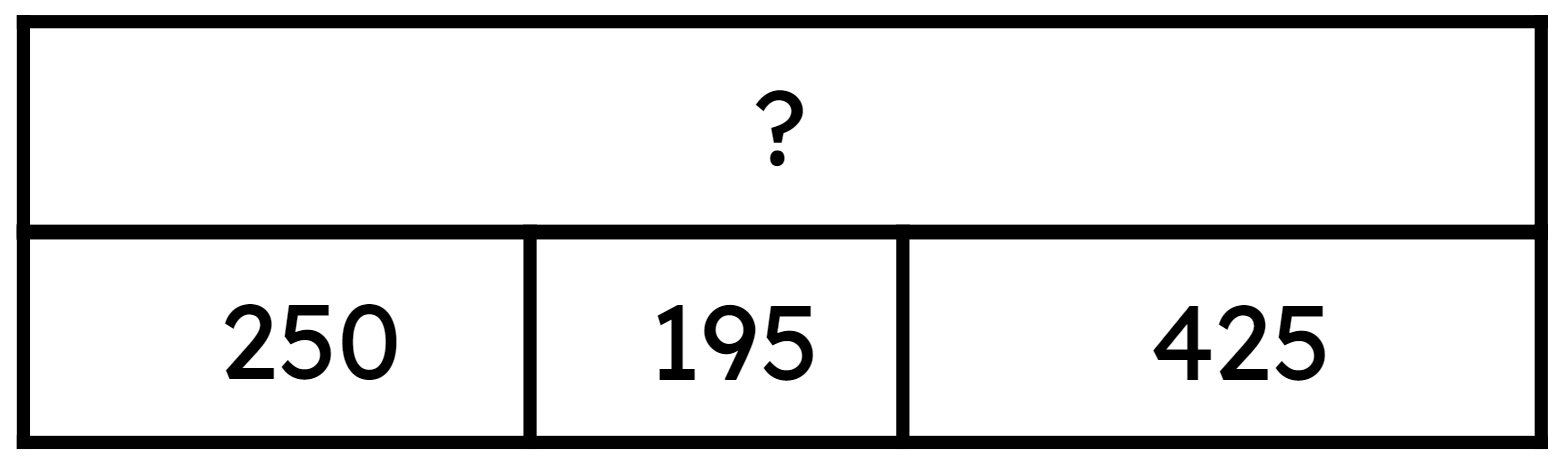
Q5.The addends in this bar model represent the number of pieces in 3 jigsaw puzzles. How many jigsaw pieces are there in total? pieces
The addends in this bar model represent the number of pieces in 3 jigsaw puzzles. How many jigsaw pieces are there in total? pieces
Q6.In the drawer of cubes, Sofia found 45 red cubes and the same number of green cubes. There were 105 cubes of other colours. How many cubes were there in total? cubes.
In the drawer of cubes, Sofia found 45 red cubes and the same number of green cubes. There were 105 cubes of other colours. How many cubes were there in total? cubes.