Use equivalence and compensation strategies to solve addition problems in a range of contexts
I can use equivalence and compensation strategies to solve addition problems in a range of contexts.


- Year 6
Use equivalence and compensation strategies to solve addition problems in a range of contexts
I can use equivalence and compensation strategies to solve addition problems in a range of contexts.
Lesson details
Key learning points
- The part-whole structure can be used to represent additive problems in a range of contexts.
- A bar model structure can be used to represent additive problems in a range of contexts.
- The same sum rule can be used to solve additive problems in a range of contexts.
Keywords
Budget - A budget is the total amount of money that you have to spend on something. It is often split into parts and money can be redistributed between these parts.
Unknown - An unknown is a quantity that has a set value but it is represented by a symbol or letter.
Adjust - When you adjust you make a change to a number.
Redistribution - Redistribution is where some of one part is moved to another part. It is sometimes known as the same sum rule.
Common misconception
The idea of an extra cost being an addition and a saving being a subtraction can seem counter-intuitive to some children.
Talk through a more basic version using a pound for a budget and sweets at a tuck shop.


Equipment

Licence
Lesson video
Loading...
Prior knowledge starter quiz
6 Questions
Q1.What symbols do we make use of when comparing two or more expressions with different values?

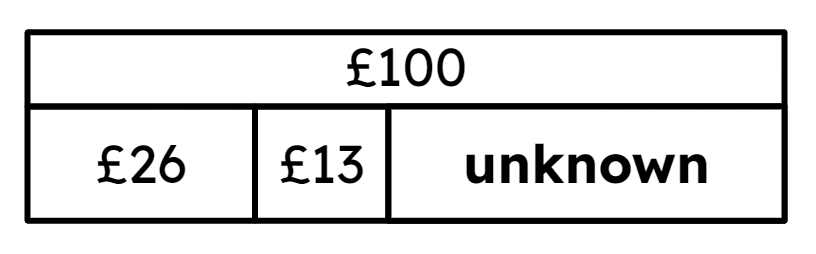
Q2.What is the unknown in the bar model? £
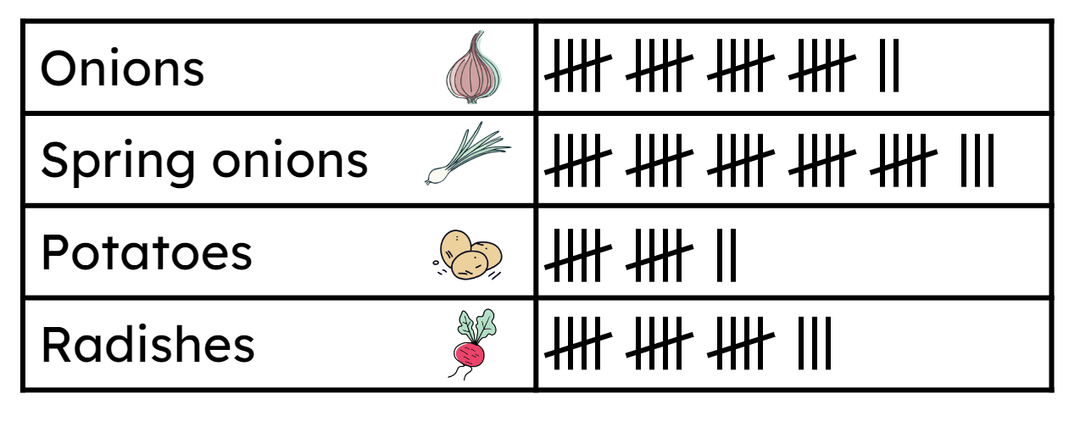
Q3.The tally chart shows the number of vegetables sold in a week from a greengrocers. How many were sold altogether?
Q4.Calculate the following sum using adjustment.
£99 + £154 = £
Q5.Calculate the following sum using adjustment.
£ = £1,999 + £2,500
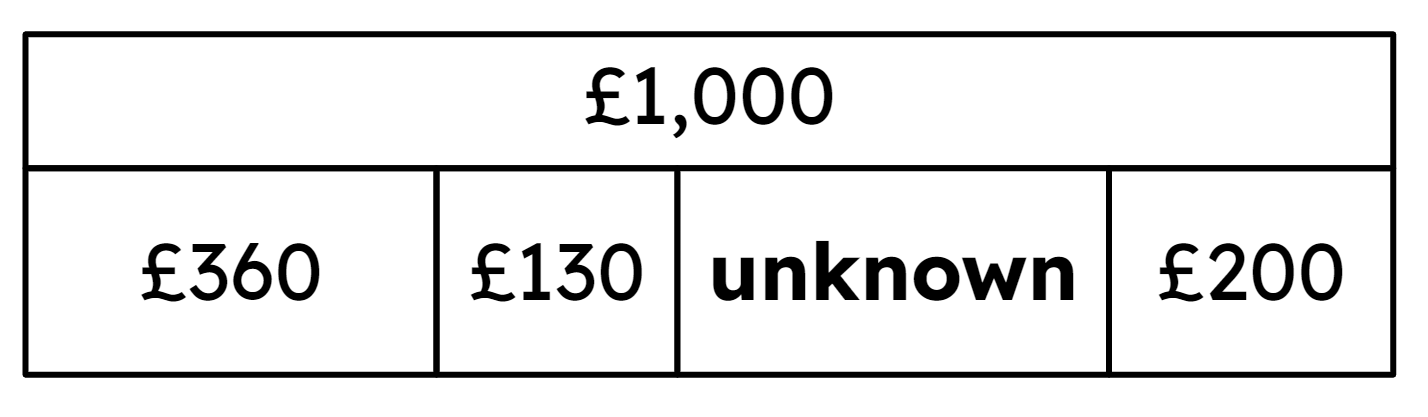
Q6.Use mental strategies to calculate the unknown in the bar model. The unknown is £
Assessment exit quiz
6 Questions
Q1.Which of the following best describes the word budget?
Q2.Solve the following addition without using a written method.
£6,999 + £1,750 = £
Q3.Find the unknown in the equation below.
£6,999 + £1,750 + £ = £10,000
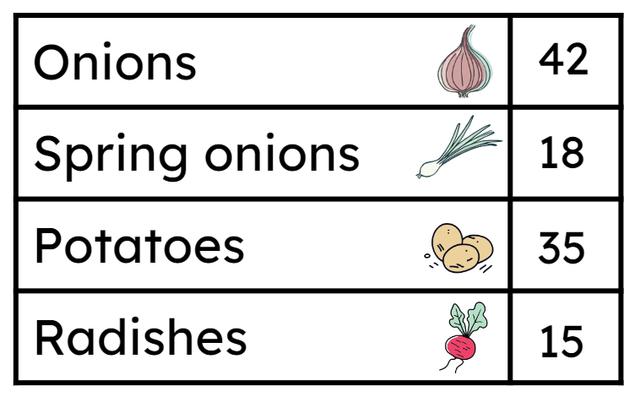
Q4.The chart shows how many vegetables have been sold. Then, 6 more onions, 2 more spring onions and 4 more potatoes were sold. 5 radishes were returned. How many vegetables have been sold now?
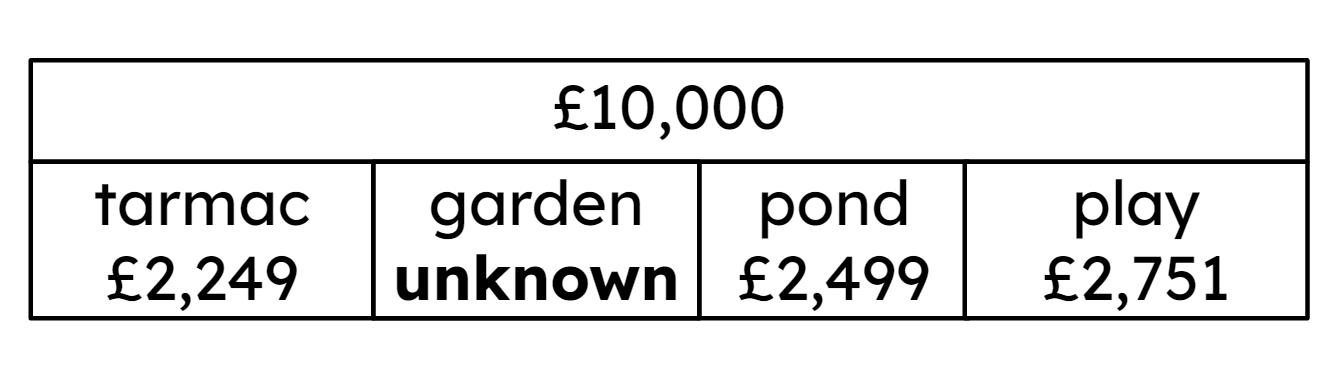
Q5.What is the unknown garden part of the budget shown in the bar model? The budget for the garden is £
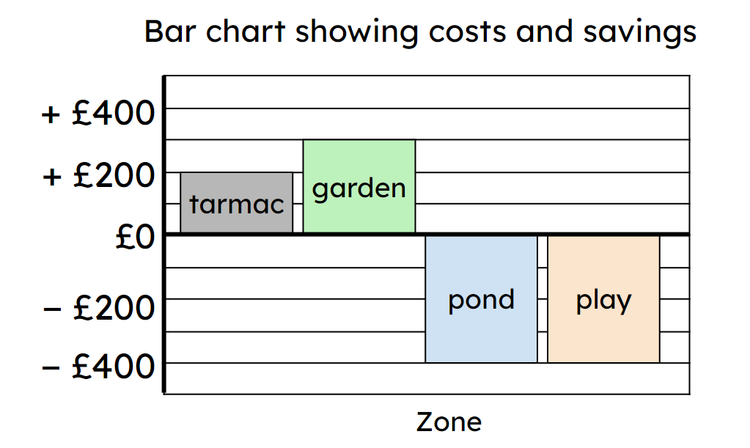
Q6.The budget was £10,000 and the graph shows the savings and extra costs. Was this over or under budget?