Use multiplication facts to answer division questions
I can use multiplication facts to solve division problems, including those with remainders.


- Year 4
Use multiplication facts to answer division questions
I can use multiplication facts to solve division problems, including those with remainders.
Lesson details
Key learning points
- Multiplication facts can be used to solve division equations and problems.
- In cases with a remainder, the largest multiple that is less than or equal to the dividend can be used.
- This indicates which multiplication fact should be used to find the number of equal groups.
- When the largest multiple is found, it is subtracted from the dividend to find the remainder.
Keywords
Grouping - Grouping is when we divide a number of objects into equal groups. We know the total number of objects and the number of objects in each group, but we don't know how many equal groups there are.
Sharing - Sharing is when a whole amount is split into equal parts or groups. We know the total number of objects and the number of parts it is split into, but we don't know how many are in each part.
Remainder - A remainder is the amount left over after division when the dividend does not divide exactly by the divisor.
Common misconception
Children may choose the multiple that is higher than or closest to the dividend, for example to solve 47 divided by 6, they may choose 8 x 6 = 48 instead of 7 x 6 = 42
Choose smaller numbers to demonstrate the concept, using practical equipment and number lines to demonstrate why the number must be equal to or less than the dividend.


Licence
Lesson video
Loading...
Prior knowledge starter quiz
6 Questions
Q1.Match the multiplication expressions to the correct products.

Q2.Match the division expressions to the correct quotient.
Q3.Which bar model represents this problem? Sofia has 60 biscuits and she divides them between 5 bags.
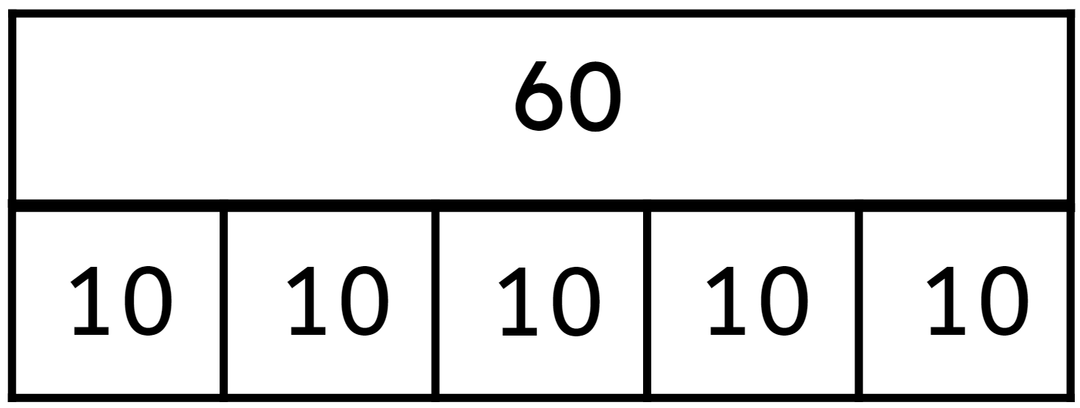
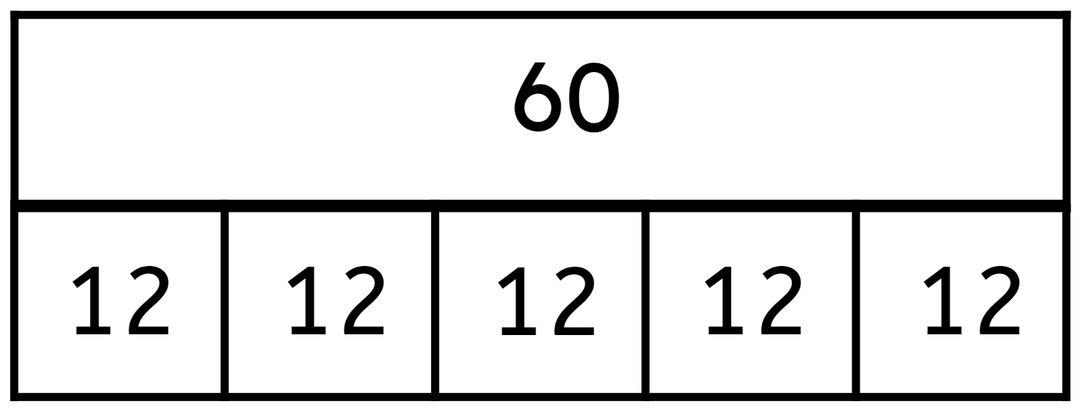
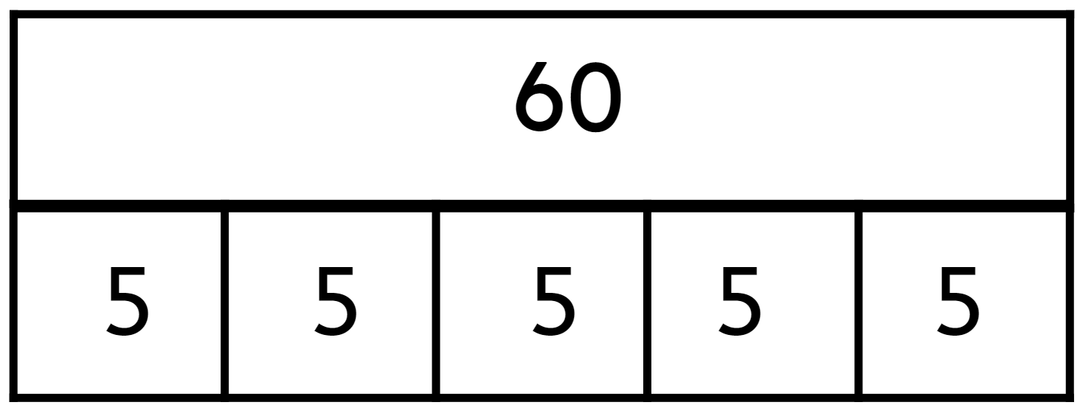
Q4.Alex divides 49 eggs into 7 boxes. There are eggs in each box.
Q5.What is the remainder when 67 sweets are divided between 9 packets? sweets

Q6.Alex divides 40 pencils equally between 6 pots. How many pencils are in each pot?
Assessment exit quiz
6 Questions
Q1.Match the parts of the sentence correctly.
Q2.What is the largest multiple of 6 that is less than or equal to 32?
Q3.Look at this equation. 45 ÷ 7 = ___ The largest multiple of 7 that is less than or equal to 45 is
Q4.45 sweets are divided between 8 bags. There are ___ sweets in each bag. Which multiplication fact will help you to solve this problem?
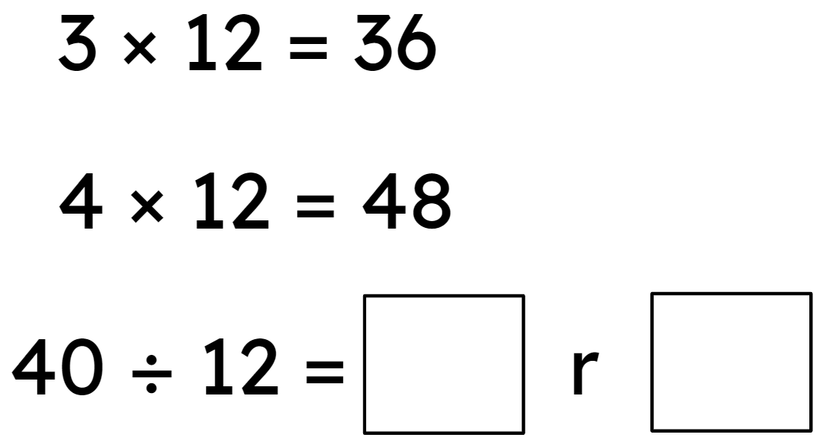
Q5.Using the given multiples of 12, solve the equation.