Using an outcome tree to display outcomes for more than two events
I can systematically find all the possible outcomes for more than two events by using an outcome tree diagram.


- Year 9
Using an outcome tree to display outcomes for more than two events
I can systematically find all the possible outcomes for more than two events by using an outcome tree diagram.
Lesson details
Key learning points
- Possible outcomes for more than two events can be shown in an outcome tree diagram.
- The outcome tree diagram can be used to generate a list.
- An outcome tree can be generated from a list.
Keywords
Tree diagrams - Tree diagrams are a representation used to model statistical/probability questions. Branches represent different possible events or outcomes.
Outcome tree - Each branch of an outcome tree shows a possible outcome from an event or from a stage of a trial. The full outcome tree shows all possible outcomes.
Sample space - A sample space is all the possible outcomes of a trial. A sample space diagram is a systematic way of producing a sample space.
Common misconception
An outcome tree can only have a maximum of three layers of branches.
An outcome tree can have as many layers of branches as needed, depending on the number of stages there are in a trial. For example, if a trial involved flipping 7 coins, then there would be 7 layers of branches! That's too probably too many to draw!


Licence
Lesson video
Loading...
Prior knowledge starter quiz
6 Questions
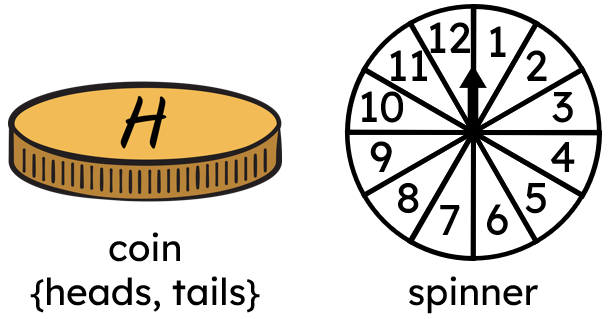
Q1.Trial: The coin and spinner are both spun once each.
Which of these statements are true?
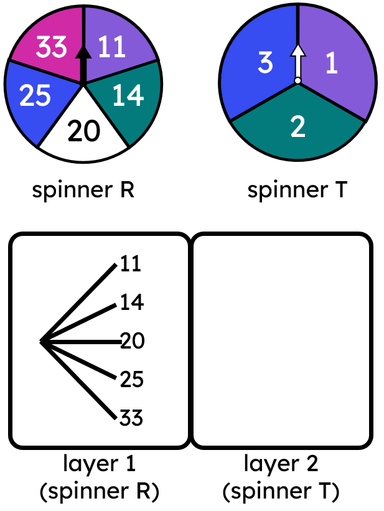
Q2.Trial: Spinner R and spinner T will both be spun once.
The outcomes of this trial are represented on this outcome tree.
In total there will there be branches in layer 2 of the outcome tree.
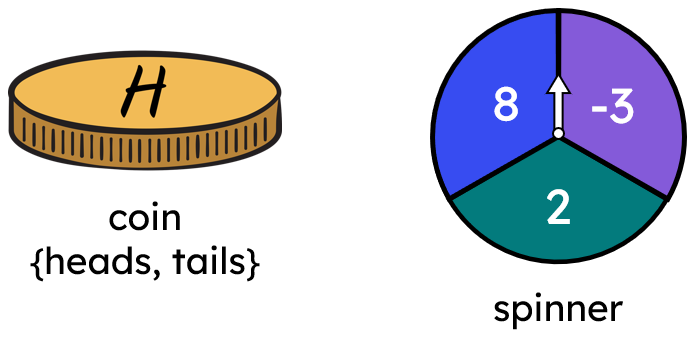
Q3.Trial: flipping the coin and spinning the spinner once each.
Which of these are representations that show the complete sample space of this trial?
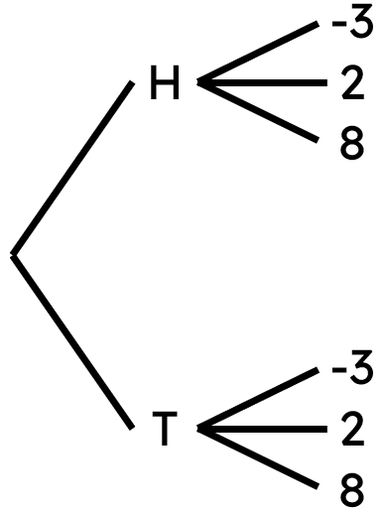
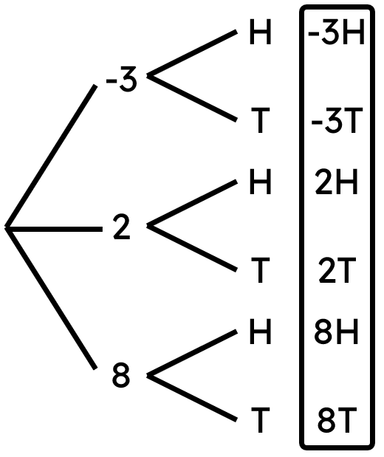
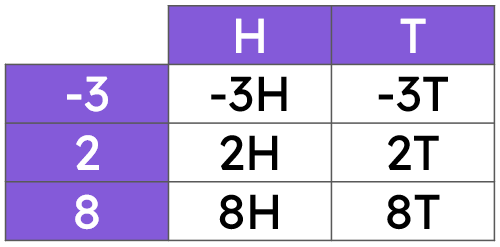
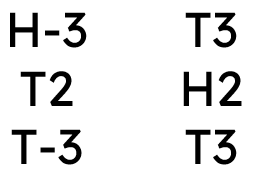
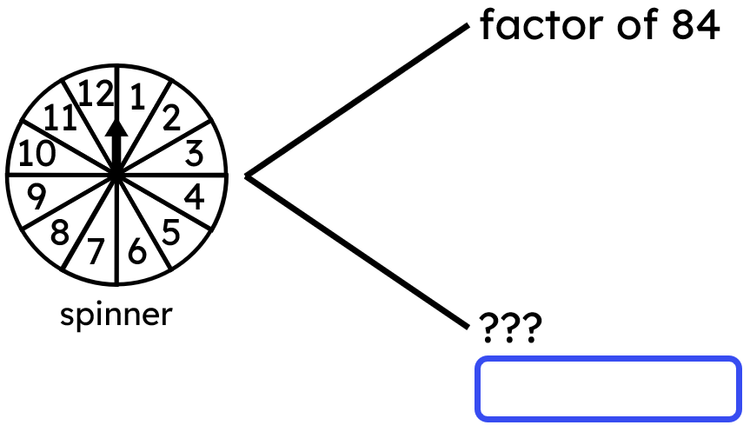
Q4.Trial: spinning this spinner once.
Event: factor of 84. This event and its opposite event are represented on an outcome tree.
The number of outcomes that should be written inside the box is .
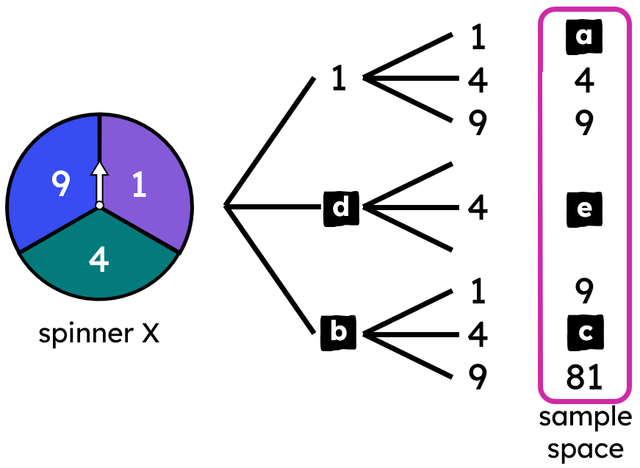
Q5.This incomplete outcome tree represents all outcomes from spinning spinner X twice and multiplying the results of each spin.
Match each letter in the sample space to its value.

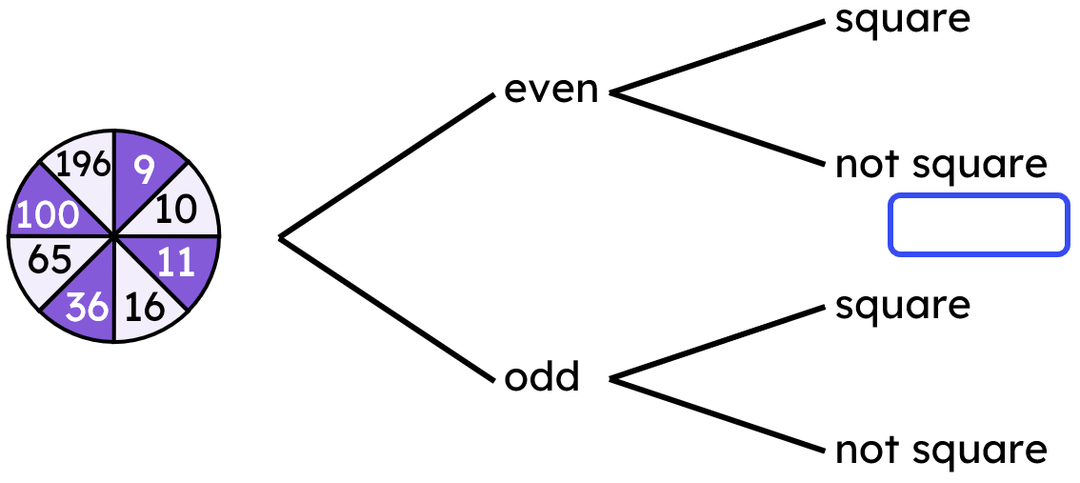
Q6.Trial: spinning this spinner once.
Event 1: even number.
Event 2: square number.
The outcome that should be written inside the box is .
Assessment exit quiz
6 Questions
Q1.Trial: spinning spinner X twice and spinning spinner Y once. The incomplete outcome tree shows this trial. Which outcomes could go in place of the letter a?
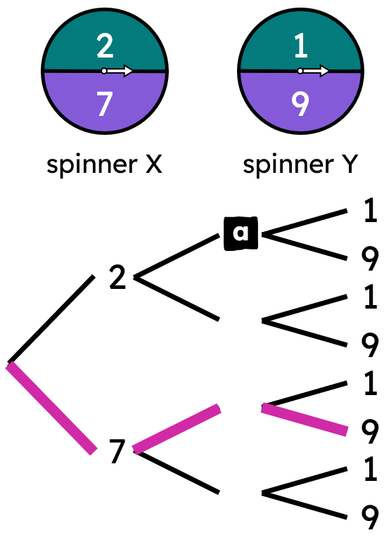
Q2.Trial: spinning spinner X twice and spinning spinner Y once.
Which of these statements could be true for the highlighted set of branches on this incomplete outcome tree?
Q3.Trial: a coin {heads, tails} is flipped three times.
The number of outcomes there are in this trial is . Sketch an outcome tree to help you.
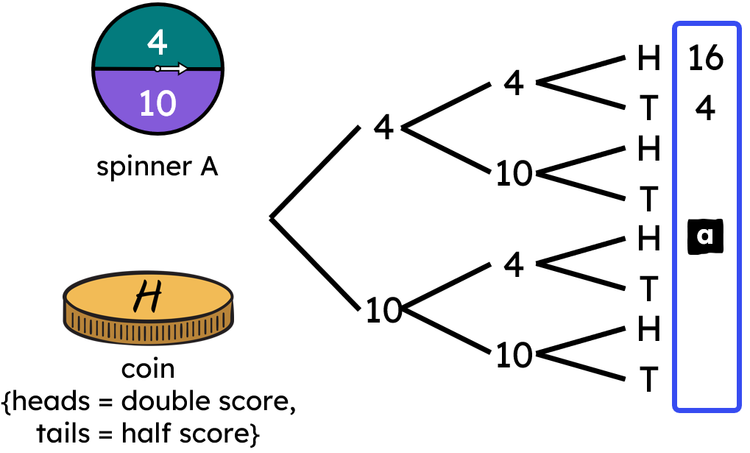
Q4.Trial: Spinner A is spun twice and coin flipped. The outcome of each spin is added together.
This incomplete outcome tree shows all the trial's outcomes.
The value of a in the sample space is .
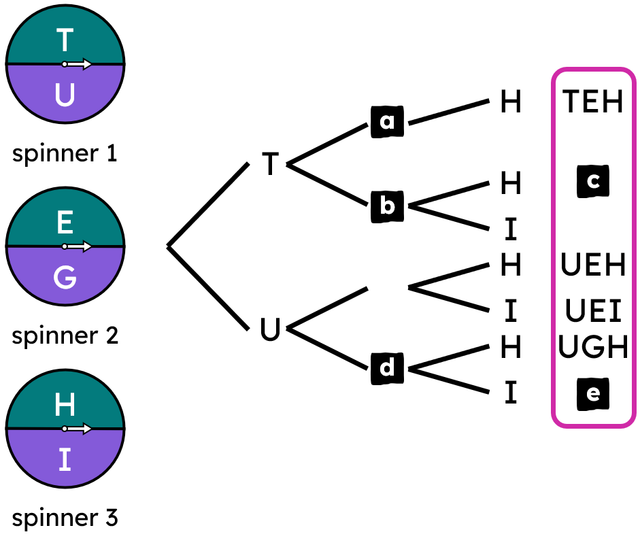
Q5.Trial: spinners 1, 2, and 3 will be spun once each.
This incomplete outcome tree represents all outcomes of this trial.
Match a, b, c, d, and e to the correct outcome of the trial or stage
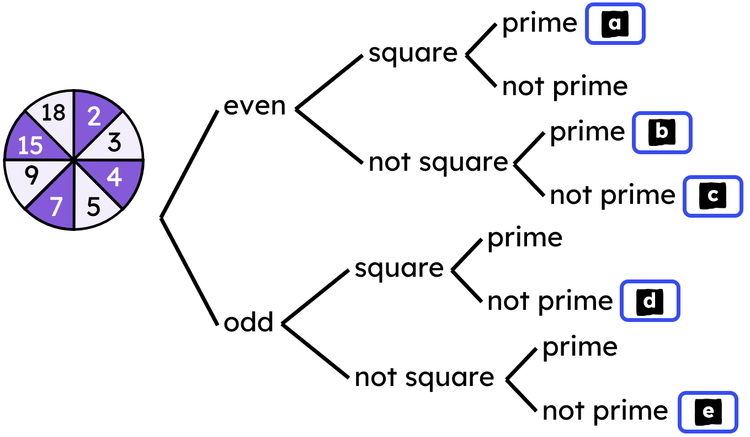
Q6.Trial: spinning this spinner once. Event 1: even number. Event 2: square number. Event 3: prime number.
Match each letter to its outcome.