Why chemical reactions happen
I can explain chemical bonding in terms of the transfer or sharing of electrons.


- Year 10
- AQA
Why chemical reactions happen
I can explain chemical bonding in terms of the transfer or sharing of electrons.
Lesson details
Key learning points
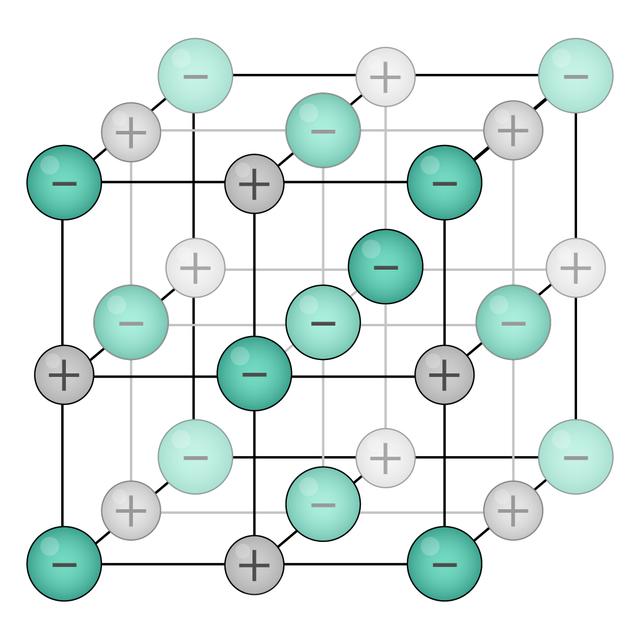
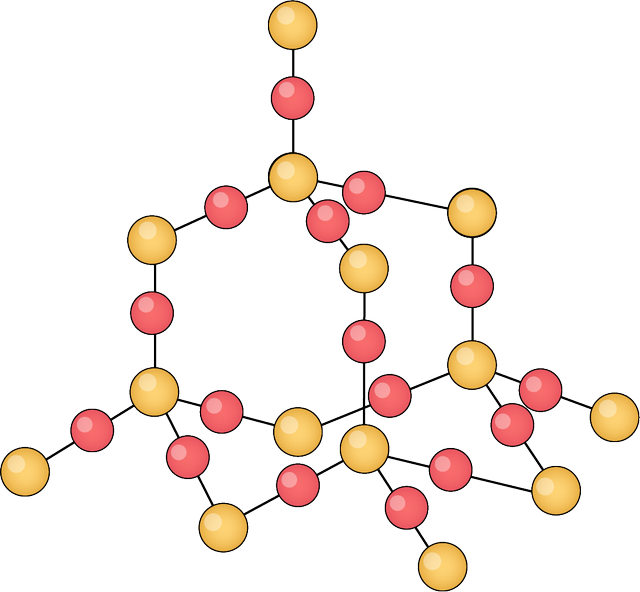
- There are five different types of substance: monatomic, simple covalent (molecules), giant covalent, ionic and metallic
- The outer shell in most atoms can hold 8 electrons but, in hydrogen and helium, it can only hold 2 electrons.
- Most atoms increase their stability by forming bonds with other atoms so that they have a full outer shell of electrons.
- Some atoms will share electrons with other atoms to increase their stability.
- Some atoms will lose or gain electrons to increase stability forming cations or anions, respectively.
Keywords
Molecule - A molecule is a particle consisting of a fixed number of (two or more) non-metal atoms covalently bonded together.
Noble gas configuration - When an atom has a full outer shell of electrons, it has a noble gas electron configuration.
Outer shell - The outer shell is the highest energy level in an atom and is usually the furthest from the nucleus.
Cation - a particle with a positive charge.
Anion - a particle with a negative charge.
Common misconception
Atoms react because they 'want' to gain a fuller outer shell of electrons – atoms don't have feelings. Monatomic means one atom and may be confused with the term element, which means one type of atom.
Take care with language and avoid personifying the atoms. Make sure that definitions and terms are used correctly.


Equipment

Licence
Lesson video
Loading...
Prior knowledge starter quiz
6 Questions
Q1.Match the following terms to the correct definition.

Q2.Which of the following are elements?
Q3.Oxygen has an atomic mass of 16 and an atomic number of 8. How many electrons does an atom of oxygen have?
Q4.Lithium is in Group 1, period 2 of the periodic table. It has an atomic number of 3. How many electrons are found in the outer shell of a lithium atom?
Q5.Which of the following are examples of diatomic molecules?
Q6.Which of the following statements about subatomic particles are correct?
Assessment exit quiz
6 Questions
Q1.Match the following terms to the correct definitions.
Q2.In which of the following are electrons donated and accepted?
Q3.Which of the following are monoatomic substances?
Q4.What type of bonding forms between non-metal atoms?
Q5.Why is an oxygen atom considered to be unstable?
Q6.Which of the following diagrams shows an ionic substance?