


The effect of light on the growth of seedlings: practical


Lesson details
Learning outcome
I can measure, record and explain the growth response of seedlings to different light intensities.
Key learning points
- Investigating the response of newly germinated seedlings to bright directional light (e.g. mustard seedlings)
- Accurately measuring the length of growth
- Producing accurate, labelled scientific drawings to depict the growth response
- Interpreting and describing the results
- Explaining the growth response of seedlings to light using ideas about auxins and phototropism
Keywords
Quantitative data - Data that is collected through taking measurements.
Qualitative data - Data that is collected through making observations.
Auxins - Plant hormones that affect the growth of plants.
Phototropism - Growth response stimulated by light.
Conclusion - A summary of the results of an investigation with data and scientific explanations
Common misconception
Pupils may think auxins move down the side of the stem that is nearest to the light and cause it to bend. Pupils may also think that sketched drawings are more accurate than scientific line drawings.
Auxins move down the shaded side causing cell elongation, which causes the seedling to grow towards the light. Line diagrams are representations that are clear and labelled; making them easy to read.
Teacher tip
The seedlings must be watered and measured every day. The seedlings in partial light must be taken in and out of light regularly. A sample set of results or demo seedlings make the investigation more realistic in a school setting.

Equipment
cress or mustard seeds, cotton wool, petri dishes, ruler

Content guidance
Risk assessment required - equipment

Supervision
Adult supervision required

Licence

Lesson video
Loading...
Prior knowledge starter quiz
6 Questions
Q1.Calculate the mean of these numbers: 40, 50 and 39.

Q2.How many millimetres are there in a centimetre?
Q3.Which of these are plant hormones?
Q4.What effect does auxin have on shoots?
Q5.What is a tropism?
Q6.Which images correctly show phototropism?

Assessment exit quiz
6 Questions
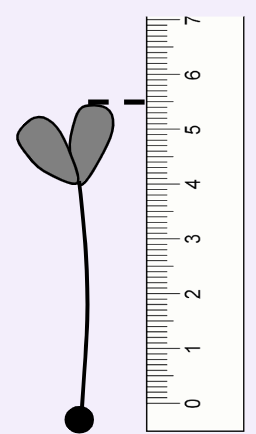
Q1.What is the height of this seedling in mm?
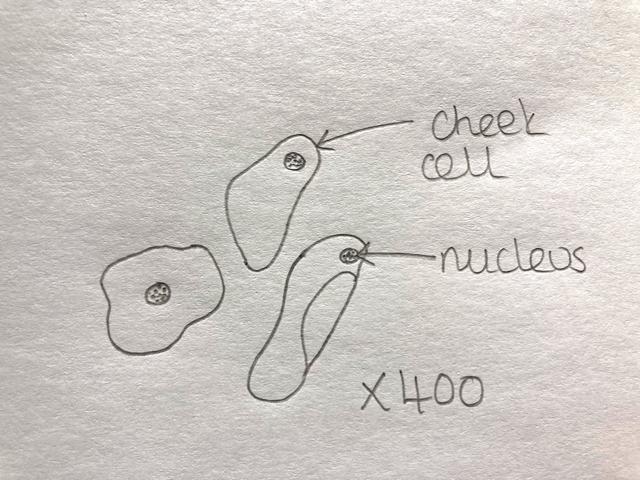
Q2.What should you not do on a biological drawing?
Q3.After 5 days, which seedlings had increased the most in height?
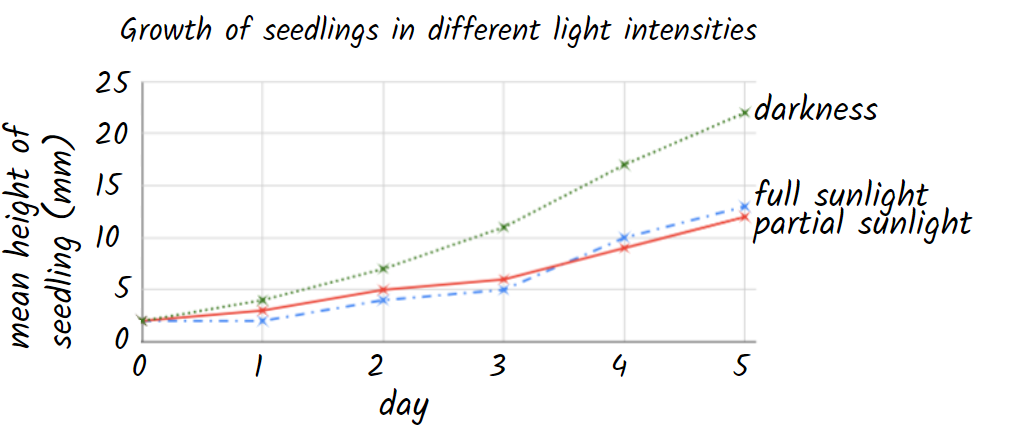
Q4.Which of the following conclusions can be made from this graph?
Q5.What is the plant response to light known as?
Q6.Look at this picture of a shoot. From which direction is the light coming and in which side of the shoot has auxin gathered?
To help you plan your 11 biology lesson on: The effect of light on the growth of seedlings: practical, download all teaching resources for free and adapt to suit your pupils' needs...
To help you plan your 11 biology lesson on: The effect of light on the growth of seedlings: practical, download all teaching resources for free and adapt to suit your pupils' needs.
The starter quiz will activate and check your pupils' prior knowledge, with versions available both with and without answers in PDF format.
We use learning cycles to break down learning into key concepts or ideas linked to the learning outcome. Each learning cycle features explanations with checks for understanding and practice tasks with feedback. All of this is found in our slide decks, ready for you to download and edit. The practice tasks are also available as printable worksheets and some lessons have additional materials with extra material you might need for teaching the lesson.
The assessment exit quiz will test your pupils' understanding of the key learning points.
Our video is a tool for planning, showing how other teachers might teach the lesson, offering helpful tips, modelled explanations and inspiration for your own delivery in the classroom. Plus, you can set it as homework or revision for pupils and keep their learning on track by sharing an online pupil version of this lesson.
Explore more key stage 4 biology lessons from the Plant growth and development unit, dive into the full secondary biology curriculum, or learn more about lesson planning.