Choose exam board for KS4 Computer Science (GCSE)
Choose exam board for KS4 English
Choose exam board for KS4 French
Choose exam board for KS4 Geography
Choose exam board for KS4 German
Choose exam board for KS4 History
Choose tier for KS4 Maths
Choose exam board for KS4 Music
Choose exam board for KS4 Physical education (GCSE)
Choose exam board for KS4 Religious education (GCSE)
Choose exam board for KS4 Spanish

      Chemical tests involving alkanes, alkenes and alcohols
      Lesson details

      Learning outcome

      I can use data to identify the functional group and predict the chain length for an alkane, alkene or alcohol.

      Key learning points

      1. A chemical test can identify the differences between alkanes and alkenes.
      2. Data from calorimetry and viscosity experiments can be used to predict the chain length of alkanes, alkenes & alcohols.
      3. As chain length increases, more energy is released during combustion.
      4. As chain length increases, the viscosity of alkanes, alkenes and alcohols increases.

      Keywords

      • Homologous series - A homologous series of organic compounds have the same general formula, and show similar chemical properties and physical property trends.

      • Functional group - The functional group is the atom or group of atoms responsible for the way a compound reacts.

      • Calorimetry - Calorimetry is an experiment that can be used to measure the energy released from a fuel.

      • Viscosity - Viscosity is how easily a liquid flows. The higher the viscosity, the less easily a liquid flows.

      Common misconception

      Describing the colour change of bromine water with an alkene from orange to clear.

      Coloured solutions can be clear if you can see through them. Colourless means it has no colour. Bromine water in the presence of an alkene changes from orange to colourless.

      Teacher tip

      Molymods can be used to model how bromine can react with an alkene.

      Licence

      This content is © Oak National Academy Limited (2026), licensed on Open Government Licence version 3.0
      except where otherwise stated. See Oak's terms & conditions
      (Collection 2).

      Lesson video

      Loading...

      Prior knowledge starter quiz

      6 Questions

      Q1.
      Sort the following alcohols into order of increasing chain length, starting with the shortest.

      1 - methanol
      2 - ethanol
      3 - propanol
      4 - butanol
      5 - pentanol

      Q2.
      What name is given to the atom or group of atoms responsible for the way a compound reacts?

      Correct Answer: functional group

      Q3.
      Match the following homologous series with the correct functional group.

      Correct Answer:alkene,C=C

      C=C

      Correct Answer:alcohol,–OH

      –OH

      Correct Answer:carboxylic acid ,–COOH

      –COOH

      Correct Answer:ester,–COO–

      –COO–

      Q4.
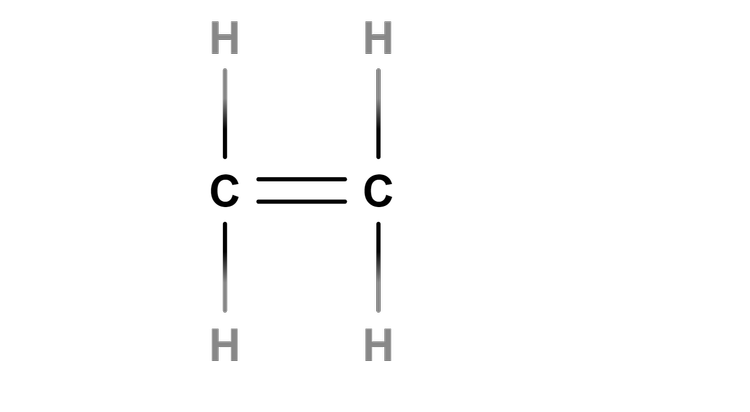
      Identify the molecule shown in the image.

      An image in a quiz
      methene
      methane
      methanol
      Correct answer: ethene
      ethane

      Q5.
      Which experiment is used to indirectly measure the energy released from the combustion of different fuels?

      photosynthesis
      crystallisation
      distillation
      Correct answer: calorimetry

      Q6.
      Which of the following statements about alkenes are correct?

      Correct answer: alkenes contain a C=C double bond
      alkenes are saturated molecules
      the simplest alkene is methene
      Correct answer: butene is an alkene containing 4 carbon atoms
      Correct answer: the general formula of alkenes is $$\text{C}_{\text{n}}\text{H}_{\text{2n}}$$

      6 Questions

      Q1.
      Which of the following is a test for unsaturation?

      Add sodium carbonate and test for carbon dioxide.
      Add hydrochloric acid and observe bubbling.
      Correct answer: Add bromine water and observe a colour change.
      Add lithium hydroxide and test the pH.

      Q2.
      Which of the following statements about chain length is correct?

      Correct answer: As chain length increases, more energy is released during combustion.
      As chain length increases, the same energy is released during combustion.
      As chain length increases, less energy is released during combustion.

      Q3.
      Sort the following alkenes into order of decreasing viscosity, starting with the most viscous.

      1 - pentene
      2 - butene
      3 - propene
      4 - ethene

      Q4.
      Which of the following colour changes, if any, will be observed when bromine water is added to an alkene?

      from colourless to orange
      from clear to orange
      Correct answer: from orange to colourless
      from orange to clear
      remains orange

      Q5.
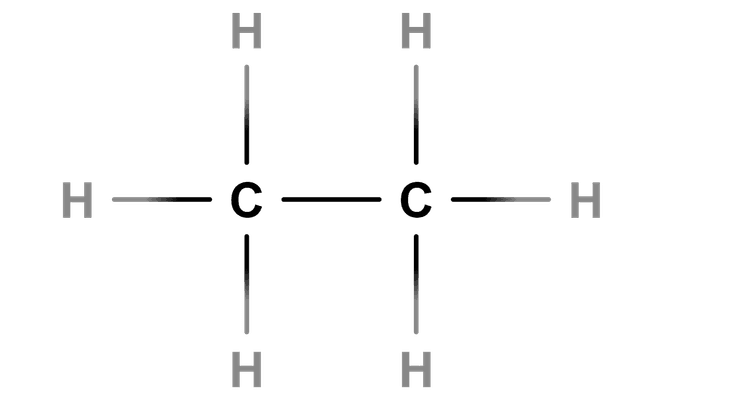
      Which of the following colour changes, if any, will be observed when bromine water is added to the molecule shown in the image?

      An image in a quiz
      from colourless to orange
      from clear to orange
      from orange to colourless
      from orange to clear
      Correct answer: remains orange

      Q6.
      Which of the following molecules will decolourise bromine water?

      Correct answer: C₂H₄
      C₂H₆
      Correct answer: C₃H₆
      C₃H₈

      To help you plan your 11 chemistry lesson on: Chemical tests involving alkanes, alkenes and alcohols, download all teaching resources for free and adapt to suit your pupils' needs...