


What is the difference between the Government and Parliament?


Lesson details
Learning outcome
I can describe the key differences between the Government and Parliament and explain some of their key roles.
Key learning points
- The Government has the authority to govern the UK.
- It is formed by the political party that wins a majority in the House of Commons and is led by the Prime Minister (PM).
- Parliament is made up of the House of Commons, the House of Lords and the monarch.
- The Government runs the country and enforces laws. Parliament debates, makes laws and scrutinises the Government.
Keywords
Government - the individuals who have been elected and given the authority to run the state, led by the Prime Minister (PM) in the UK
Authority - the power or right to have official responsibility, to give orders and make decisions
Parliament - comprises three parts: the House of Commons, the House of Lords and the monarch. Its purpose is to debate, make laws and scrutinise the government
Common misconception
The Government is the same thing as Parliament.
Parliament makes laws and is made up of elected MPs, appointed Lords and the monarch. The Government implements laws and runs the country, led by the PM. Parliament scrutinises Government decisions.
Teacher tip
Create a role-play scenario where pupils take on the roles of Parliament and the Government. A hands-on activity will support pupils in understanding the practical differences between the two, as they experience how Parliament makes legislation, with the Government executing it.

Licence

Lesson video
Loading...
Prior knowledge starter quiz
6 Questions
Q1.Which of the following best describes the phrase 'to govern'?
Q2.The UK is governed by which style of political system?
Q3.What does MP stand for, in a political context?
Q4.Members of Parliament (MPs) are elected to represent the views of the public in the of Commons.
Q5.Put these words into the correct order to form a sentence.
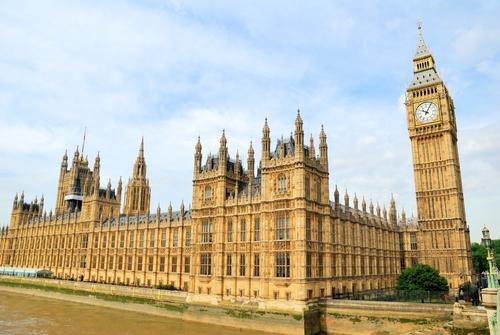
Q6.In which UK city is the House of Westminster, the home of Parliament found?
Assessment exit quiz
6 Questions
Q1.The people who are appointed to sit in the House of Lords are called ...
Q2.Match the following roles to their role descriptions.

Q3.Put these steps in the order that they occur when a government is set up.
Q4.Match these verbs associated with Parliament and government to their definitions.
Q5.The three parts of Parliament are:
Q6.In order to get a law passed, must approve it first.
To help you plan your 8 citizenship lesson on: What is the difference between the Government and Parliament?, download all teaching resources for free and adapt to suit your pupils' needs...
To help you plan your 8 citizenship lesson on: What is the difference between the Government and Parliament?, download all teaching resources for free and adapt to suit your pupils' needs.
The starter quiz will activate and check your pupils' prior knowledge, with versions available both with and without answers in PDF format.
We use learning cycles to break down learning into key concepts or ideas linked to the learning outcome. Each learning cycle features explanations with checks for understanding and practice tasks with feedback. All of this is found in our slide decks, ready for you to download and edit. The practice tasks are also available as printable worksheets and some lessons have additional materials with extra material you might need for teaching the lesson.
The assessment exit quiz will test your pupils' understanding of the key learning points.
Our video is a tool for planning, showing how other teachers might teach the lesson, offering helpful tips, modelled explanations and inspiration for your own delivery in the classroom. Plus, you can set it as homework or revision for pupils and keep their learning on track by sharing an online pupil version of this lesson.
Explore more key stage 3 citizenship lessons from the How does the political system work in the UK? unit, dive into the full secondary citizenship curriculum, or learn more about lesson planning.