


How can we exercise democratic rights without a vote?


Lesson details
Learning outcome
I can explain what democratic rights are and how to exercise them, even if I am not eligible to vote yet.
Key learning points
- Democratic rights are fundamental freedoms and entitlements needed to sustain political democracy.
- There are several ways you can exercise your democratic rights, even if you cannot vote.
Keywords
Human rights - basic rights and freedoms that all people are entitled to
Democratic rights - fundamental freedoms and entitlements needed to maintain a democratic society
Common misconception
Voting is the only way you can exercise your democratic rights.
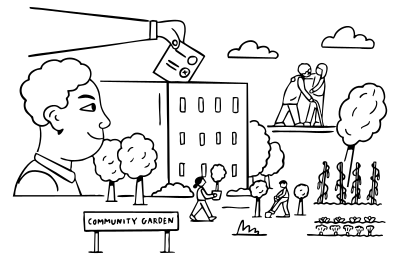
There are several ways you can exercise your democratic rights, even if you cannot vote. You could: contact your local councillor or Member of Parliament (MP); express your opinion; join a peaceful protest or pressure group or join a political party.
Teacher tip
Encourage pupils to think about how the actions discussed in this lesson can make a real difference in their communities.

Content guidance
Depiction or discussion of sensitive content
Depiction or discussion of violence or suffering
Depiction or discussion of violence or suffering

Supervision
Adult supervision required

Licence

Lesson video
Loading...
Prior knowledge starter quiz
6 Questions
Q1.Which of the following is a key feature of a democracy?
Q2.Which of the following Acts granted (some) women the right to vote for the first time in the UK?
Q3.Who was the leader of the Suffragettes?
Q4.Match the sentence starter to it's end.

Q5.Which of the following is a common argument in favour of giving 16- and 17-year-olds the right to vote?
Q6.What is a common argument against giving 16- and 17-year-olds the right to vote?
Assessment exit quiz
6 Questions
Q1.What am I describing? Fundamental rights and freedoms that every person is entitled to.
Q2.What am I describing? Fundamental freedoms and entitlements needed to maintain a democratic society.
Q3.Which of the following is an example of a democratic right?
Q4.Match the right to it's description.
Q5.Which of the following is not a way to exercise democratic rights without voting?
Q6.Which of the following would joining a political party as a youth member enable you to do?
To help you plan your 8 citizenship lesson on: How can we exercise democratic rights without a vote?, download all teaching resources for free and adapt to suit your pupils' needs...
To help you plan your 8 citizenship lesson on: How can we exercise democratic rights without a vote?, download all teaching resources for free and adapt to suit your pupils' needs.
The starter quiz will activate and check your pupils' prior knowledge, with versions available both with and without answers in PDF format.
We use learning cycles to break down learning into key concepts or ideas linked to the learning outcome. Each learning cycle features explanations with checks for understanding and practice tasks with feedback. All of this is found in our slide decks, ready for you to download and edit. The practice tasks are also available as printable worksheets and some lessons have additional materials with extra material you might need for teaching the lesson.
The assessment exit quiz will test your pupils' understanding of the key learning points.
Our video is a tool for planning, showing how other teachers might teach the lesson, offering helpful tips, modelled explanations and inspiration for your own delivery in the classroom. Plus, you can set it as homework or revision for pupils and keep their learning on track by sharing an online pupil version of this lesson.
Explore more key stage 3 citizenship lessons from the Why was the struggle for the vote important today? unit, dive into the full secondary citizenship curriculum, or learn more about lesson planning.