


What impact can the media have locally and nationally?


Lesson details
Learning outcome
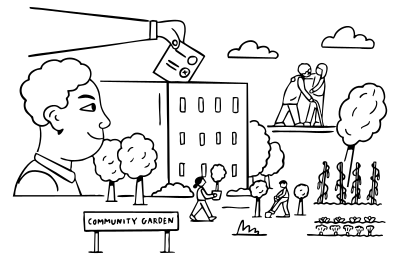
I can consider what impact the media has had at both a local and national level.
Key learning points
- National media covers news of interest to the entire country, while local media focuses on smaller areas.
- Local media holds authorities accountable and raises awareness of local issues.
- Local media encourages civic engagement and strengthens community cohesion.
- National media shapes public opinion and holds the Government accountable.
- National media sets the national agenda and unifies the nation.
Keywords
Media - television, radio, printed and digital media which can reach a large number of people
Local - something that relates to a specific area, town or community
National - something that affects or covers the whole country
Common misconception
Local media is less important than national media in influencing public opinion.
Both are vital. Local media engages communities directly, while national media impacts the broader public and sets key agendas. They complement each other.
Teacher tip
Highlight how both types of media serve unique, yet equally important, roles in shaping society and influencing civic actions. Pupils could read and compare local and national newspapers to compare the differences in content and purpose.

Content guidance
Depiction or discussion of discriminatory behaviour
Depiction or discussion of sensitive content
Depiction or discussion of violence or suffering

Supervision
Adult supervision required

Licence

Lesson video
Loading...
Prior knowledge starter quiz
6 Questions
Q1.Match the word with its correct definition.

Q2.According to Ofcom what percentage of citizens in the UK regularly consume some form of media?
Q3.Which of the following best describes the concept of parliamentary sovereignty in the UK?
Q4.Fill in the blank: Traditional media was once small-owned, but now it is dominated by large , which control multiple companies, including media outlets.
Q5.Which of the following is a key concern with digital media?
Q6.Which of the following describes hard power?
Assessment exit quiz
6 Questions
Q1.Which of the following best describes the role of local media?
Q2.Fill in the blank: National media sets the agenda and unifies the nation.
Q3.Match the word to its correct definition.
Q4.Which of the following is true regarding local and national media?
Q5.Community members can get their voice heard in their local area by voting in local or attending council meetings.
Q6.What is a key function of national media in the UK?
To help you plan your 10 citizenship lesson on: What impact can the media have locally and nationally?, download all teaching resources for free and adapt to suit your pupils' needs...
To help you plan your 10 citizenship lesson on: What impact can the media have locally and nationally?, download all teaching resources for free and adapt to suit your pupils' needs.
The starter quiz will activate and check your pupils' prior knowledge, with versions available both with and without answers in PDF format.
We use learning cycles to break down learning into key concepts or ideas linked to the learning outcome. Each learning cycle features explanations with checks for understanding and practice tasks with feedback. All of this is found in our slide decks, ready for you to download and edit. The practice tasks are also available as printable worksheets and some lessons have additional materials with extra material you might need for teaching the lesson.
The assessment exit quiz will test your pupils' understanding of the key learning points.
Our video is a tool for planning, showing how other teachers might teach the lesson, offering helpful tips, modelled explanations and inspiration for your own delivery in the classroom. Plus, you can set it as homework or revision for pupils and keep their learning on track by sharing an online pupil version of this lesson.
Explore more key stage 4 citizenship lessons from the How powerful is the media? unit, dive into the full secondary citizenship curriculum, or learn more about lesson planning.