


Adrenaline, thyroxine and negative feedback


Lesson details
Learning outcome
I can describe the roles of the hormones adrenaline and thyroxine in the human body, and explain what is meant by negative feedback.
Key learning points
- The hormone adrenaline is secreted by the adrenal gland during stress; it causes the body to prepare for rapid action.
- The hormone thyroxine is secreted by the thyroid gland; it controls growth and the rates of chemical reactions in cells.
- The pituitary gland secretes hormones that can control other glands.
- The pituitary gland secretes TSH, which causes the thyroid gland to secrete thyroxine.
- Thyroxine causes the pituitary gland to stop secreting TSH; this is an example of negative feedback.
Keywords
Adrenaline - A hormone secreted by the adrenal glands in times of fear or stress.
Thyroxine - A hormone secreted by the thyroid gland that stimulates the basal metabolic rate.
Negative feedback - A mechanism where changes to conditions cause an action to reverse the change, keeping conditions stable.
Gland - An organ or tissues that produces and secretes substances, such as hormones.
Common misconception
Negative feedback only works to reverse high levels back to normal.
The slide deck has several slides where changes are described as being high and low and there is a CFU question in the final learning cycle that specifically assesses this misconception.
Teacher tip
You can link negative feedback to previous lessons such as regulating blood glucose to reinforce the idea of negative feedback with a different example.

Licence

Lesson video
Loading...
Prior knowledge starter quiz
6 Questions
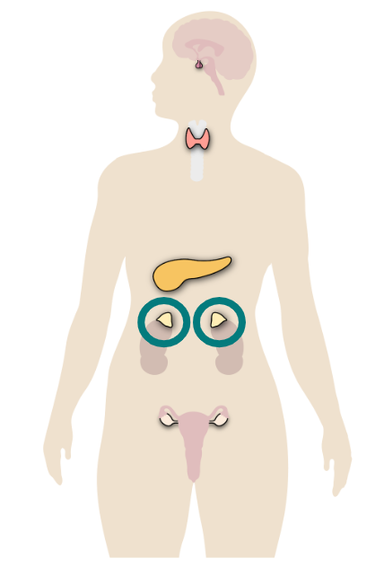
Q1.The image shows glands of the endocrine system. What are the circled glands called?
Q2.Which hormone is secreted by the adrenal glands?
Q3.Which gland in the human body is involved in regulating metabolism?
Q4.What is the name of the hormone secreted by the thyroid gland?
Q5.Which gland is known as the master gland?
Q6.Regulation of constant internal conditions for optimum enzyme activity and cell function is called ...
Assessment exit quiz
6 Questions
Q1.Match the hormone to the gland that it is secreted by.

Q2.Which of the following correctly describe the effect of adrenaline on the body?
Q3.What is the mechanism called where the body detects changes in conditions, then reverses these changes to bring levels back to normal?
Q4.Put these steps in order to show the body's response to low levels of thyroxine.
Q5.Which is true for when thyroxine levels are too high?
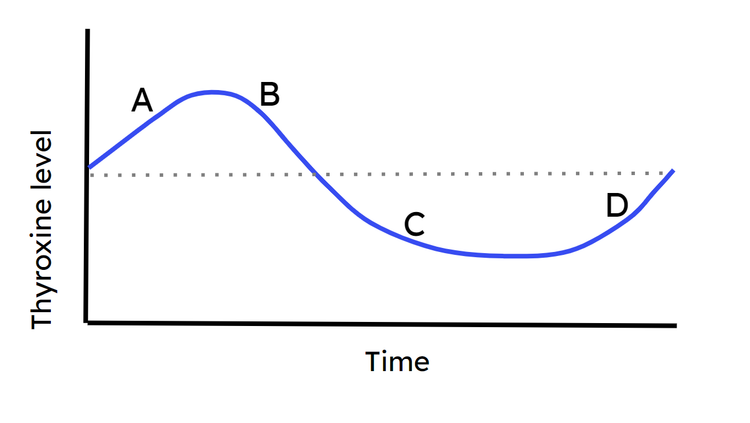
Q6.The graph below shows changes in thyroxine over time. Which statements about the graph are correct?
To help you plan your 10 combined science lesson on: Adrenaline, thyroxine and negative feedback, download all teaching resources for free and adapt to suit your pupils' needs...
To help you plan your 10 combined science lesson on: Adrenaline, thyroxine and negative feedback, download all teaching resources for free and adapt to suit your pupils' needs.
The starter quiz will activate and check your pupils' prior knowledge, with versions available both with and without answers in PDF format.
We use learning cycles to break down learning into key concepts or ideas linked to the learning outcome. Each learning cycle features explanations with checks for understanding and practice tasks with feedback. All of this is found in our slide decks, ready for you to download and edit. The practice tasks are also available as printable worksheets and some lessons have additional materials with extra material you might need for teaching the lesson.
The assessment exit quiz will test your pupils' understanding of the key learning points.
Our video is a tool for planning, showing how other teachers might teach the lesson, offering helpful tips, modelled explanations and inspiration for your own delivery in the classroom. Plus, you can set it as homework or revision for pupils and keep their learning on track by sharing an online pupil version of this lesson.
Explore more key stage 4 combined science lessons from the Coordination and control: hormones and the human endocrine system unit, dive into the full secondary combined science curriculum, or learn more about lesson planning.