


Measuring the resistance of a filament lamp


Lesson details
Learning outcome
I can find the resistance of a filament lamp by measuring the current and p.d. for a suitable range of p.d.
Key learning points
- An appropriate range of p.d. values includes 0 V and the maximum p.d. of the lamp and at least four other readings.
- For electricity investigations, it is good practice to take many more than the minimum number of measurements.
- After plotting a graph, extra readings could be taken to fill gaps or to check possible errors.
- Plots that lie off the best fit line are possible errors that need to be checked.
- The resistance of a filament lamp is calculated from an I–V graph using pairs of readings and the equation R = V ÷ I.
Keywords
Filament lamp - a type of lamp that uses a hot wire to emit light
Variable resistor - a resistor that can be easily changed to any value in its range
Range - the minimum to maximum possible values in an experiment
Repeat reading - when a measurement is taken again to improve the experiment
Best fit line - a line that shows the underlying trend of a set of results on a graph, it can be straight or curved
Common misconception
The terms current, voltage, resistance, energy and power, together with the properties of each, are often mixed up.
As each term is introduced during this lesson, spend a few moments checking pupils’ understanding.
Teacher tip
A simple string loop model of a series circuit can be helpful for showing: p.d. corresponds to the size of push (caused by an electric field); the amount of string passing a point each second corresponds to current; and firmness of a grip on the string corresponds to resistance.

Equipment
Power supply (or battery pack), filament lamp, variable resistor, electrical leads, ammeter and voltmeter.

Content guidance
Risk assessment required - equipment

Supervision
Adult supervision required

Licence

Lesson video
Loading...
Prior knowledge starter quiz
6 Questions
Q1.What is the correct name for the electrical device shown?
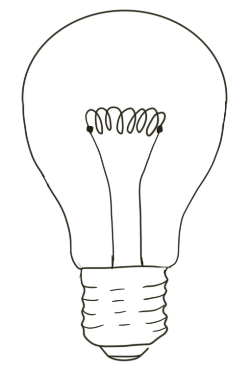
Q2.Why is the filament glowing?
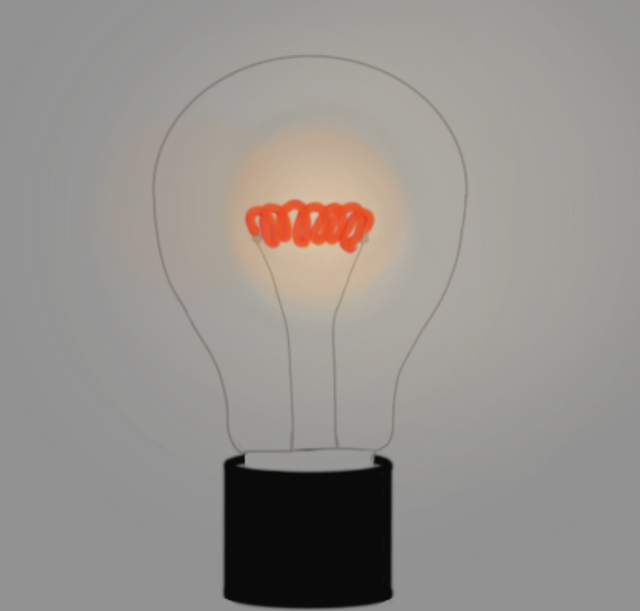
Q3.Which of the following statements about filament bulbs is incorrect?
Q4.Which of the following statements are correct?
Q5.Which of the following components is represented by the circuit symbol shown?
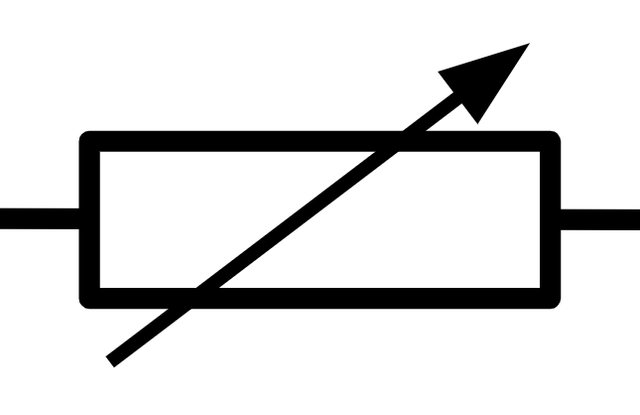
Q6.Which of the following equations shows the correct relationship between potential difference, V, current, I and resistance, R?
Assessment exit quiz
6 Questions
Q1.Match each of the following components to their function in a circuit with a cell and filament lamp.

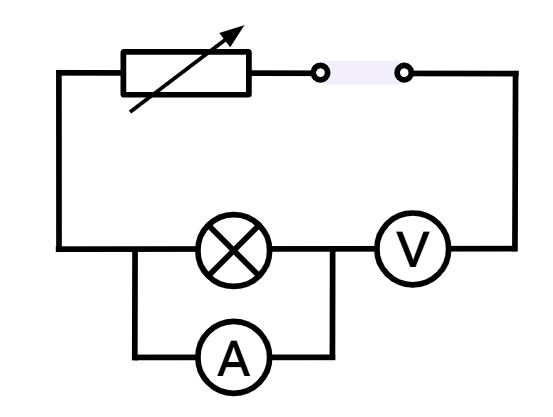
Q2.What mistake has been made in the circuit shown in the diagram below?
Q3.What is 5 milliamps (mA) when converted to amps (A)?
Q4.A current of 0.6 A flows through a filament lamp when a p.d. of 3.0 V is applied across it. What is the resistance of the lamp in ohms (Ω)?
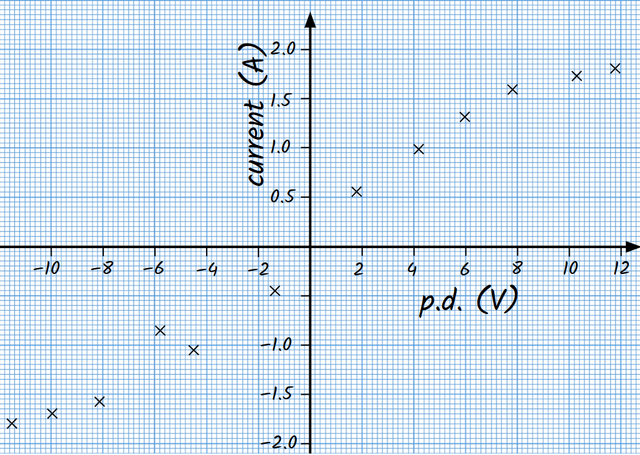
Q5.What should the line of best fit look like on the graph shown?
Q6.Which of the following statements are correct when a filament lamp becomes brighter?
To help you plan your 10 combined science lesson on: Measuring the resistance of a filament lamp, download all teaching resources for free and adapt to suit your pupils' needs...
To help you plan your 10 combined science lesson on: Measuring the resistance of a filament lamp, download all teaching resources for free and adapt to suit your pupils' needs.
The starter quiz will activate and check your pupils' prior knowledge, with versions available both with and without answers in PDF format.
We use learning cycles to break down learning into key concepts or ideas linked to the learning outcome. Each learning cycle features explanations with checks for understanding and practice tasks with feedback. All of this is found in our slide decks, ready for you to download and edit. The practice tasks are also available as printable worksheets and some lessons have additional materials with extra material you might need for teaching the lesson.
The assessment exit quiz will test your pupils' understanding of the key learning points.
Our video is a tool for planning, showing how other teachers might teach the lesson, offering helpful tips, modelled explanations and inspiration for your own delivery in the classroom. Plus, you can set it as homework or revision for pupils and keep their learning on track by sharing an online pupil version of this lesson.
Explore more key stage 4 combined science lessons from the Circuit components unit, dive into the full secondary combined science curriculum, or learn more about lesson planning.