


Analysing series circuits: including complex calculations



Lesson details
Learning outcome
I can use circuit rules and the equation I = V ÷ R to analyse series circuits.
Key learning points
- Current can be calculated using the equation: current = p.d. ÷ resistance (I = V ÷ R).
- The rules of current and p.d. for a series circuit can be applied to find some missing values of current and p.d.
- The equation I = V ÷ R can be rearranged so that either V or R is the subject of the equation.
- If any two values in the equation I = V ÷ R are known, the third can be calculated.
- If only one value in the equation I = V ÷ R is known, rules for current or p.d. need to be applied to find a second.
Keywords
Electrical current - Electrical current is the amount of charge flowing past a given point in one second.
Series circuit - A series circuit is an electrical circuit with a single loop.
Potential difference (p.d.) - P.d is a measure of the push an electric field gives to charges.
Resistance - Resistance is a property of a material that prevents the flow of current.
Ohms (Ω) - Ohms is the unit of resistance.
Common misconception
To solve circuits, you need only to put numbers into equations.
Talk through circuits with pupils before analysing them in order to develop an intrinsic understanding of how circuits work; research shows this improves pupils’ problem solving ability for electric circuits.
Teacher tip
A string loop or rope loop model is very useful for supporting discussion about rules in series circuits.

Licence

Lesson video
Loading...
Prior knowledge starter quiz
6 Questions
Q1.Which of the following is the unit of electric current?

Q2.Which of the following is the unit of resistance?
Q3.There is an invisible electric around a charged object, in which other charged objects and small, uncharged objects experience forces.
Q4.Which of the following can always be used to describe a series circuit?
Q5.A lamp is added to a series circuit, in series with the other components in the circuit. No other changes are made to the circuit.
Which of the following describes what happens to the current?
Q6.A series circuit includes one 1.5 V cell.
Two more 1.5 V cells are added in series with the first cell, and no other changes are made. Which of the following occurs?
Assessment exit quiz
6 Questions
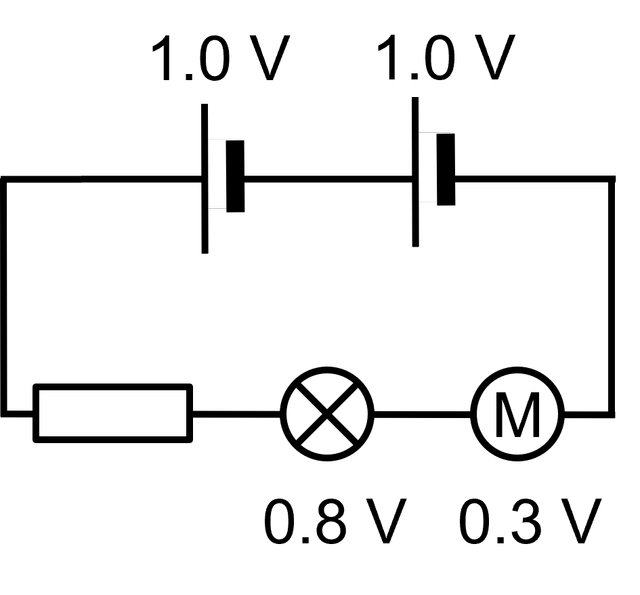
Q1.The circuit diagram shows a series circuit. The potential difference across each cell and component is shown, except for the resistor.
The p.d. across the resistor is V.
Q2.What potential difference is needed to make a current of 0.40 A flow through a motor with a resistance of 8.0 Ω?
Q3.A resistor in a circuit has a potential difference of 5.5 V across it and a current of 2.2 A flowing through it. The resistance of the resistor is Ω.
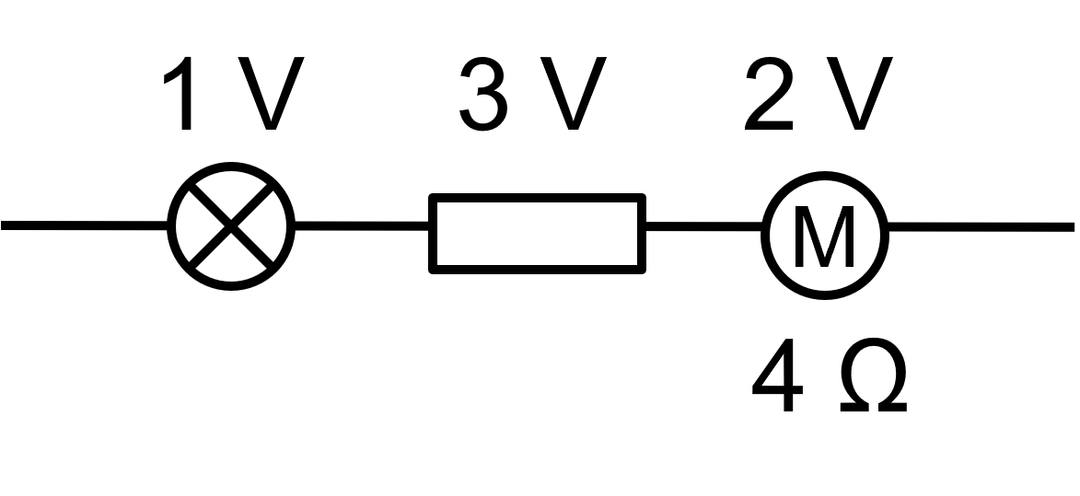
Q4.The diagram shows three components in series with each other. The potential difference across each component, and the resistance of one component, are shown. The resistance of the resistor is Ω.
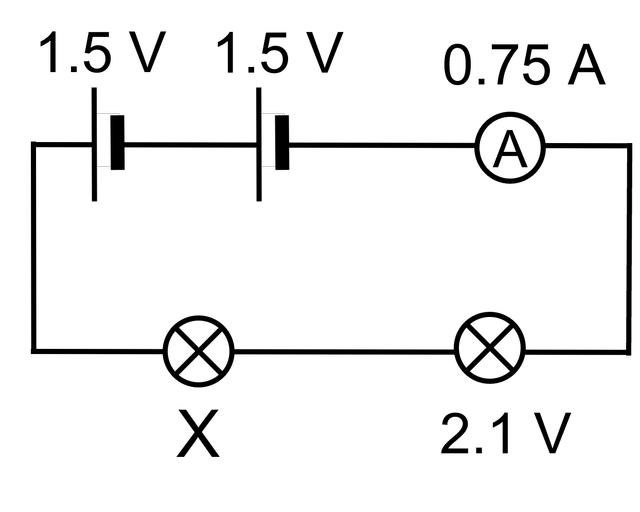
Q5.What is the resistance of the lamp labelled X in the circuit shown?
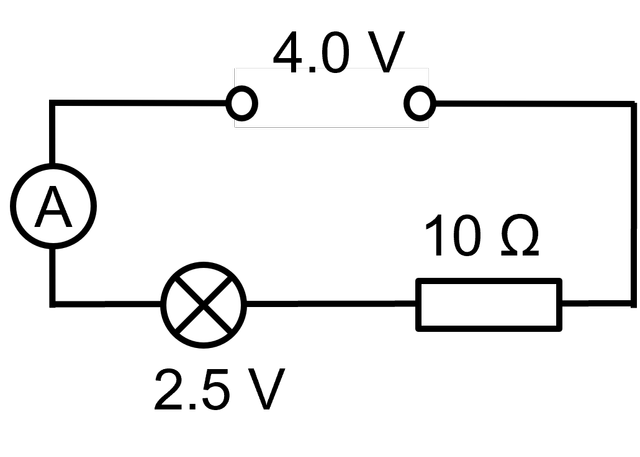
Q6.The diagram shows a series circuit. The power supply voltage, the p.d. across the lamp and the resistance of the resistor are shown.
The reading on the ammeter is A.
To help you plan your 10 combined science lesson on: Analysing series circuits: including complex calculations, download all teaching resources for free and adapt to suit your pupils' needs...
To help you plan your 10 combined science lesson on: Analysing series circuits: including complex calculations, download all teaching resources for free and adapt to suit your pupils' needs.
The starter quiz will activate and check your pupils' prior knowledge, with versions available both with and without answers in PDF format.
We use learning cycles to break down learning into key concepts or ideas linked to the learning outcome. Each learning cycle features explanations with checks for understanding and practice tasks with feedback. All of this is found in our slide decks, ready for you to download and edit. The practice tasks are also available as printable worksheets and some lessons have additional materials with extra material you might need for teaching the lesson.
The assessment exit quiz will test your pupils' understanding of the key learning points.
Our video is a tool for planning, showing how other teachers might teach the lesson, offering helpful tips, modelled explanations and inspiration for your own delivery in the classroom. Plus, you can set it as homework or revision for pupils and keep their learning on track by sharing an online pupil version of this lesson.
Explore more key stage 4 combined science lessons from the Electric fields and circuit calculations unit, dive into the full secondary combined science curriculum, or learn more about lesson planning.