


Exploring the characters' emotions in 'The Day the Crayons Quit'



Lesson details
Learning outcome
I can understand the reasons that the different characters write a letter in ‘The Day the Crayons Quit’ by exploring their emotions.
Key learning points
- The crayons in ‘The Day the Crayons Quit’ use letters to explain to Duncan why they are going to quit.
- They all share different emotions in their letters.
- Simple sentences can be written in the simple present, progressive present and perfect present tense.
- A simple sentence is formed of a main clause; a main clause contains a verb and makes sense by itself.
- One type of simple sentence is the statement: it tells the reader a fact or an opinion.
Keywords
Character - a person, animal, being, creature or thing in a story
Emotion - the way a person is feeling
Present tense - tells the reader the action is happening now
Simple sentence - a sentence about one idea that makes complete sense
Statement - a type of simple sentence that expresses a fact or an opinion and most often ends with a full stop
Common misconception
Pupils may think that simple sentences that are statements can only give facts.
Simple sentences can be used to state facts, opinions and emotions.
Teacher tip
Use the accompanying Year 3 Grammar unit 'Tense forms: simple, progressive and perfect' to teach the range of tenses used at Year 3 level in detail. Secure knowledge of different tense types increases pupil engagement in writing.

Equipment
You need a copy of the 2016 Harper Collins edition of ‘The Day the Crayons Quit', written by Drew Daywalt and illustrated by Oliver Jeffers for this lesson.

Licence

Lesson video
Loading...
Prior knowledge starter quiz
6 Questions
Q1.What kind of text is 'The Day the Crayons Quit'?

Q2.What is the name of the author of 'The Day the Crayons Quit'?
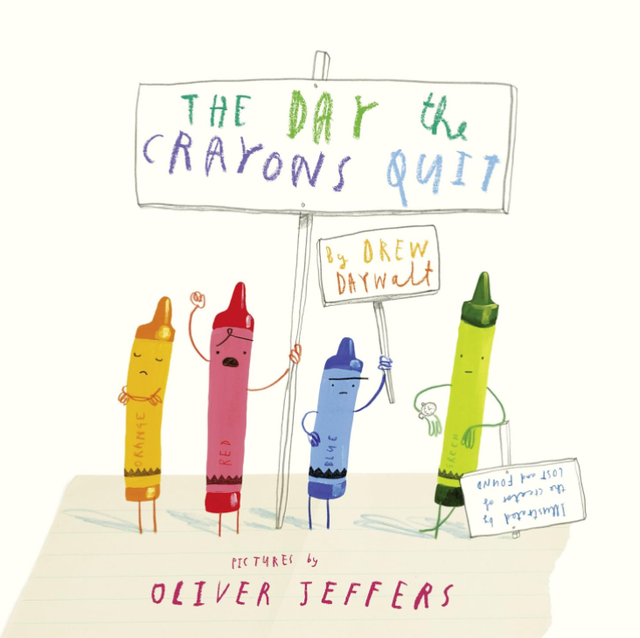
Q3.What objects are the main characters in 'The Day the Crayons Quit'?
Q4.Select the verb in this sentence: 'The crayon was annoyed.'
Q5.Select the sentence written in the present tense.
Q6.Which sentence shows the character's emotion?
Assessment exit quiz
6 Questions
Q1.Is this statement true or false? 'All the crayons were feeling the same emotions.'
Q2.What is the definition of 'emotion'?
Q3.Why was the red one frustrated with Duncan?
Q4.Which of the following are true of a simple sentence?
Q5.Which of these sentences is written in the progressive present tense?
Q6.Which of these sentences is written in the perfect present tense?
To help you plan your 3 English lesson on: Exploring the characters' emotions in 'The Day the Crayons Quit', download all teaching resources for free and adapt to suit your pupils' needs...
To help you plan your 3 English lesson on: Exploring the characters' emotions in 'The Day the Crayons Quit', download all teaching resources for free and adapt to suit your pupils' needs.
The starter quiz will activate and check your pupils' prior knowledge, with versions available both with and without answers in PDF format.
We use learning cycles to break down learning into key concepts or ideas linked to the learning outcome. Each learning cycle features explanations with checks for understanding and practice tasks with feedback. All of this is found in our slide decks, ready for you to download and edit. The practice tasks are also available as printable worksheets and some lessons have additional materials with extra material you might need for teaching the lesson.
The assessment exit quiz will test your pupils' understanding of the key learning points.
Our video is a tool for planning, showing how other teachers might teach the lesson, offering helpful tips, modelled explanations and inspiration for your own delivery in the classroom. Plus, you can set it as homework or revision for pupils and keep their learning on track by sharing an online pupil version of this lesson.
Explore more key stage 2 English lessons from the 'The Day the Crayons Quit': reading and writing persuasive letters unit, dive into the full primary English curriculum, or learn more about lesson planning.