


Partition one of the factors in a multiplication equation using representations


Lesson details
Learning outcome
I can partition one of the factors in a multiplication equation in different ways using representations.
Key learning points
- We can easily calculate multiples of a number by adding on or subtracting that number from an adjacent multiple.
- Multiplying a number by a group of numbers added together is the same as doing each multiplication separately.
- A factor can be partitioned to solve multiplication problems efficiently.
Keywords
Multiples - The product of a number and an integer.
Partition - The act of splitting an object or value down into smaller parts.
Distributive law - The distributive law says that multiplying a number by a group of numbers added together is the same as doing each multiplication separately.
Adjacent - Next to each other. In this lesson, it’s used to refer to multiples that are next to one another.
Common misconception
Counters are being used for unitisation in this lesson but sometimes pupils can struggle to understand that counters can be worth different amounts without a proportional change in size.
Count up and down in different amounts using the counters so that children understand they represent a unit that can have different values in different examples.
Teacher tip
Make use of giant PE hoops and tennis balls for partitioning so that children can make large movements to physically manipulate and partition the tennis balls.

Licence

Lesson video
Loading...
Prior knowledge starter quiz
6 Questions
Q1.What is the missing number in the equation below? 7 × = 35
Q2.What is the missing number in the equation below? × 4 = 44
Q3.What is the missing number in the equation below? 9 × = 27
Q4.Tick the two equations that show that multiplication is commutative.
Q5.There are 6 jars of 400 marbles.
Match the objects with group size or number of groups.

Q6.The product of a multiplication will always be the __________ of the related division fact.
Assessment exit quiz
6 Questions
Q1.Tick the equations that are represented by this part-part-whole model.
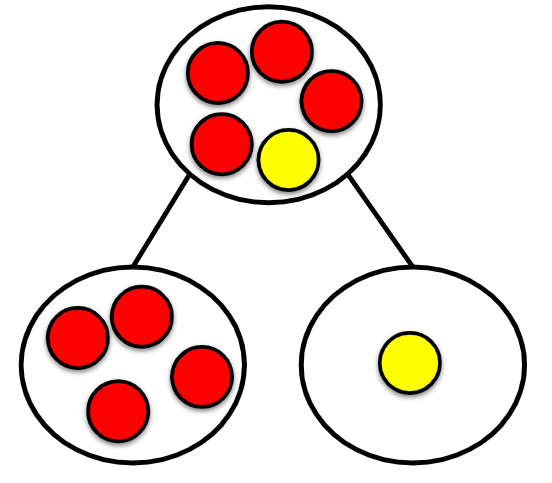
Q2.Tick the equations that are represented by this part-part-whole model.
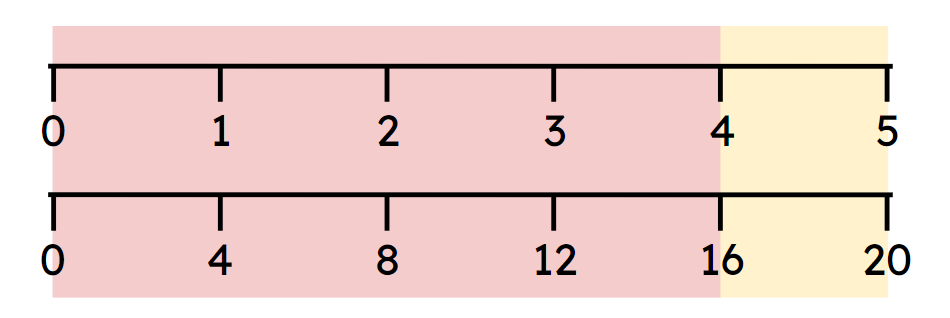
Q3.Tick the equations that are represented by this stacked number line.
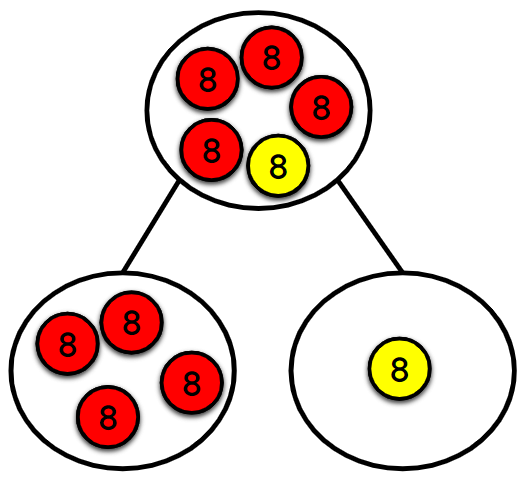
Q4.Tick the equations that are represented by this part-part-whole model.
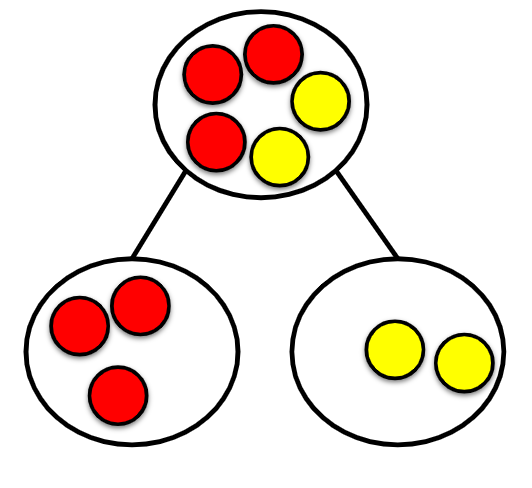
Q5.Tick the equations, showing the distributive law, that are represented by this part-part-whole model.
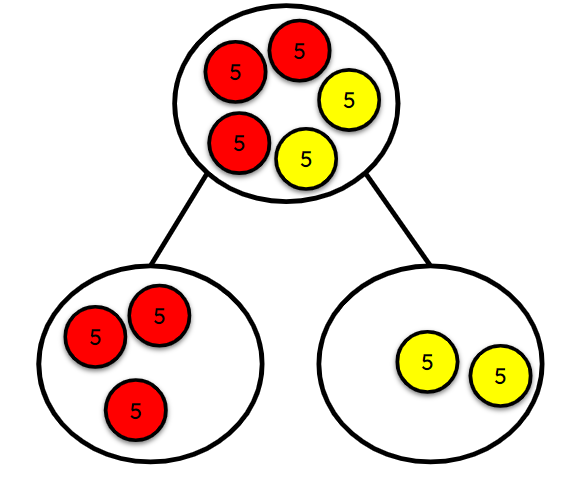
Q6.Tick the equations, showing the distributive law, that are represented by this stacked number line.
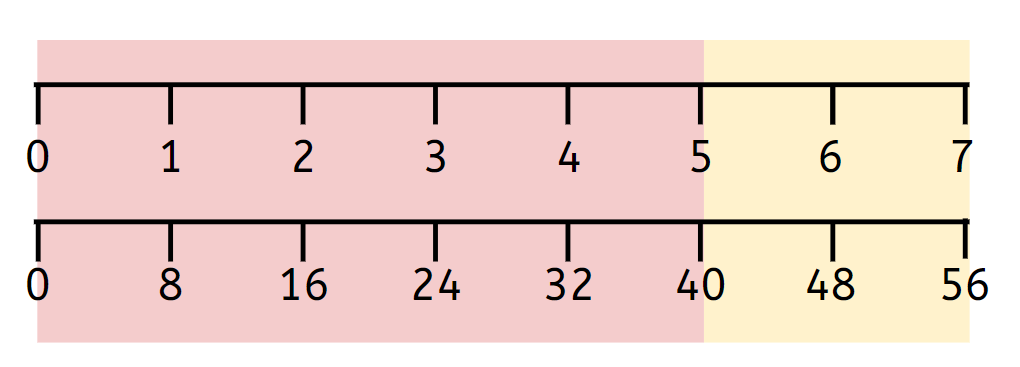
To help you plan your 4 maths lesson on: Partition one of the factors in a multiplication equation using representations, download all teaching resources for free and adapt to suit your pupils' needs...
To help you plan your 4 maths lesson on: Partition one of the factors in a multiplication equation using representations, download all teaching resources for free and adapt to suit your pupils' needs.
The starter quiz will activate and check your pupils' prior knowledge, with versions available both with and without answers in PDF format.
We use learning cycles to break down learning into key concepts or ideas linked to the learning outcome. Each learning cycle features explanations with checks for understanding and practice tasks with feedback. All of this is found in our slide decks, ready for you to download and edit. The practice tasks are also available as printable worksheets and some lessons have additional materials with extra material you might need for teaching the lesson.
The assessment exit quiz will test your pupils' understanding of the key learning points.
Our video is a tool for planning, showing how other teachers might teach the lesson, offering helpful tips, modelled explanations and inspiration for your own delivery in the classroom. Plus, you can set it as homework or revision for pupils and keep their learning on track by sharing an online pupil version of this lesson.
Explore more key stage 2 maths lessons from the Understand and represent multiplicative structures unit, dive into the full primary maths curriculum, or learn more about lesson planning.