Choose exam board for KS4 Computer Science (GCSE)
Choose exam board for KS4 English
Choose exam board for KS4 French
Choose exam board for KS4 Geography
Choose exam board for KS4 German
Choose exam board for KS4 History
Choose tier for KS4 Maths
Choose exam board for KS4 Music
Choose exam board for KS4 Physical education (GCSE)
Choose exam board for KS4 Religious education (GCSE)
Choose exam board for KS4 Spanish

      Checking and securing understanding of angle notation and drawing/measuring angles
      Lesson details

      Learning outcome

      I can draw and measure any angle and am confident with various angle notations.

      Key learning points

      1. A protractor is used to draw angles.
      2. A protractor is used to measure the size of angles.
      3. A protractor measures angles in degrees.

      Keywords

      • Angle - An angle is a measure of turn. It is often displayed as the rotation between two line segments.

      • Reflex angle - An angle that is greater than a straight line (i.e. greater than 180°) is a reflex angle.

      Common misconception

      Pupils read from the incorrect values on the protractor.

      Encourage pupils to consider the type of angle they are measuring. If it is an acute angle, will it really measure 122°?

      Teacher tip

      Pupils can assess each other's work during Task A. By having pupils work in pairs/small groups, they can all measure an angle and then compare their answers to check accuracy.

      Licence

      This content is © Oak National Academy Limited (2025), licensed on Open Government Licence version 3.0
      except where otherwise stated. See Oak's terms & conditions
      (Collection 2).

      Lesson video

      Loading...

      Prior knowledge starter quiz

      6 Questions

      Q1.
      An is a measure of turn. It is often displayed as the rotation between two line segments.

      Correct Answer: angle

      Q2.
      Which of these is an instrument used for measuring an angle?

      measuring jug
      pair of compasses
      Correct answer: protractor
      ruler
      weighing scales

      Q3.
      Which of these units is used to measure angles?

      centimetres
      Correct answer: degrees
      kilograms
      litres

      Q4.
      An angle that is smaller than a right angle is called an angle.

      Correct Answer: acute

      Q5.
      An angle that is greater than a right angle but smaller than a straight line is called an angle.

      Correct Answer: obtuse

      Q6.
      An angle that is greater than a straight line (i.e. greater than 180°) is called a angle.

      Correct Answer: reflex

      6 Questions

      Q1.
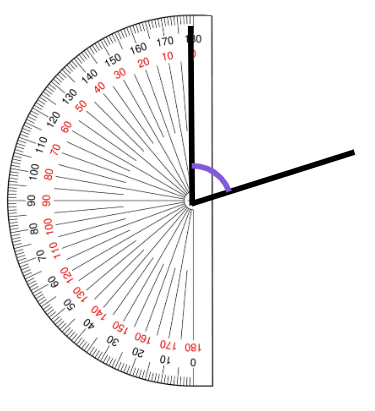
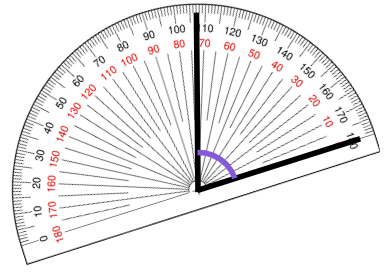
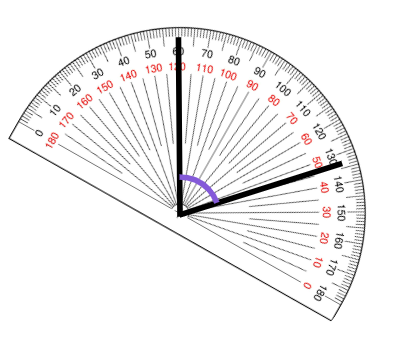
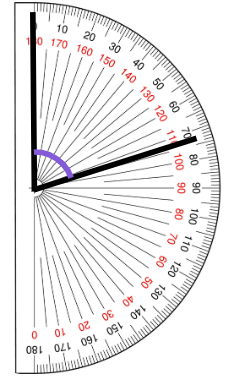
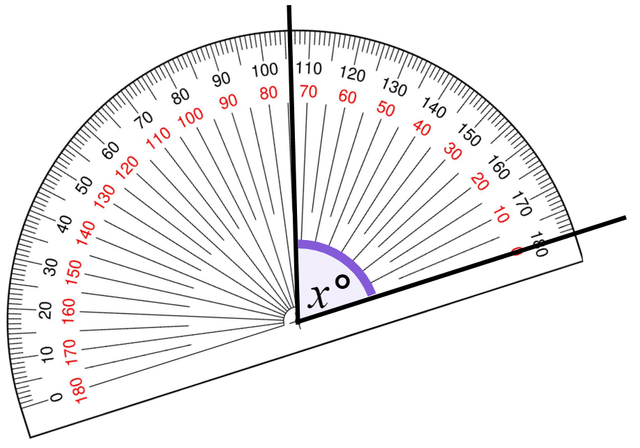
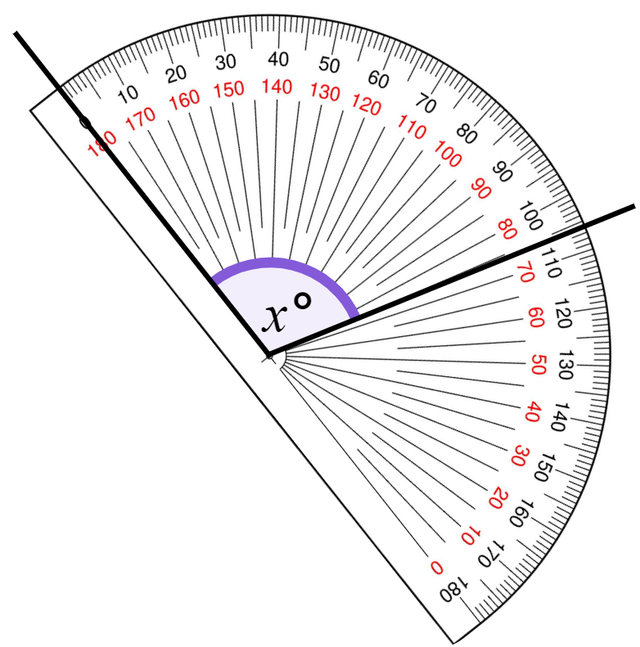
      In which of these images is the protractor in a correct position to measure the marked angle?

      An image in a quiz
      Correct Answer: An image in a quiz
      An image in a quiz
      An image in a quiz
      Correct Answer: An image in a quiz
      An image in a quiz

      Q2.
      What is the size of the angle marked $$x$$?

      An image in a quiz
      Correct answer: 74°
      86°
      106°
      114°

      Q3.
      What is the size of the angle marked $$x$$?

      An image in a quiz
      74°
      86°
      Correct answer: 106°
      114°

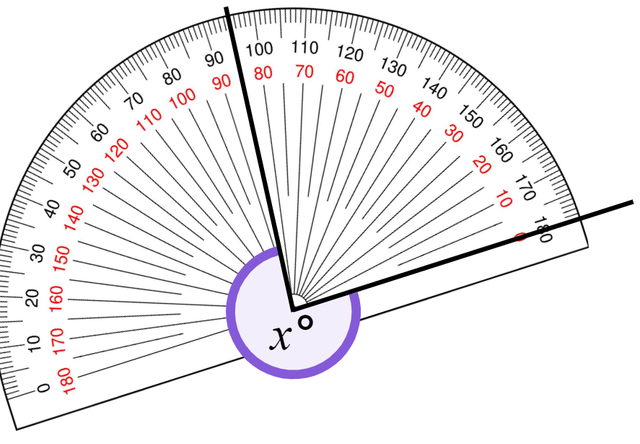
      Q4.
      The size of the angle marked $$x$$ is °.

      An image in a quiz
      Correct Answer: 275, two hundred and seventy five

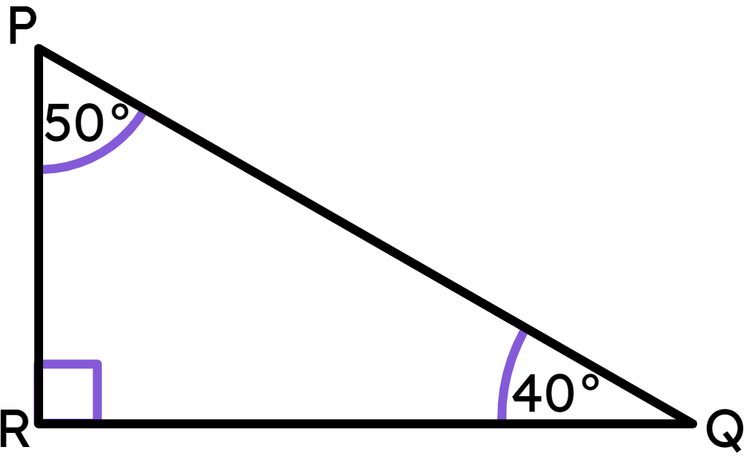
      Q5.
      Match each angle to its size.

      An image in a quiz
      Correct Answer:∠PQR,40°
      Correct Answer:∠QRP,90°
      Correct Answer:∠RPQ,50°

      Q6.
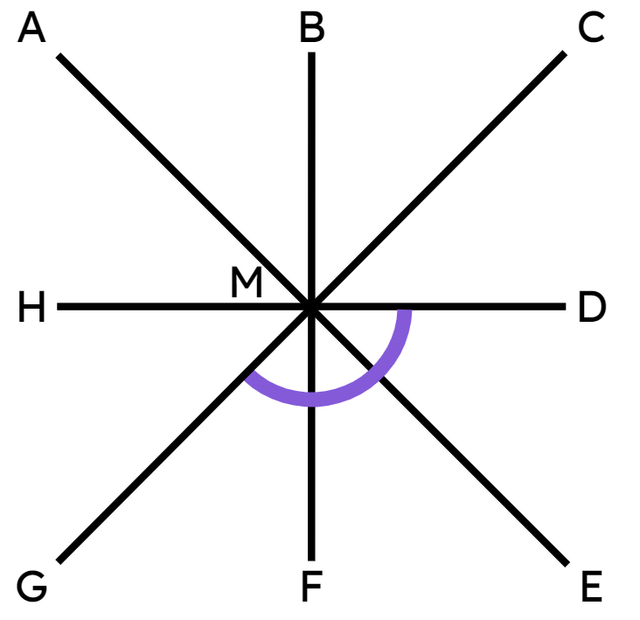
      The three letter notation for the marked angle is ∠ .

      An image in a quiz
      Correct Answer: GMD, DMG

      To help you plan your 10 maths lesson on: Checking and securing understanding of angle notation and drawing/measuring angles, download all teaching resources for free and adapt to suit your pupils' needs...