


Promotion of personal health


Lesson details
Learning outcome
I can explain the importance of a personal exercise programme and apply it to training.
Key learning points
- A PEP is training programme designed to improve personal fitness
- A PEP can often be associated with improving specific components of fitness
- A PEP can also be used to improve performance in a certain activity or sport
- An effective PEP will provide opportunities to plan, monitor and evaluate fitness
Keywords
PEP - a Personal Exercise Programme is a training programme aimed at improving fitness
Fitness - the ability to meet the demands of the environment
PAR-Q - Physical Activity Readiness Questionnaire which is done before participating in training
Training methods - the type of training done to achieve a specific goal (e.g. circuit training)
Common misconception
Personal exercise programmes are only used by people that play sport.
Perosnal exercise programmes can be used by everyone to increase physical activity levels.
Teacher tip
This lesson could also be used to support with writing the PEP coursework.

Licence

Lesson video
Loading...
Prior knowledge starter quiz
6 Questions
Q1.Health is a state of complete physical, emotional and well-being, not merely the absence of disease or infirmity.
Q2.FITT stands for frequency, intensity, time and ...
Q3.If someone wants to improve their cardiovascular endurance, what type of training should they do?
Q4.What aspects may affect someone's physical health?
Q5.Match the benefit of exercise to the type of health.

Q6.Which is not a principle of training?
Assessment exit quiz
6 Questions
Q1.A PEP is a Exercise Programme.
Q2.When would you complete a PAR-Q?
Q3.Which question is unlikely to be asked in the planning phase of a PEP?
Q4.Naomi is completing her PEP. She trains 5 times a week. Which FITT principle does this refer to?
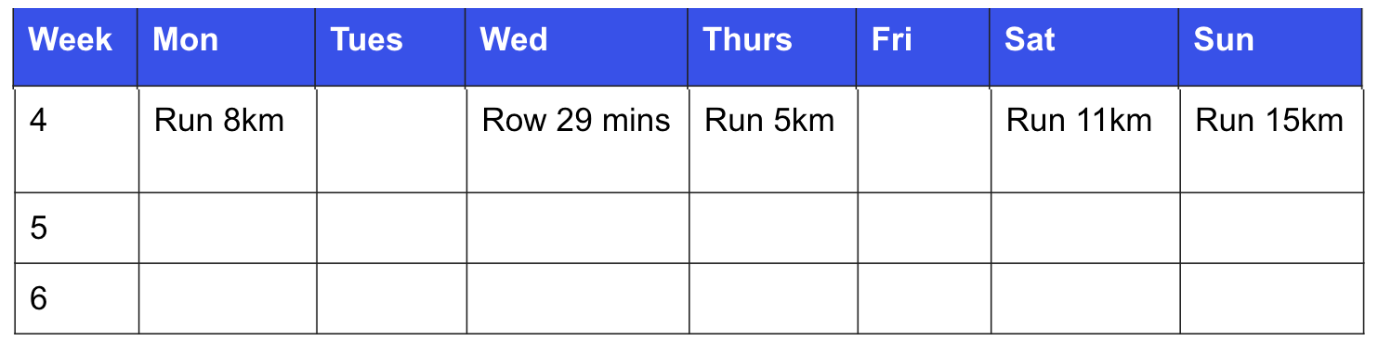
Q5.Identify which principle of training has been applied to this PEP.
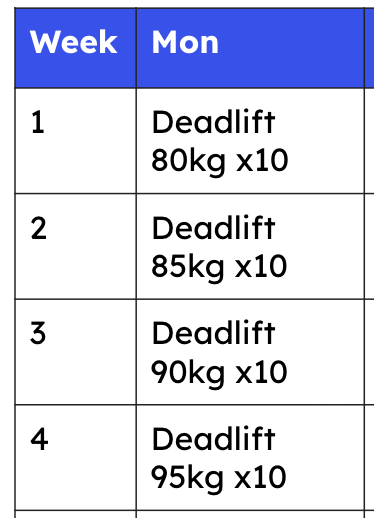
Q6.In week 5 and 6, to ensure overtraining does not happen, which would be the best solution?
To help you plan your 11 physical education lesson on: Promotion of personal health, download all teaching resources for free and adapt to suit your pupils' needs...
To help you plan your 11 physical education lesson on: Promotion of personal health, download all teaching resources for free and adapt to suit your pupils' needs.
The starter quiz will activate and check your pupils' prior knowledge, with versions available both with and without answers in PDF format.
We use learning cycles to break down learning into key concepts or ideas linked to the learning outcome. Each learning cycle features explanations with checks for understanding and practice tasks with feedback. All of this is found in our slide decks, ready for you to download and edit. The practice tasks are also available as printable worksheets and some lessons have additional materials with extra material you might need for teaching the lesson.
The assessment exit quiz will test your pupils' understanding of the key learning points.
Our video is a tool for planning, showing how other teachers might teach the lesson, offering helpful tips, modelled explanations and inspiration for your own delivery in the classroom. Plus, you can set it as homework or revision for pupils and keep their learning on track by sharing an online pupil version of this lesson.
Explore more key stage 4 physical education lessons from the Health and well-being: reasons for participation unit, dive into the full secondary physical education curriculum, or learn more about lesson planning.