


Checking and securing understanding of circles
I can identify the parts of a circle and calculate the perimeter and area of a circle.


- Year 10
Checking and securing understanding of circles
I can identify the parts of a circle and calculate the perimeter and area of a circle.
Lesson details
Key learning points
- A chord splits the circle into two uneven pieces.
- The smaller piece is the minor segment and the larger is the major segment.
- Sectors look familiar as you broke a circle into sectors to draw a pie chart.
- The circumference of a circle is found using C = πd or C = 2πr
- The area of a circle is found using A = πr²
Keywords
Chord - A chord is any line segment joining two points on the circumference of a circle.
Segment - Two segments are created when dividing a circle into two parts using a chord.
Sector - A sector is the region formed between two radii and their connecting arc.
Arc - An arc is part of a curve. An arc of a circle is part of the circle’s circumference.
Common misconception
"Any line segment starting from the centre of a circle is a radius."
It is true that one endpoint of a radius must be at the centre of a circle. However, the other endpoint must be on the circumference of the circle. This second endpoint cannot be inside or outside of the circle.


Licence
Lesson video
Loading...
Prior knowledge starter quiz
6 Questions
Q1.Which of these shapes are polygons?


Q2.Which of these statements correctly explains why this shape is not a polygon?

Q3.1 centilitre equals $$1 \over 100$$ litres.
Match each letter in the ratio table to its value to convert 4040 cl into litres.
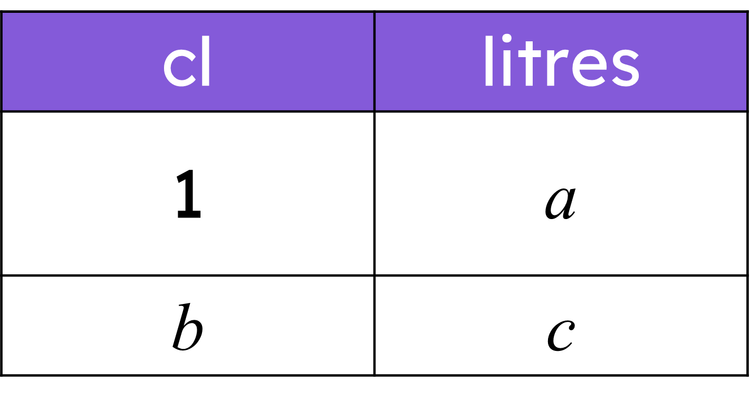
$$a$$ - $$1 \over 100$$
$$b$$ - 4040
$$c$$ - 40.4
Q4.0.065 litres = centilitres.
Q5.The perimeter of this parallelogram is cm.
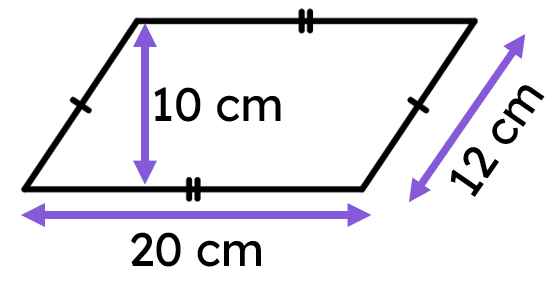
Q6.The area of this parallelogram is cm².
Assessment exit quiz
6 Questions
Q1.Each diagram shows a different part of a circle. Match each part of a circle to its name.
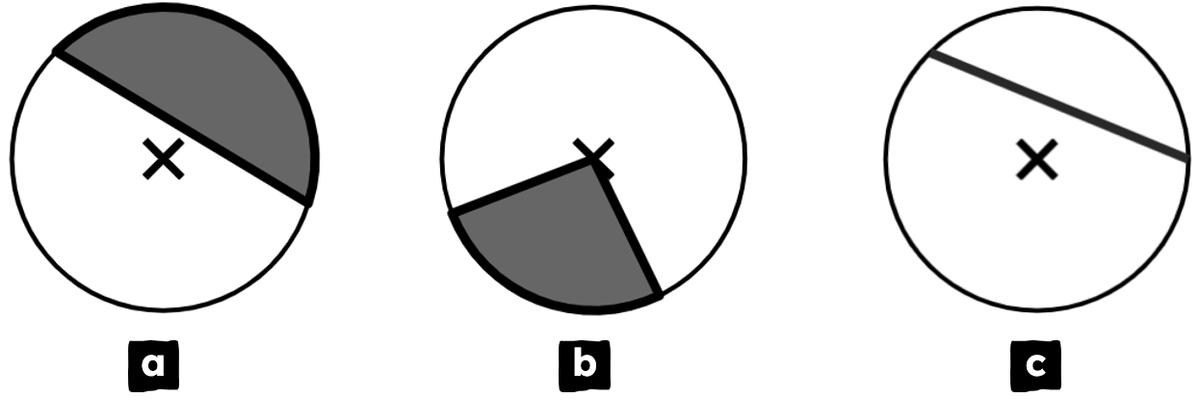
Diagram a - segment
Diagram b - sector
Diagram c - chord
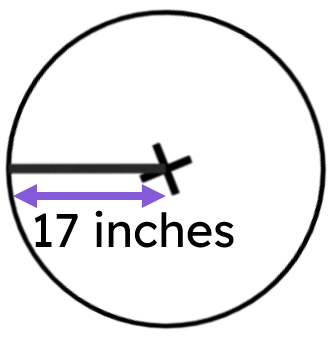
Q2.The length of the diameter of this circle is inches.
Q3.The circumference of a circle is 150 cm.
Which of these statements is correct about the circle?
Q4.The diameter of a circle is 60 cm.
Which of these statements is correct about the circle?
Q5.The radius of a circle is 9 cm.
Which of these statements is correct about the circle?
Q6.The area of this circle can be calculated from the equation $$A = \pi \times 62^2$$.
Match each property of the circle to its value.
radius (in cm) - 62
diameter (in cm) - 124
circumference (in cm) - 124$$\pi$$
area (in cm²) - 12 076.28
