Classification into kingdoms and domains: sub-cellular evidence
I can describe the classification of organisms based on evidence from their phenotype and cells.


- Year 11
- Edexcel
Classification into kingdoms and domains: sub-cellular evidence
I can describe the classification of organisms based on evidence from their phenotype and cells.
Lesson details
Key learning points
- Organisms are classified into groups within larger groups, from species up to kingdoms and domains
- There are domains of eukaryotes (animals, plants, fungi and protists), bacteria and archaea (both prokaryotic)
- Organisms can be classified using evidence of their macroscopic features (phenotype)
- Organisms can be classified using evidence of their and microscopic cell structures
Keywords
Species - a group of similar organisms that can breed together to produce fertile offspring
Kingdom - A division of living things in the classification system. The five kingdoms are animals, plants, fungi, protist and prokaryotes.
Domain - The three domain system of classification organises organisms into three large groups: Bacteria, Archaea and Eukaryota.
Phenotype - the physical characteristics of an organism
Common misconception
Pupils may think that the modern classification system that we use today is complete.
Remind pupils why new data from experiments or observations leads to changes in models or theories.


Licence
Lesson video
Loading...
Prior knowledge starter quiz
6 Questions
Q1.Which type of microsope is shown in the image?
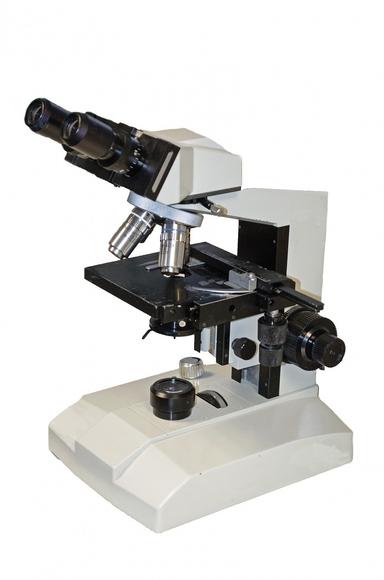

Q2.Which type of cells contain membrane bound sub-cellular structures, including a nucleus?
Q3.Which type of cell, prokaryotic or eukaryotic, is generally smaller in size?
Q4.If a bacterial cell has a diameter of 1.5 micrometres, how many times smaller is it compared to a eukaryotic cell with a diameter of 15 micrometres?
Q5.Which of the following statements about microscopes are true?
Q6.Calculate the real size of a cell if its image size is 200 micrometres and the magnification is 400x.
Assessment exit quiz
6 Questions
Q1.Which scientist is known as the father of modern classification and introduced the binomial naming system?
Q2.Starting with the largest group, sort the groups of Linnean classification into the correct order.
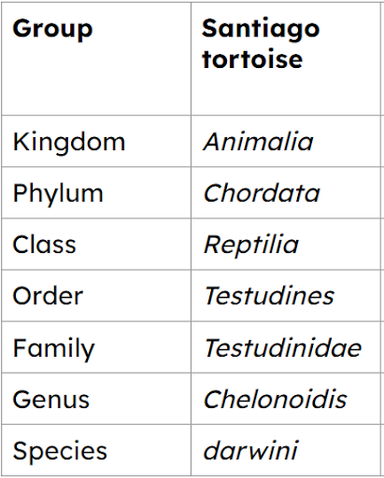
Q3.What is the binomial name for the Santiago tortoise?