


New
New
Describe rotations using the standard unit of degrees when compared to a right angle
I can describe rotations using the standard unit of degrees when compared to a right angle.


Lesson 6 of 15
New
New
- Year 5
Describe rotations using the standard unit of degrees when compared to a right angle
I can describe rotations using the standard unit of degrees when compared to a right angle.
Lesson details
Key learning points
- Some objects rotate or spin and this is measured in degrees
- Rotation can be more than a right angle >90 degrees
- Rotation can be less than a right angle <90 degrees
Keywords
Degrees - A degree is a unit of measure for angles.
Estimate - To estimate is to find a value that is close enough to the right answer, usually with some thought or calculation involved.
Rotation - A rotation is a circular movement around a fixed point.
Common misconception
Objects rotate only either less than a full turn or more than a full turn.
Take time to discuss the purpose of the object in question and clarify the difference between what an object should do and could do.
Encourage pupils to find examples of rotating objects in their own settings and explore the different starting positions of each angle, generalising that an angle can start from any point.

Teacher tip

Licence
This content is © Oak National Academy Limited (2025), licensed on Open Government Licence version 3.0 except where otherwise stated. See Oak's terms & conditions (Collection 2).
Lesson video
Loading...
Prior knowledge starter quiz
6 Questions
Q1.Which of the angles shown is the smallest?
Which of the angles shown is the smallest?
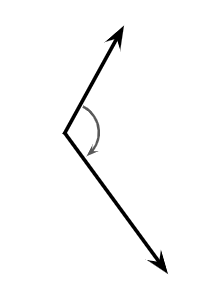
A
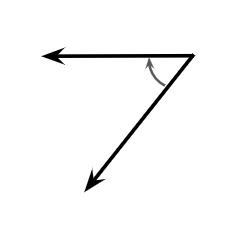

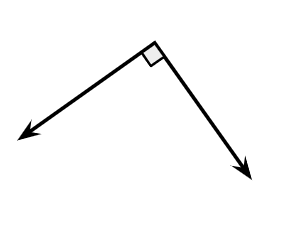
C
Q2.Look at the hands on this clock face and the arrow. How does the angle created by the hands compare to a right angle?
Look at the hands on this clock face and the arrow. How does the angle created by the hands compare to a right angle?
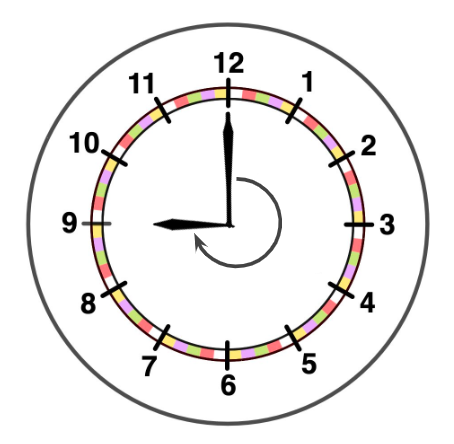
Smaller than a right angle.
Equal to a right angle.
Q3.Look at the hands on this clock face. The hour hand began pointing at 12 and then rotated to point at 9 How can you describe the turn?
Look at the hands on this clock face. The hour hand began pointing at 12 and then rotated to point at 9 How can you describe the turn?
A quarter turn
A half turn
A full turn
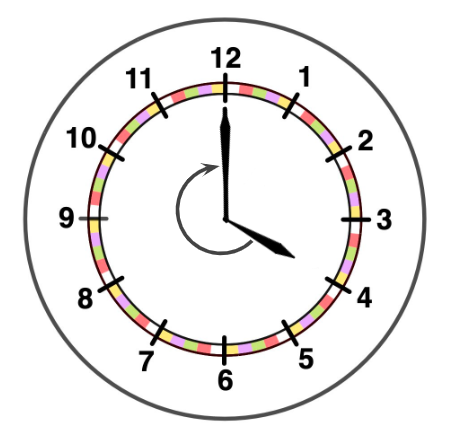
Q4.Look at the hands on this clock face and the arrow. The angle formed is __________.
Look at the hands on this clock face and the arrow. The angle formed is __________.
acute
a right angle
obtuse
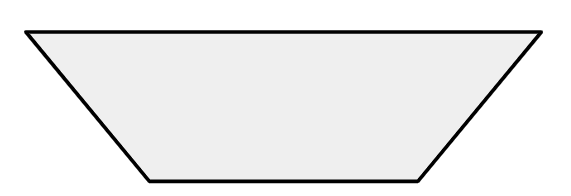
Q5.This is a trapezium. Look carefully at the vertices and the angles inside the shape. Which statement is correct?
This is a trapezium. Look carefully at the vertices and the angles inside the shape. Which statement is correct?
The trapezium has four acute angles.
The trapezium has four obtuse angles.
The trapezium has two right angles and two acute angles.
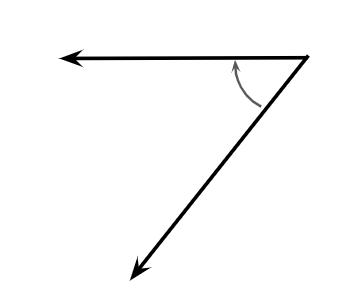
Q6.Which of these is the best estimate for the angle shown?
Which of these is the best estimate for the angle shown?
20°
70°
Assessment exit quiz
6 Questions
Q1.Think about a bicycle's wheels. How could you describe the movement they make?
Think about a bicycle's wheels. How could you describe the movement they make?
No rotation
They rotate less than 360°
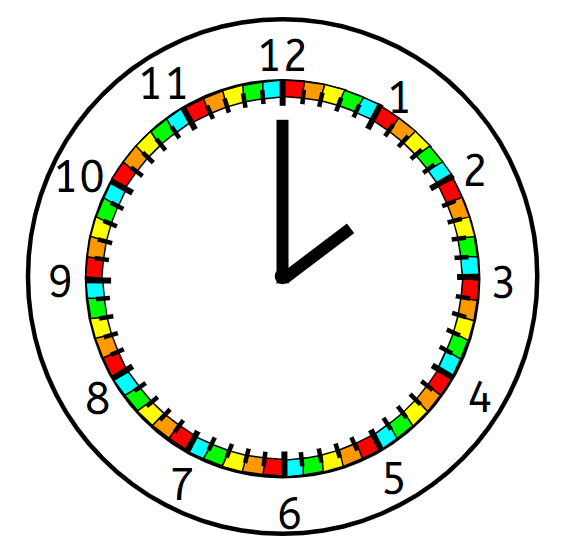
Q2.The time is 2 o’clock. When Lucas next looks, it is 4 o’clock. How has the hour hand moved?
The time is 2 o’clock. When Lucas next looks, it is 4 o’clock. How has the hour hand moved?
It has not rotated.
It has rotated exactly 360°
It has rotated more than 360°
Q3.The time is 2 o’clock. When Lucas next looks, it is 4 o’clock. How has the minute hand moved?
The time is 2 o’clock. When Lucas next looks, it is 4 o’clock. How has the minute hand moved?
It has not rotated.
It has rotated less than 360°
It has rotated exactly 360°
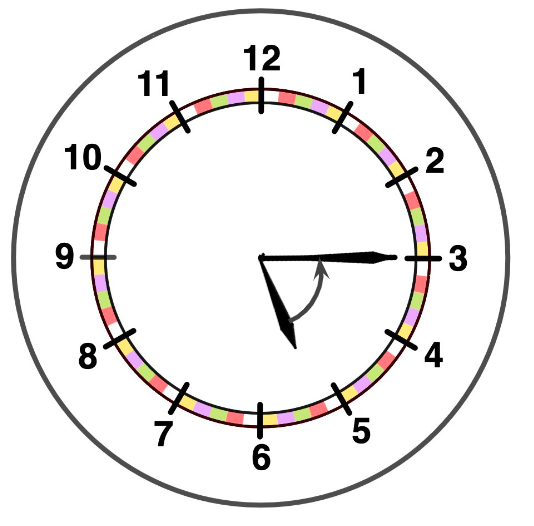
Q4.Look at the hands on this clock face and the arrow. The angle formed is __________.
Look at the hands on this clock face and the arrow. The angle formed is __________.
a right angle
obtuse
reflex
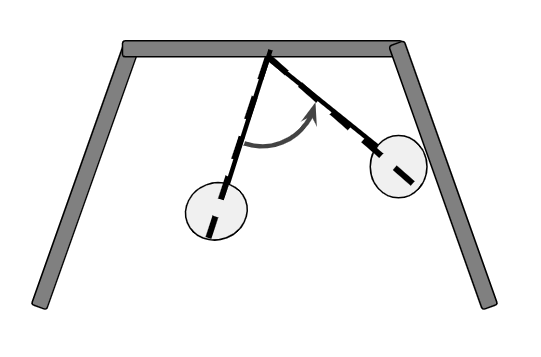
Q5.The swing rotates and the angle has been drawn. What is the best estimate for the angle?
The swing rotates and the angle has been drawn. What is the best estimate for the angle?
10°
20°
70°
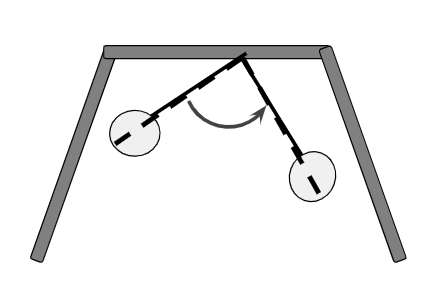
Q6.The swing rotates and the angle has been drawn. What is the best estimate for the angle?
The swing rotates and the angle has been drawn. What is the best estimate for the angle?
60°
75°
120°
