


New
New
Eukaryotic and prokaryotic organisms
I can describe differences in the cell structures of eukaryotic and prokaryotic organisms.


Lesson 6 of 7
New
New
- Year 10
- OCR
Eukaryotic and prokaryotic organisms
I can describe differences in the cell structures of eukaryotic and prokaryotic organisms.
Lesson details
Key learning points
- Eukaryotic cells store their genetic material in a nucleus and have membrane bound sub-cellular structures.
- Eukaryotic organisms can be unicellular or multicellular.
- Examples of eukaryotic and prokaryotic organisms.
- Prokaryotic cells do not have membrane bound sub-cellular structures including a nucleus; DNA is floating in cytoplasm.
- Prokaryotic organisms are unicellular.
Keywords
Eukaryotic - Eukaryotic cells contain a membrane bound nucleus; this contains the DNA.
Multicellular - Organisms that are made up of more than one cell are multicellular.
Prokaryotic - Prokaryotic cells have no membrane bound nucleus; DNA is free floating in the cytoplasm.
Unicellular - An organism that consists of only one cell is unicellular.
Common misconception
All eukaryotic cells are multicellular.
Addressed within the slides to specifically mention that some eukaryotic organisms are unicellular.
There are sub-cellular structures that have not been mentioned within the lesson that students may be familiar with. It might be good to remind students that they are present, but that they are not membrane bound or linked to understanding the difference between eukaryotic and prokaryotic cells.

Teacher tip

Licence
This content is © Oak National Academy Limited (2026), licensed on Open Government Licence version 3.0 except where otherwise stated. See Oak's terms & conditions (Collection 2).
Lesson video
Loading...
Prior knowledge starter quiz
6 Questions
Q1.Which of these images is showing a bacterium?
Which of these images is showing a bacterium?
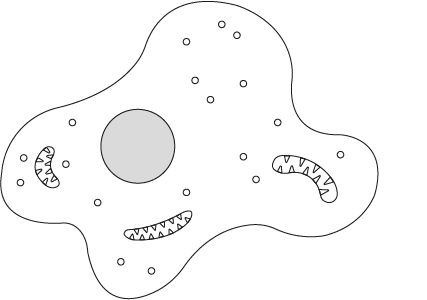
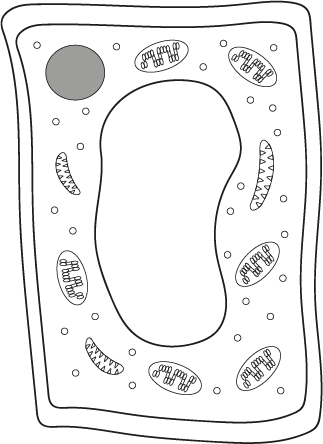
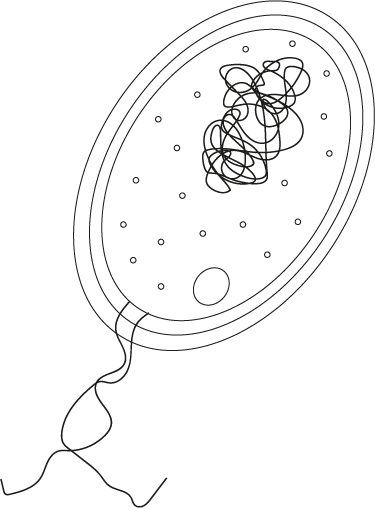
Q2.What does the prefix 'uni' mean in the word 'unicycle'?
What does the prefix 'uni' mean in the word 'unicycle'?
two
many
united
Q3.What is the unit for micrometres?
What is the unit for micrometres?
mm
cm
m
Q4.In an animal cell, which sub-cellular structure contains the DNA?
In an animal cell, which sub-cellular structure contains the DNA?
Q5.Which of the following organisms is made up of many cells?
Which of the following organisms is made up of many cells?
amoeba
yeast
bacterium
Q6.Match the organism to its description.
Match the organism to its description.

Assessment exit quiz
6 Questions
Q1.Match the key term to its definition.
Match the key term to its definition.
Q2.Which of the following sub-cellular structures would not be found in a prokaryotic cell?
Which of the following sub-cellular structures would not be found in a prokaryotic cell?
cell membrane
ribosome
cytoplasm
Q3.How do human cheek cells divide?
How do human cheek cells divide?
binary fission
reproduction
meiosis
Q4.Which of the following statements are true?
Which of the following statements are true?
The DNA is free floating in eukaryotic cells.
Eukaryotic cells contain no membrane bound structures.
Q5.Which statement is correct?
Which statement is correct?
All eukaryotic cells contain a cell wall.
Only plant cells contain a cell wall.
Plant and animal cells contain a cell wall.
Q6.Which of the statements are false?
Which of the statements are false?
Bacterial cell walls are made from peptidoglycan.
Bacteria can contain a ring of DNA called a plasmid.
